


Are You Letting Money Slip Through Your Fingers? Wise Moves to Make the Most of Your ETFs



Key Points
Two ETFs may be vastly different, so it's up to you to learn as much as possible about the assets each holds.
While most ETFs are famous for their low expense ratios, there's far more to consider before buying.
You're likely to get more from an ETF when you hold it for the long term.
If you're using an exchange-traded fund (ETF) to build wealth, you may be among the many who leave value on the table in how you select, trade, and use your ETF. Here, we'll cover a few strategic adjustments to help you gain more diversification, efficiency, and long-term growth from the ETFs already in your portfolio. If you want to make the most of your ETF, consider making the following moves.
Take a long look under the hood
It's easy to treat an ETF as an interchangeable index product. However, depending on the ETF, it may track anything from broad markets to narrow sectors -- two very different investments. Before buying, take time to review the underlying index, including its top holdings, sector mix, and risk rating. Be sure it aligns with both your goals and your risk tolerance. Ignoring seemingly minor details can leave you overexposed to a single industry and fail to provide the types of investments your portfolio needs for diversification.
Missed Nvidia in 2009? This Rare Signal Is Flashing Again. In 2009, a "Double Down" signal flashed for a little-known chipmaker called Nvidia. For the first time in years, that same "Total Conviction" signal is flashing for a company 1/100th the size of Nvidia. Continue »
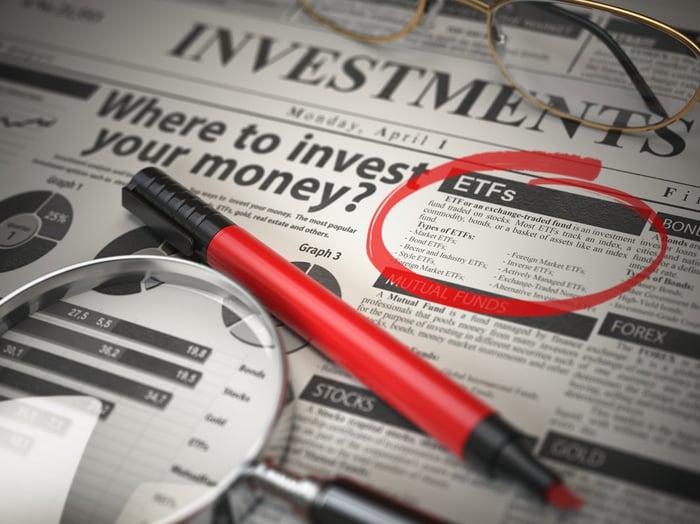
Image source: Getty Images.
Look beyond the expense ratio
Understanding an ETF's expense ratio is critical. The issue is that many investors are so caught up in that ratio that they overlook trading costs and tracking quality. Be sure to consider bid-ask spread, trading commissions (if any), and how closely the ETF tracks its index. Each of these factors affects your real return.
Avoid overlap
Investing in ETFs is a smart move because it lets you buy many stocks at once. Owning several ETFs may seem like a good way to cover your investment bases. However, owning multiple ETFs doesn't guarantee diversification. That's because multiple funds hold the same large companies, which could lead to owning a handful of mega-caps rather than truly diversifying your holdings.
Periodically review each of your ETFs to ensure there's no overlap between them. When you find overlap, rebalance so that your portfolio risk remains aligned with your goals and risk tolerance rather than drifting with the market.
Take the headlines with a grain of salt
It's easy to react to exciting market news. For example, if REIT ETFs suddenly become the hottest thing on the market, you may be tempted to jump out of another ETF and into a REIT ETF. Each time you buy and sell, you incur expenses that affect your bottom line. Each individual trade may seem relatively inexpensive on its own, but they can eat into your profits in these ways:
- Transaction fees: Each trade incurs brokerage fees, which erode profits.
- Taxes: Short-term capital gains from ETFs held for less than a year are taxed at a higher rate than long-term gains.
- Timing risks: Trying to time the market to ride the wave of a hot new ETF can lead to poor, impulsive decisions that result in buying high and selling low.
- Compounding: Frequent trades disrupt the flow of compounding returns. Holding ETFs for the long term typically leads to better results.
Don't lose sight of tax efficiency opportunities
As you invest in an ETF, pay special attention to where you hold each fund and the type of income it generates. Factoring that information into your decision can improve after-tax returns without affecting your overall investment strategy.
ETFs are a great way to gain exposure to a broad range of assets while saving money. When considering an ETF, make sure to choose one that fits your goals, risk tolerance, and timeline. You can find the details under the hood.
Where to invest $1,000 right now
When our analyst team has a stock tip, it can pay to listen. After all, Stock Advisor’s total average return is 929%* — a market-crushing outperformance compared to 211% for the S&P 500.
They just revealed what they believe are the 10 best stocks for investors to buy right now, available when you join Stock Advisor.
*Stock Advisor returns as of July 12, 2026.
The Motley Fool has a disclosure policy.
Recommended Articles






Comments (0)
Click the $ button, enter the symbol, and select to link a stock, ETF, or other ticker.