


 Discount


Intel Corp Stock (INTC) Moved Up by 13.07% on Nov 23: A Full Analysis


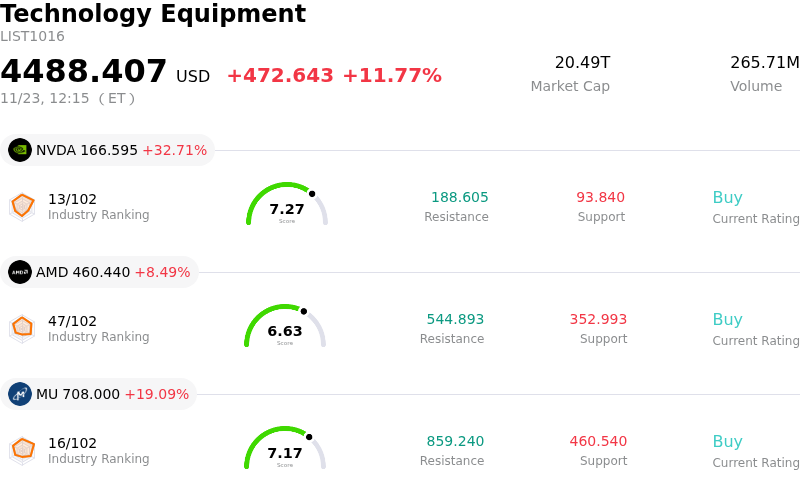
Intel Corp (INTC) moved up by 13.07%. The Technology Equipment sector is up by 11.77%. The company outperformed the industry. Top 3 stocks by turnover in the sector: NVIDIA Corp (NVDA) up 32.88%; Advanced Micro Devices Inc (AMD) up 8.60%; Micron Technology Inc (MU) up 19.41%.
What is driving Intel Corp (INTC)’s stock price up today?
Intel shares staged a powerful rally during the session, driven by a convergence of positive operational milestones within its foundry turnaround roadmap and renewed institutional conviction surrounding its long-term competitive positioning. The substantial upward momentum reflects mounting investor optimism that the company’s multi-year restructuring and node transition strategy are reaching a pivotal commercial inflection point.
The primary catalyst behind the buying surge stems from significant progress in Intel Foundry Services, highlighted by tangible commitments from major external fabless and hyperscale customers. Confirmation of yield stability and volume manufacturing timelines for Intel’s advanced process nodes has materially reduced execution skepticism. Markets have responded enthusiastically to indications that the company is closing the competitive gap with Asian foundry leaders, while expanding its pipeline for high-margin advanced packaging solutions. Simultaneously, sustained demand across enterprise data centers and the accelerating refresh cycle for AI-capable personal computers have bolstered confidence in baseline client and server revenue stability, offsetting earlier cyclical concerns.
From an industry dynamics perspective, the broader semiconductor landscape is actively repricing Intel as a vital beneficiary of supply chain diversification and domestic manufacturing initiatives. Government co-investments and strategic subsidies under the CHIPS framework have provided a capital buffer, easing balance sheet pressures as heavy fabrication buildouts continue. This operational derisking triggered a wave of upward revisions across Wall Street research desks, prompting price target hikes and rating upgrades that fueled heavy institutional inflows and short-covering across the derivative and cash markets.
While market sentiment has turned decidedly bullish, institutional investors must remain vigilant regarding ongoing execution risks. Rebuilding foundry economics is an inherently capital-intensive process that can compress gross margins during the ramp-up phase, and persistent competitive pressure from rivals in cutting-edge accelerated computing remains an ongoing challenge. Nonetheless, today’s pronounced upward rerating demonstrates that the market is increasingly willing to reward Intel’s tangible progress toward technological parity and sustained structural profitability.
Technical Analysis of Intel Corp (INTC)
Technically, Intel Corp (INTC) shows a MACD (12,26,9) value of 1.699, indicating a neutral signal. The RSI at 37.791 suggests neutral condition and the Williams %R at 47.202 suggests neutral condition. Please monitor closely.
Media Coverage of Intel Corp (INTC)
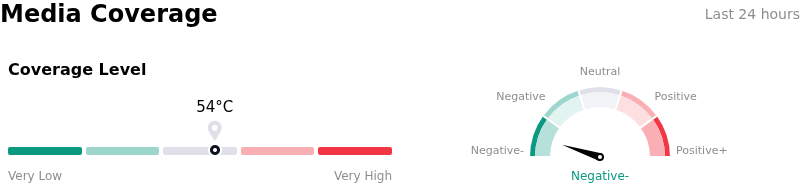
In terms of media coverage, Intel Corp (INTC) shows a coverage score of 54, indicating a moderate level of media attention. The overall market sentiment index is currently in extremely bearish zone.
Fundamental Analysis of Intel Corp (INTC)
Intel Corp (INTC) is in the Technology Equipment industry. Its latest annual revenue is $52.85B, ranking 6 in the industry. The net profit is $-267.00M, ranking 111 in the industry. Company Profile
Over the past month, multiple analysts have rated the company as Hold, with an average price target of $91.99, a high of $160.00, and a low of $63.00.
More details about Intel Corp (INTC)
Company Specific Risks:
- Protracted Client PC Demand Contraction: Severe weakness across consumer and enterprise PC shipments, compounded by an ongoing OEM inventory glut and surging memory costs, has driven fourth-quarter revenue guidance down to $15–$16 billion (below the $17 billion consensus), with management warning that demand headwinds will persist well into 2027.
- Prolonged Deficit in Free Cash Flow: Sustained margin erosion and massive capital expenditure requirements needed to build out advanced foundry capacity (including 18A and 14A nodes) have prompted management and institutional analysts to forecast zero positive free cash flow through 2027, raising concerns over near-term capital allocation.
- Substrate Constraints and Fab Disruptions: Persistent substrate and advanced packaging bottlenecks, paired with a recent production disruption at the Israel fabrication facility that resulted in an estimated $300 million revenue loss, continue to obstruct Intel's ability to pivot excess manufacturing capacity toward high-demand data center CPUs.
- Mounting Securities Class Action Lawsuits: An influx of shareholder class action filings alleges that management issued materially misleading statements regarding channel inventory levels within the Client Computing Group and concealed operational constraints that prevented a seamless supply shift to enterprise processors.
This article may include AI-generated content that is human-reviewed, which is for reference and general information purposes only and does not constitute investment advice.
Recommended Articles






Comments (0)
Click the $ button, enter the symbol, and select to link a stock, ETF, or other ticker.