


 Discount


HSBC Holdings PLC Stock (HSBC) Moved Down by 3.06% on Nov 20: A Full Analysis


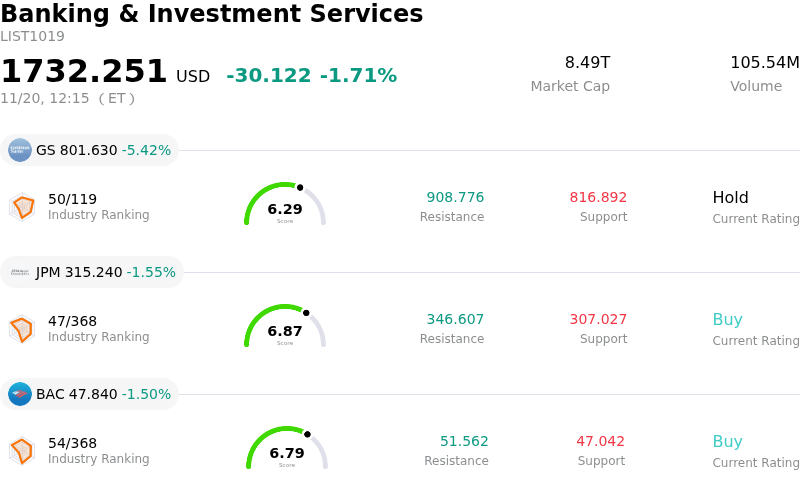
HSBC Holdings PLC (HSBC) moved down by 3.06%. The Banking & Investment Services sector is down by 1.71%. The company underperformed the industry. Top 3 stocks by turnover in the sector: Goldman Sachs Group Inc (GS) down 5.44%; JPMorgan Chase & Co (JPM) down 1.55%; Bank of America Corp (BAC) down 1.50%.
What is driving HSBC Holdings PLC (HSBC)’s stock price down today?
HSBC faced notable downward pressure during the session, driven by a confluence of macroeconomic headwinds, shifting monetary policy expectations, and persistent credit concerns in its core geographic markets. As global central banks navigate easing cycles, institutional investors are reassessing revenue sustainability for multinational lenders that have benefited from extended periods of elevated interest rates.
A primary driver of the pullback is the projected compression of net interest margins. With expectations of continued policy rate cuts by the Federal Reserve and the Bank of England, asset yields across HSBC’s extensive balance sheet are poised to reprice downward more quickly than deposit liabilities. This margin squeeze challenges the bank’s ability to sustain the robust net interest income levels delivered over recent quarters, prompting analysts to temper forward-looking earnings projections.
Asset quality concerns across key Asian markets also continue to dampen investor sentiment. Exposure to commercial real estate and commercial lending in Hong Kong and mainland China remains a focal point for risk managers. Muted regional credit demand and lingering vulnerabilities in the property sector elevate the potential for increased expected credit loss provisions, dampening sentiment across the global banking sector. Furthermore, broader geopolitical crosscurrents and softening global trade volumes place additional pressure on transaction banking and trade finance fee generation.
On the operational front, the bank’s sweeping organizational restructuring introduces near-term execution risk. While the initiative aims to simplify governance, delineate geographic operations, and lower structural costs over the long run, restructuring charges and organizational disruption are creating caution among institutional portfolio managers. In response, some asset allocators are trimming exposure to diversified global banks in favor of institutions with more defensive, domestically focused revenue profiles.
Despite these near-term headwinds, HSBC maintains sound capital adequacy, bolstered by resilient baseline solvency ratios and ongoing commitments to shareholder returns through dividends and share buyback programs. Nevertheless, until interest margin trajectories stabilize under the prevailing global easing cycle and tangible signs of recovery emerge across regional credit markets, the stock is likely to remain sensitive to macroeconomic data releases and institutional risk reassessments.
Technical Analysis of HSBC Holdings PLC (HSBC)
Technically, HSBC Holdings PLC (HSBC) shows a MACD (12,26,9) value of -0.637, indicating a sell signal. The RSI at 28.791 suggests sell condition and the Williams %R at 99.249 suggests oversold condition. Please monitor closely.
Fundamental Analysis of HSBC Holdings PLC (HSBC)
HSBC Holdings PLC (HSBC) is in the Banking & Investment Services industry. Its latest annual revenue is $69.62B, ranking 4 in the industry. The net profit is $21.10B, ranking 3 in the industry. Company Profile
Over the past month, multiple analysts have rated the company as Buy, with an average price target of $101.03, a high of $112.05, and a low of $90.00.
More details about HSBC Holdings PLC (HSBC)
Company Specific Risks:
- Core Capital Buffer Depletion: HSBC's Common Equity Tier 1 (CET1) capital ratio has slipped to 13.9%, falling below management's target range of 14.0% to 14.5% due to bond portfolio mark-to-market losses and balance sheet expansion, which constrains capital flexibility alongside ongoing multi-billion-dollar share repurchase commitments.
- Deposit Beta Pressure and NIM Compression: Net interest margin (NIM) upside is deteriorating amid intensifying deposit competition in Hong Kong and the UK, prompting institutional analysts to flag elevated downside risks to medium-term net interest income (NII) consensus as central banks advance rate-cutting cycles.
- Greater China Commercial Real Estate Vulnerability: Persistent credit weakness and asset quality deterioration across Hong Kong and mainland China commercial property markets continue to drive elevated expected credit loss provisions, limiting earnings visibility.
- Restructuring Friction and Wealth Division Disruption: Aggressive corporate restructuring under CEO Georges Elhedery—including major staffing reductions across UK wealth management and the consolidation of commercial and investment banking divisions—creates elevated transition costs, operational disruptions, and execution risks.
This article may include AI-generated content that is human-reviewed, which is for reference and general information purposes only and does not constitute investment advice.
Recommended Articles









Comments (0)
Click the $ button, enter the symbol, and select to link a stock, ETF, or other ticker.