


 Discount


SpaceX Stock (SPCX) Opened Down by 5.16% on Nov 20: Facts Behind the Movement


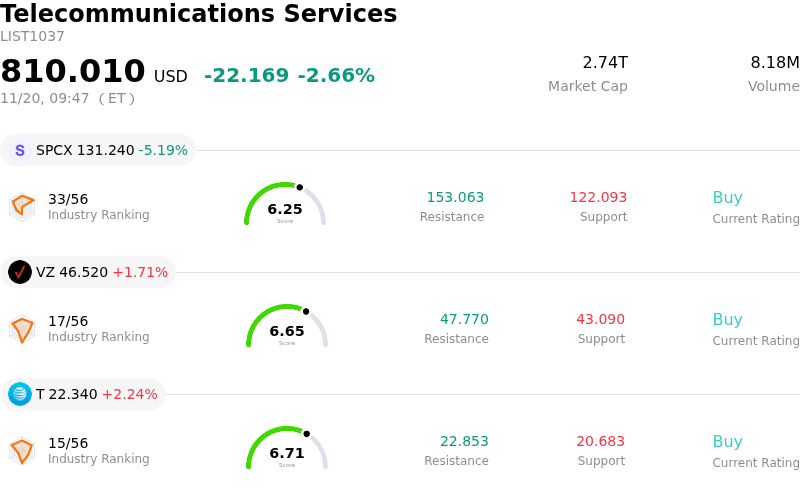
SpaceX (SPCX) opened down by 5.16%. The Telecommunications Services sector is down by 2.66%. The company underperformed the industry. Top 3 stocks by turnover in the sector: SpaceX (SPCX) down 5.16%; Verizon Communications Inc (VZ) up 1.71%; AT&T Inc (T) up 2.24%.
What is driving SpaceX (SPCX)’s stock price down today?
The CrossingBridge Pre-Merger SPAC ETF experienced notable downward pressure during the trading session, reflecting a confluence of macroeconomic crosscurrents, deal-specific friction within the blank-check ecosystem, and broader risk aversion in speculative liquidity vehicles. As an actively managed fund targeting pre-combination special purpose acquisition companies, the vehicle is uniquely sensitive to yield curve shifts, arbitrage spreads, and completion probabilities across its underlying holdings.
A primary catalyst for the pullback stems from shifts in fixed-income markets and changing yield dynamics. Because pre-merger SPAC units derive their floor valuation from cash held in interest-bearing trust accounts, fluctuations in short-term benchmark rates directly alter the yield-to-maturity expectations of arbitrageurs. Widening credit and liquidity spreads have caused market participants to demand higher risk premiums, compressing the trading values of trust-backed vehicles that had previously traded at or near parity with net asset value.
Compounding this macro headwind is ongoing structural attrition across the broader merger and acquisition landscape. The blank-check segment continues to face elevated completion hurdles, characterized by high shareholder redemption rates, prolonged regulatory review timelines, and increased instances of mutual deal terminations. When proposed combinations stall or fail to secure required private investments in public equity, the associated downside in equity-linked structures and sponsor-backed shares triggers direct losses or prolonged capital lockups, dampening sentiment across the fund’s core portfolio components.
Furthermore, institutional portfolio realignments have exacerbated selling pressure. In an environment marked by heightened risk aversion and elevated volatility across alternative asset classes, institutional allocators frequently trim non-core, specialized vehicles to consolidate capital into higher-liquidity cash equivalents or core benchmark equities. This exit liquidity dynamic often forces secondary market discounts to widen relative to underlying portfolio assets, especially in thinly traded issues where market-maker absorption capacity remains constrained.
Looking ahead, recovery in the vehicle will depend heavily on the stabilization of short-term interest rate paths and the successful resolution of pending business combinations within its holdings. While the embedded trust structure provides a defined redemption floor over longer horizons, near-term performance remains vulnerable to liquidity friction, sponsor liquidation risks, and general risk-off sentiment across event-driven arbitrage strategies. Investors should closely monitor portfolio duration, average trust discount levels, and broader capital market liquidity conditions in assessing subsequent directional momentum.
Technical Analysis of SpaceX (SPCX)
Technically, SpaceX (SPCX) shows a MACD (12,26,9) value of 0.210, indicating a neutral signal. The RSI at 40.952 suggests neutral condition and the Williams %R at 58.655 suggests sell condition. Please monitor closely.
Fundamental Analysis of SpaceX (SPCX)
SpaceX (SPCX) is in the Telecommunications Services industry. Its latest annual revenue is $18.67B, ranking 10 in the industry. The net profit is $-4.94B, ranking 61 in the industry. Company Profile
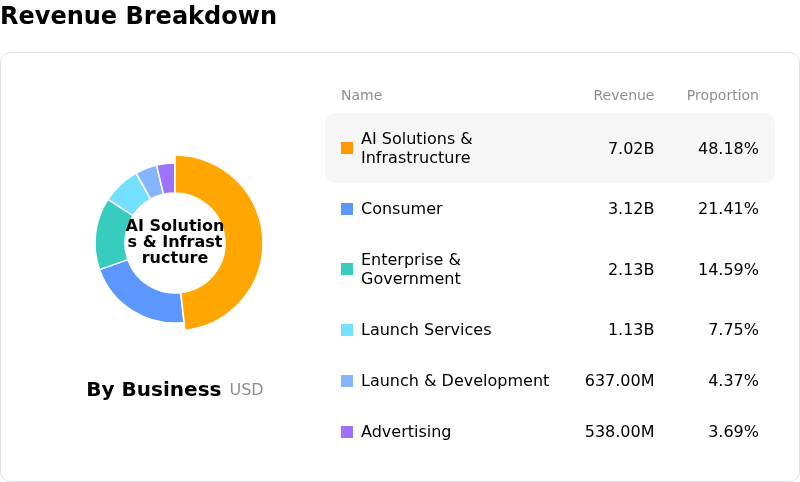
Over the past month, multiple analysts have rated the company as Buy, with an average price target of $250.32, a high of $800.00, and a low of $118.00.
More details about SpaceX (SPCX)
Company Specific Risks:
- Surging Debt Burden and High Financing Costs: SpaceX priced approximately $32 billion in bonds carrying yields above 8.3% as part of a broader $40+ billion debt package, significantly increasing the company's leverage profile and ongoing interest expense obligations.
- Lender Disputes Over Asset Collateralization: Creditors backing the multi-billion-dollar debt package have raised resistance against management's plans to launch debt-securing graphics processing units into orbit, citing severe recovery and liquidation risks in a potential default scenario.
- Capital Expenditure Strain and Uncertain AI Monetization: Committing roughly $47.3 billion toward advanced hardware amid a broader tech correction has heightened institutional investor scrutiny over near-term free cash flow compression and the multi-year return on invested capital for spaceborne computing infrastructure.
- Technical Breakdown Below Benchmark IPO Valuation: Recent intraday selling pressure forced the stock down over 5%, breaching the psychological $135 IPO subscription level and triggering automated stop-losses as market risk premiums on the company's aggressive debt-financed expansion widen.
This article may include AI-generated content that is human-reviewed, which is for reference and general information purposes only and does not constitute investment advice.
Recommended Articles






Comments (0)
Click the $ button, enter the symbol, and select to link a stock, ETF, or other ticker.