


 Discount


Petroleo Brasileiro SA Petrobras Stock (PBR) Moved Down by 3.48% on Nov 18: What Signal Does It Send?


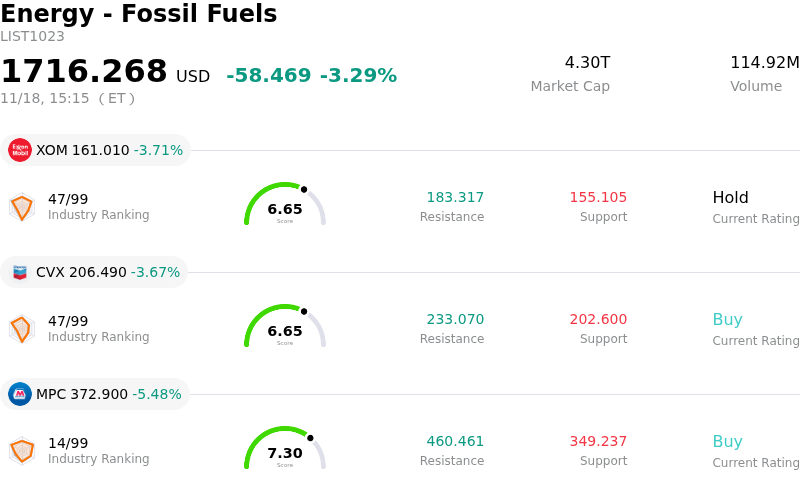
Petroleo Brasileiro SA Petrobras (PBR) moved down by 3.48%. The Energy - Fossil Fuels sector is down by 3.29%. The company underperformed the industry. Top 3 stocks by turnover in the sector: Exxon Mobil Corp (XOM) down 3.71%; Chevron Corp (CVX) down 3.67%; Marathon Petroleum Corp (MPC) down 5.48%.
What is driving Petroleo Brasileiro SA Petrobras (PBR)’s stock price down today?
Petroleo Brasileiro S.A. experienced noticeable downward pressure during the trading session, primarily driven by a sharp contraction in global crude oil benchmarks and renewed investor sensitivity regarding Brazilian state-led capital allocation. As an integrated energy major with significant exposure to global commodity cycles, the ADRs track broader softness across Brent and West Texas Intermediate futures, where lingering concerns over global macroeconomic demand and expanding non-OPEC supply continue to weigh on exploration and production sentiment.
Compounding the pressure from international commodity markets are domestic governance and policy dynamics that frequently overhang the company. Market participants remain vigilant regarding potential government intervention in the state-run oil company's corporate strategy. Persistent debate surrounding fuel pricing parity versus domestic consumer inflation management, alongside strategic shifts favoring elevated refining investments over shareholder distributions, has caused dividend-focused institutional investors to pare exposure. Any indications of expanded capital expenditure guidance toward lower-return domestic industrial projects typically dilute the valuation premium historically awarded to the company's pre-salt deepwater assets.
Currency volatility and broader emerging market asset reallocation also contributed to the session's weakness. A softening Brazilian Real relative to the U.S. Dollar automatically dampens ADR valuations and elevates foreign exchange translation risk on foreign-denominated debt obligations. During risk-off trading environments across global equity markets, institutional capital tends to rotate out of state-controlled Latin American commodity plays in favor of defensive domestic assets, accelerating sector-wide outflows.
From an institutional standpoint, the pullback underscores the dual vulnerability the company faces from both cyclical hydrocarbon pricing and sovereign political risk. While Petroleo Brasileiro maintains exceptionally low pre-salt lifting costs and robust underlying cash flow generation, near-term performance remains constrained by headline sensitivity surrounding shareholder distributions and executive-level governance priorities. Portfolio managers will likely maintain a cautious stance until clear visibility emerges on dividend sustainability and the upcoming multi-year strategic investment outline.
Technical Analysis of Petroleo Brasileiro SA Petrobras (PBR)
Technically, Petroleo Brasileiro SA Petrobras (PBR) shows a MACD (12,26,9) value of -0.691, indicating a sell signal. The RSI at 23.519 suggests sell condition and the Williams %R at 97.555 suggests oversold condition. Please monitor closely.
Fundamental Analysis of Petroleo Brasileiro SA Petrobras (PBR)
Petroleo Brasileiro SA Petrobras (PBR) is in the Energy - Fossil Fuels industry. Its latest annual revenue is $88.94B, ranking 11 in the industry. The net profit is $19.69B, ranking 3 in the industry. Company Profile
Over the past month, multiple analysts have rated the company as Buy, with an average price target of $23.26, a high of $31.00, and a low of $14.50.
More details about Petroleo Brasileiro SA Petrobras (PBR)
Company Specific Risks:
- Dividend Distribution Miss and Payout Contraction: Petrobras declared a quarterly dividend distribution of $2.7 billion, falling substantially short of consensus expectations of $3.8 billion and signaling compressed cash distributions to equity holders under its 45% free cash flow formula.
- Aggressive CapEx Guidance Escalation: Management escalated full-year capital expenditure forecasts to a range of $21 billion to $22 billion to accelerate offshore platform construction, triggering institutional concern that heightened capital intensity will persistently drain available free cash flow.
- Institutional Price Target Reductions: Wall Street firms revised price targets downward, highlighted by Citigroup cutting its target to $18.50 alongside cuts from JPMorgan Chase, reflecting reduced confidence in dividend yields, capex discipline, and domestic refining margin retention.
- Downstream Re-regulation and Capital Diversion: Lingering domestic fuel pricing scrutiny alongside capital deployment into government-aligned, lower-return transition initiatives—such as the full buyout of biofuel logistics operator Logum—threatens downstream margins and increases exposure to state-directed intervention.
This article may include AI-generated content that is human-reviewed, which is for reference and general information purposes only and does not constitute investment advice.
Recommended Articles







Comments (0)
Click the $ button, enter the symbol, and select to link a stock, ETF, or other ticker.