


 Discount


ConocoPhillips Stock (COP) Moved Down by 3.11% on Nov 18: What Signal Does It Send?


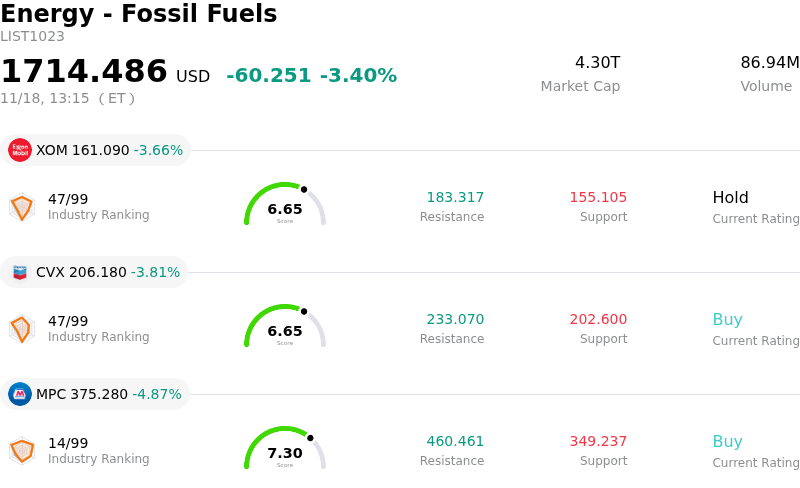
ConocoPhillips (COP) moved down by 3.11%. The Energy - Fossil Fuels sector is down by 3.40%. The company outperformed the industry. Top 3 stocks by turnover in the sector: Exxon Mobil Corp (XOM) down 3.66%; Chevron Corp (CVX) down 3.81%; Marathon Petroleum Corp (MPC) down 4.87%.
What is driving ConocoPhillips (COP)’s stock price down today?
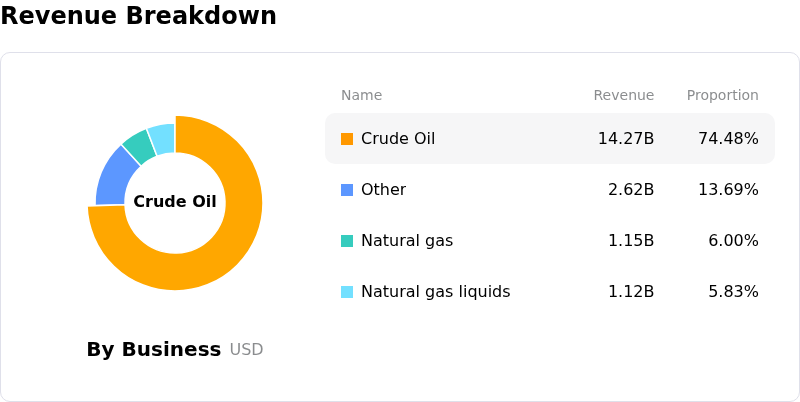
The pullback in ConocoPhillips reflects mounting pressure across the upstream energy complex, primarily triggered by a retreat in global crude oil benchmarks. Softer demand indicators across major industrial economies, compounded by a firmer U.S. dollar, have reinforced a cautious outlook for global petroleum consumption. Because ConocoPhillips operates as an exploration and production pure-play with direct sensitivity to unhedged realized prices for oil, natural gas, and natural gas liquids, any sudden weakening in underlying commodity benchmarks prompts immediate downward revisions to near-term cash flow projections.
Industry dynamics and supply concerns have further amplified sector-wide risk aversion. Rising commercial inventories alongside persistent market debates regarding production policy discipline among major producer alliances have heightened fears of medium-term market oversupply. These broader energy market imbalances have led institutional investors to de-risk cyclical energy holdings, triggering sector-wide portfolio adjustments away from upstream equities into more defensive market segments.
Company-specific capital allocation and cost considerations have added to the selling pressure. While ConocoPhillips maintains a strong balance sheet and a track record of returning capital through dividends and share repurchases, market participants remain sensitive to operational spending trajectories and reinvestment discipline. Lingering concerns over inflationary pressures on oilfield services, long-term capital expenditure commitments on major international LNG and deepwater ventures, and the operational integration of acquired assets create friction during periods of softer pricing realizations.
In the broader market context, elevated equity volatility and algorithmic trading tied to energy commodity futures accelerated intraday turnover. As systematic funds reacted to technical breakdown levels in crude contracts, automated selling spilled into large-cap energy equities. In the absence of an immediate upside catalyst to offset the negative commodity momentum, ConocoPhillips faced persistent institutional distribution throughout the session.
Technical Analysis of ConocoPhillips (COP)
Technically, ConocoPhillips (COP) shows a MACD (12,26,9) value of -1.640, indicating a neutral signal. The RSI at 43.237 suggests neutral condition and the Williams %R at 79.108 suggests sell condition. Please monitor closely.
Fundamental Analysis of ConocoPhillips (COP)
ConocoPhillips (COP) is in the Energy - Fossil Fuels industry. Its latest annual revenue is $58.94B, ranking 13 in the industry. The net profit is $7.96B, ranking 7 in the industry. Company Profile
Over the past month, multiple analysts have rated the company as Buy, with an average price target of $151.36, a high of $189.00, and a low of $119.34.
More details about ConocoPhillips (COP)
Company Specific Risks:
- Extreme Crude Oil Price Sensitivity: Institutional analyst downgrades highlight that ConocoPhillips remains disproportionately vulnerable to crude oil declines due to a portfolio where 66% of proved reserves are in liquids; internal financial sensitivity models show that every $1.00/bbl drop in crude prices reduces net income by approximately $395 million, creating severe downside earnings volatility in softening benchmark environments.
- Underlying Production Contraction: Recent operational disclosures from ConocoPhillips' Form 8-K report an underlying pro forma production decline of 2% (40 MBOED) year-over-year, indicating ongoing asset depletion headwinds that jeopardize management's multi-year execution target of expanding free cash flow to $7 billion by 2029.
- Valuation Ceiling and Institutional Downgrades: Wall Street firms, including Freedom Broker, have downgraded the stock from Buy to Hold, citing an overextended share price rally near 52-week highs that leaves limited margin for multiple expansion and triggers intraday profit-taking as capital returns are already priced to perfection.
- High-Cost Bitumen Exposure and Margin Compression: With 5% of proved reserves and up to 5% of production tied to Canadian oil sands, ConocoPhillips faces elevated cost-of-supply hurdles, leaving its Canadian segment exposed to rapid margin compression and potential operating losses should heavy crude price differentials widen.
This article may include AI-generated content that is human-reviewed, which is for reference and general information purposes only and does not constitute investment advice.
Recommended Articles








Comments (0)
Click the $ button, enter the symbol, and select to link a stock, ETF, or other ticker.