


 Discount


Merck & Co Inc Stock (MRK) Moved Down by 3.35% on Nov 18: Facts Behind the Movement


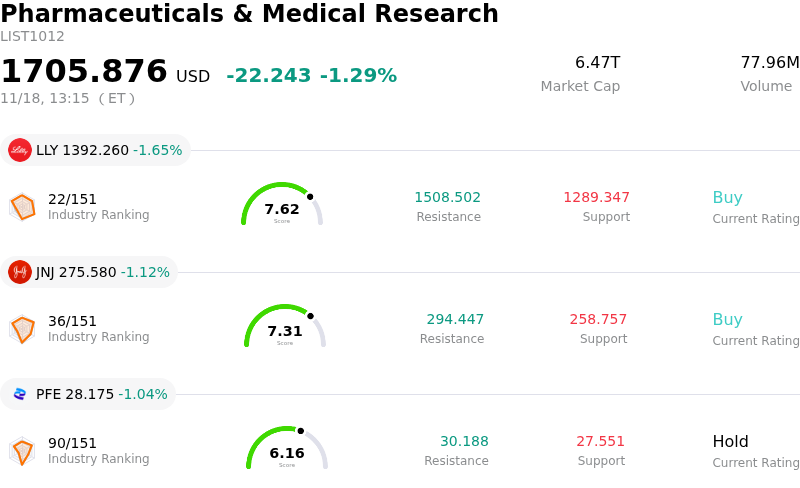
Merck & Co Inc (MRK) moved down by 3.35%. The Pharmaceuticals & Medical Research sector is down by 1.29%. The company underperformed the industry. Top 3 stocks by turnover in the sector: Eli Lilly and Co (LLY) down 1.65%; Johnson & Johnson (JNJ) down 1.12%; Pfizer Inc (PFE) down 1.04%.
What is driving Merck & Co Inc (MRK)’s stock price down today?
Merck experienced notable downward pressure during the trading session, reflecting a confluence of company-specific operational headwinds and broader sector-wide rotation within large-cap pharmaceuticals. Institutional investors demonstrated heightened caution as scrutiny intensified over the durability of the company’s core commercial franchises and the execution timeline of its later-stage clinical pipeline.
A primary catalyst weighing on investor sentiment centers on the long-term revenue concentration surrounding its flagship oncology therapy, Keytruda. With the drug approaching its patent cliff later in the decade, the market remains acutely sensitive to any incremental risk regarding biosimilar erosion, clinical trial timelines for next-generation combination regimens, or regulatory developments surrounding subcutaneous delivery formulations. Additionally, persistent demand friction and inventory adjustments in key overseas markets for other high-margin products, particularly the Gardasil vaccine franchise, continue to feed concerns regarding near-term international volume growth.
Broader industry dynamics and macro factors have compounded the selling pressure. Large-cap biopharma continues to navigate an evolving policy and regulatory landscape characterized by heightened scrutiny over domestic drug pricing, patent thickets, and Medicare negotiation frameworks. At the same time, shifting macroeconomic sentiment and fluctuations in sovereign bond yields have prompted active portfolio managers to pare back exposure to traditional defensive healthcare names, redirecting capital toward higher-beta sectors or rotating into biopharma peers with fewer near-term patent expiration overhangs.
From an institutional perspective, the pullback underscores the market’s demand for tangible proof of pipeline replacement power. While Merck maintains a strong balance sheet, solid free cash flow generation, and an active business development strategy targeting targeted oncology and cardiometabolic therapies, near-term multiples are likely to remain constrained until management can demonstrate sustained organic growth beyond its primary blockbuster assets. In the immediate horizon, market participants will closely monitor upcoming clinical data readouts and management guidance on global demand trends to gauge the underlying stability of earnings.
Technical Analysis of Merck & Co Inc (MRK)
Technically, Merck & Co Inc (MRK) shows a MACD (12,26,9) value of -1.549, indicating a neutral signal. The RSI at 38.181 suggests neutral condition and the Williams %R at 99.865 suggests oversold condition. Please monitor closely.
Fundamental Analysis of Merck & Co Inc (MRK)
Merck & Co Inc (MRK) is in the Pharmaceuticals & Medical Research industry. Its latest annual revenue is $65.01B, ranking 5 in the industry. The net profit is $18.25B, ranking 3 in the industry. Company Profile
Over the past month, multiple analysts have rated the company as Buy, with an average price target of $158.39, a high of $186.00, and a low of $105.00.
More details about Merck & Co Inc (MRK)
Company Specific Risks:
- Termination of Phase 3 Nemtabrutinib Program: Merck announced the immediate discontinuation of its entire late-stage BELLWAVE development program (including Phase 3 trials BELLWAVE-011, BELLWAVE-008, and BELLWAVE-010) for oral BTK inhibitor nemtabrutinib after an external Data Monitoring Committee determined that clinical risks outweighed therapeutic benefits in hematologic cancers, eliminating a flagship pipeline candidate from its $2.7 billion ArQule acquisition and risking future intangible asset impairment charges.
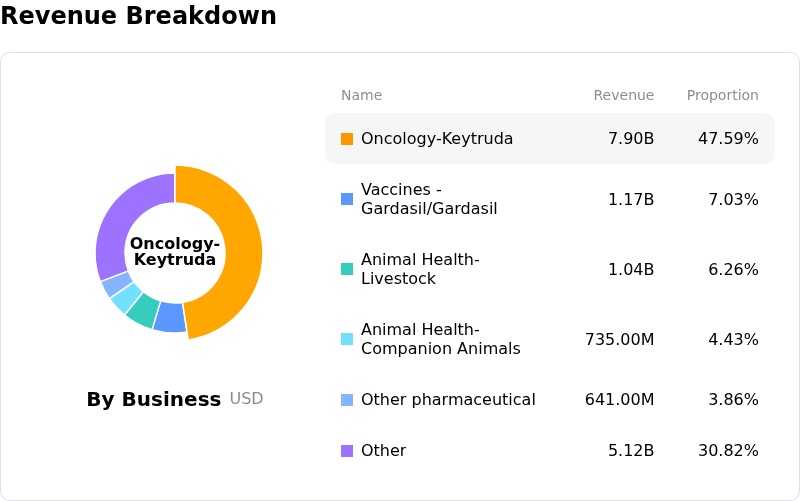
- Heightened Post-Loss-of-Exclusivity Exposure for Keytruda: The failure of prospective pipeline contributors exacerbates structural vulnerabilities tied to the impending 2028 patent cliff for blockbuster PD-1 therapy Keytruda, intensifying analyst scrutiny over Merck's heavy top-line concentration in a single asset that generates nearly half of its total revenues.
- Persistent Revenue Contraction in the Gardasil Vaccine Franchise: Merck continues to battle severe volume erosion and demand deceleration in its core non-oncology growth pillar, Gardasil/Gardasil 9, driven by sustained market-access disruptions and reduced purchasing trends in major international markets like China.
- Capital Allocation Friction and Margin Dilution from Aggressive M&A: Substantial acquisition-related accounting expenses and integration costs from recent pipeline buyouts have sharply compressed adjusted operating margins and diluted near-term earnings guidance, elevating financial downside if recently acquired clinical-stage assets fail to achieve commercialization.
This article may include AI-generated content that is human-reviewed, which is for reference and general information purposes only and does not constitute investment advice.
Recommended Articles







Comments (0)
Click the $ button, enter the symbol, and select to link a stock, ETF, or other ticker.