


ConocoPhillips Stock (COP) Moved Down by 3.28% on Nov 2: A Full Analysis


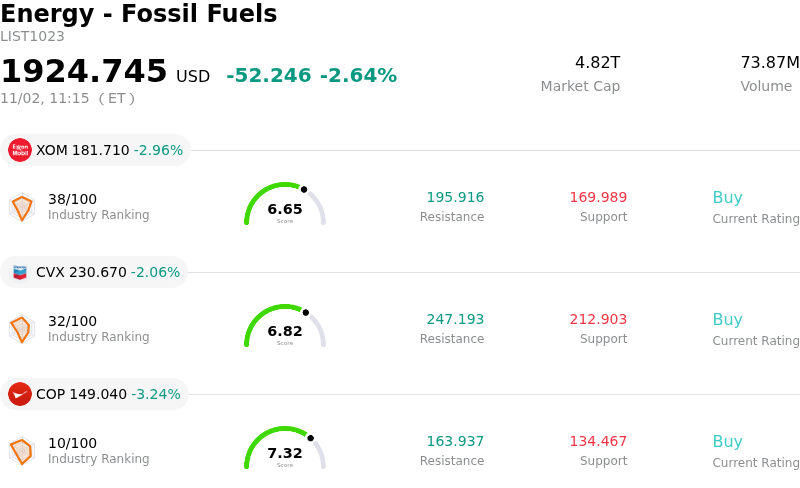
ConocoPhillips (COP) moved down by 3.28%. The Energy - Fossil Fuels sector is down by 2.64%. The company underperformed the industry. Top 3 stocks by turnover in the sector: Exxon Mobil Corp (XOM) down 2.98%; Chevron Corp (CVX) down 2.06%; ConocoPhillips (COP) down 3.24%.
What is driving ConocoPhillips (COP)’s stock price down today?
The primary driver behind the intraday pullback in ConocoPhillips was a sharp decline in underlying benchmark crude oil prices. Headline developments regarding diplomatic negotiations in the Middle East eased immediate concerns over shipping bottlenecks and global crude supply constraints, triggering a sector-wide retreat across energy equities. As an independent exploration and production company with direct sensitivity to commodity price realizations, ConocoPhillips tends to amplify broad oil price volatility compared to integrated energy peers that benefit from downstream refining margin offsets.
Beyond broad commodity weakness, company-specific positioning played a major role in the session's trading activity. Shares of ConocoPhillips had surged significantly over the preceding weeks, reaching elevated technical levels and pushing momentum indicators into overbought territory. With the company scheduled to report its third-quarter financial results later in the week, market participants engaged in tactical profit-taking and portfolio de-risking. Because Wall Street analysts had steadily revised earnings and revenue consensus estimates upward leading into the release, the heightened expectations prompted short-term traders to trim positions ahead of the event.
Despite the immediate downward pressure, the structural backdrop for ConocoPhillips remains supported by solid operational execution. Institutional ownership in the stock remains high, and recent portfolio disclosures indicate ongoing interest from major institutional managers. The company continues to demonstrate strong free cash flow generation, disciplined capital expenditures, and an active shareholder return strategy. Consequently, the recent weakness reflects short-term commodity price digestion and pre-earnings repositioning rather than a fundamental deterioration in the firm's long-term outlook.
Technical Analysis of ConocoPhillips (COP)
Technically, ConocoPhillips (COP) shows a MACD (12,26,9) value of 0.758, indicating a buy signal. The RSI at 62.143 suggests neutral condition and the Williams %R at 38.901 suggests buy condition. Please monitor closely.
Fundamental Analysis of ConocoPhillips (COP)
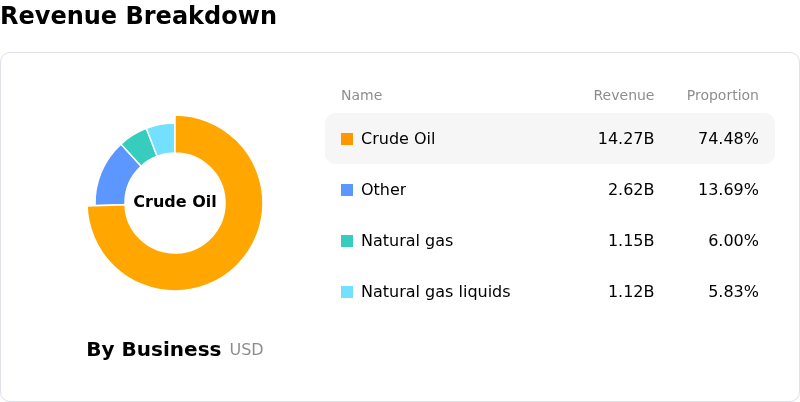
ConocoPhillips (COP) is in the Energy - Fossil Fuels industry. Its latest annual revenue is $58.94B, ranking 13 in the industry. The net profit is $7.96B, ranking 7 in the industry. Company Profile
Over the past month, multiple analysts have rated the company as Buy, with an average price target of $150.90, a high of $189.00, and a low of $119.34.
More details about ConocoPhillips (COP)
Company Specific Risks:
- Technical Overbought Conditions and Valuation Downgrade Risk: With the stock trading near its 52-week high of $154 following a sharp rally, technical readings above 70 on the Relative Strength Index (RSI) raise immediate risks of profit-taking, backed by recent analyst downgrades citing diminished upside potential.
- Pre-Earnings Execution Scrutiny Under Executive Transition: Heading into the upcoming Q3 earnings release, the stock faces heightened volatility as the event marks the first quarterly report under new CEO Andy O'Brien, placing strict focus on whether the company can hit its Q3 production target of 2.29–2.32 million BOE/day while maintaining operating cost discipline.
- Pure-Play Upstream Commodity Price Sensitivity: Unlike integrated peers with downstream refining buffers, ConocoPhillips operates almost exclusively in upstream exploration and production, leaving its cash flow and earnings highly vulnerable to intraday pullbacks in benchmark crude oil and natural gas prices.
- Operational Headwinds and Regional Restructuring: Recent workforce reductions in Alberta, alongside ongoing geopolitical and operational friction in Middle Eastern production zones, present localized operational risk and ongoing operational disruption concerns.
This article may include AI-generated content that is human-reviewed, which is for reference and general information purposes only and does not constitute investment advice.
Recommended Articles







Comments (0)
Click the $ button, enter the symbol, and select to link a stock, ETF, or other ticker.