


Home Depot Inc Stock (HD) Moved Down by 3.01% on Oct 23: What Investors Need To Know



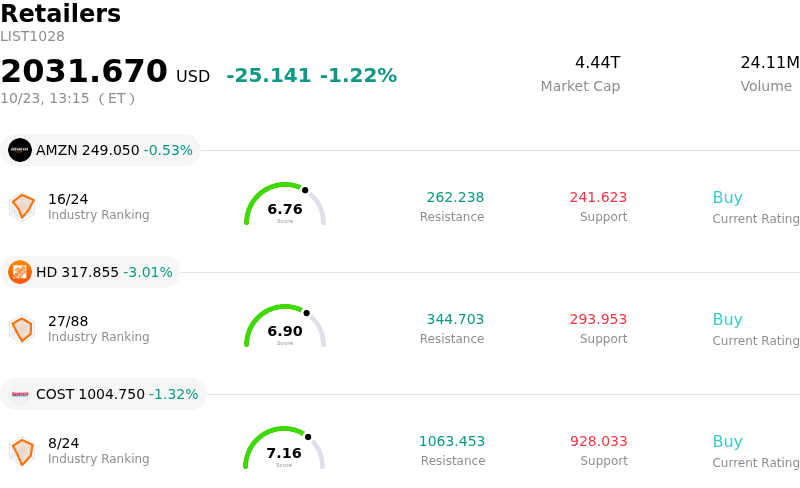
Home Depot Inc (HD) moved down by 3.01%. The Retailers sector is down by 1.22%. The company underperformed the industry. Top 3 stocks by turnover in the sector: Amazon.com Inc (AMZN) down 0.53%; Home Depot Inc (HD) down 3.01%; Costco Wholesale Corp (COST) down 1.32%.
What is driving Home Depot Inc (HD)’s stock price down today?
The downward pressure and heightened intraday volatility in Home Depot reflect persistent headwinds originating from the broader housing market and macroeconomic environment. High mortgage rates and elevated benchmark Treasury yields continue to suppress U.S. residential real estate turnover. As home affordability remains constrained, consumers are increasingly deferring large-scale, financing-sensitive home renovation and remodeling projects. Because top-line growth for home improvement retailers is closely tied to home sales volume and major renovation activity, ongoing weakness in existing home sales acts as a primary drag on forward revenue expectations.
Operational expense headwinds and margin considerations have also prompted institutional caution. Rising input expenditures, including energy and supply chain costs, threaten to trim operating margins and offset potential gross margin tailwinds. Additionally, recent strategic acquisitions designed to expand Home Depot's professional contractor ecosystem bring near-term product mix shifts and modest margin dilution. While resilient performance in routine maintenance and professional contractor channels provides a structural floor for cash flows, corporate leadership has noted that a broader demand inflection has yet to materialize, keeping market sentiment cautious.
From a market dynamics perspective, today's retreat follows recent temporary rebounds, triggering technical profit-taking across consumer discretionary holdings. Heightened volatility during the trading day illustrates an active debate between long-term institutional investors focused on Home Depot's healthy balance sheet and dividend durability versus short-term traders reacting to persistent macroeconomic friction. With insider sales in recent months and cautious positioning across the retail sector, investors appear to be recalibrating portfolios ahead of the company's scheduled third-quarter financial results.
Technical Analysis of Home Depot Inc (HD)
Technically, Home Depot Inc (HD) shows a MACD (12,26,9) value of 8.894, indicating a neutral signal. The RSI at 60.787 suggests neutral condition and the Williams %R at 21.819 suggests buy condition. Please monitor closely.
Media Coverage of Home Depot Inc (HD)
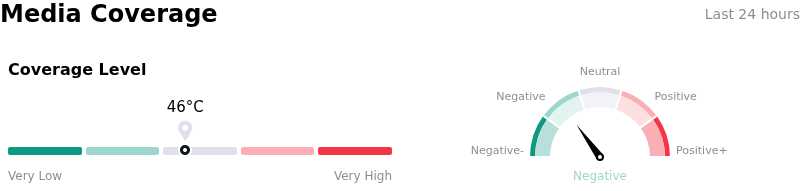
In terms of media coverage, Home Depot Inc (HD) shows a coverage score of 46, indicating a moderate level of media attention. The overall market sentiment index is currently in bearish zone.
Fundamental Analysis of Home Depot Inc (HD)
Home Depot Inc (HD) is in the Retailers industry. Its latest annual revenue is $164.68B, ranking 1 in the industry. The net profit is $14.16B, ranking 1 in the industry. Company Profile
Over the past month, multiple analysts have rated the company as Buy, with an average price target of $373.64, a high of $425.00, and a low of $255.00.
More details about Home Depot Inc (HD)
Company Specific Risks:
- Persistently Frozen Housing Market and High Mortgage Rates: Elevated 30-year mortgage rates hovering around 7.3% to 7.4% and multi-year low housing turnover continue to depress large-ticket home improvement and professional remodeling projects, with management acknowledging that an operational demand inflection has yet to begin.
- Input Cost Pressures and Acquisition Integration Drag: Higher energy, fuel, and product input costs, alongside expenses associated with integrating recent large-scale building-products acquisitions like GMS into the SRS unit, are straining profitability and causing operating income growth to lag overall net sales growth.
- Interim Leadership Reliance amid CEO Medical Leave: CEO Ted Decker's ongoing temporary medical leave leaves CFO Richard McPhail dual-tasked with primary executive oversight and managing Pro business subsidiaries, creating key-person operational and execution risks during a period of macroeconomic uncertainty.
- Persistent Insider Capital Outflows and Operational Friction: Senior corporate executives have engaged in sustained net share sales over the past year with zero insider purchases recorded, while public and operational friction surrounding store parking-lot enforcement events creates headline risk and potential customer disruption.
This article may include AI-generated content that is human-reviewed, which is for reference and general information purposes only and does not constitute investment advice.
Recommended Articles








Comments (0)
Click the $ button, enter the symbol, and select to link a stock, ETF, or other ticker.