


Shell PLC Stock (SHEL) Moved Down by 3.41% on Sep 16: Key Drivers Unveiled



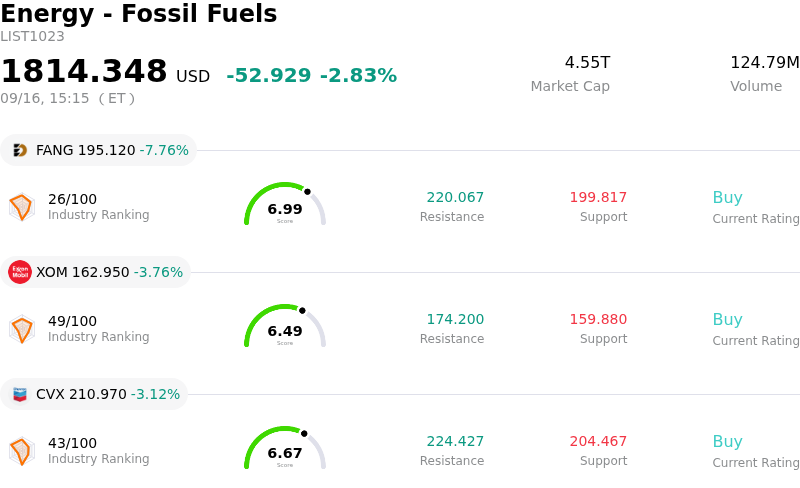
Shell PLC (SHEL) moved down by 3.41%. The Energy - Fossil Fuels sector is down by 2.83%. The company underperformed the industry. Top 3 stocks by turnover in the sector: Diamondback Energy Inc (FANG) down 7.76%; Exxon Mobil Corp (XOM) down 3.76%; Chevron Corp (CVX) down 3.12%.
What is driving Shell PLC (SHEL)’s stock price down today?
Shell plc experienced notable downward pressure during the trading session, primarily driven by a sharp retreat in underlying benchmark crude oil prices. Energy commodities pulled back after market data revealed an unexpected and substantial accumulation in U.S. crude inventories. Concurrently, supply disruption concerns in the Middle East softened following reports that alternative shipping routes were being utilized to maintain export flows, easing immediate market fears of crude shortages. As benchmark crude futures pulled back, integrated oil and gas majors faced immediate revenue realization headwinds, dragging down equity valuations across the sector.
In addition to softer commodity pricing, profit-taking activity across energy equities contributed significantly to the stock's lower trajectory. Shell had recently traded near multi-month highs following strong quarterly financial results, strong earnings estimates, and aggressive capital execution. With the broader market adopting a risk-on tone in non-energy sectors while anticipating central bank monetary policy announcements, institutional market participants trimmed exposure to recent energy outperformers to lock in gains. This rotation left energy equities as noticeable underperformers relative to the broader market index.
Despite the short-term pullback dictated by commodity fluctuations and macro portfolio rebalancing, Shell's underlying fundamental picture remains intact. The company continues to execute its ongoing share buyback program across listing venues, providing baseline demand for shares and reducing overall share count to support per-share metric growth. Institutional holdings remain supportive and analyst sentiment leans constructive, citing favorable intrinsic cash flow valuation and disciplined capital expenditure. Looking ahead, share performance will likely remain closely tied to international crude price momentum while relying on corporate capital returns to cushion broader sector volatility.
Technical Analysis of Shell PLC (SHEL)
Technically, Shell PLC (SHEL) shows a MACD (12,26,9) value of 0.390, indicating a buy signal. The RSI at 59.053 suggests neutral condition and the Williams %R at 39.264 suggests buy condition. Please monitor closely.
Fundamental Analysis of Shell PLC (SHEL)
Shell PLC (SHEL) is in the Energy - Fossil Fuels industry. Its latest annual revenue is $266.89B, ranking 2 in the industry. The net profit is $17.84B, ranking 4 in the industry. Company Profile
Over the past month, multiple analysts have rated the company as Buy, with an average price target of $98.33, a high of $120.60, and a low of $46.46.
More details about Shell PLC (SHEL)
Company Specific Risks:
- ARC Resources Integration and Debt Load: Shell's recent completion of its $16.5 billion acquisition of Canada's ARC Resources adds $2.5 billion in net debt and involved issuing $10.6 billion in new equity, creating integration execution risks and potential share-count dilution that could constrain capital flexibility.
- Chemicals Segment Restructuring and Margin Drag: Persistent margin weakness and operational headwinds across global refining and chemicals continue to pressure group cash flows, prompting ongoing asset sales and high-grading efforts that carry execution and impairment risks.
- Geopolitical Exposure to LNG and Supply Disruptions: Because Shell is heavily reliant on its global LNG trading operations and Middle Eastern assets—including production in Qatar and regional shipping routes—geopolitical conflicts present direct threats to supply continuity and trading arbitrage profits.
- European Regulatory Disadvantage and Fiscal Vulnerabilities: Shell remains exposed to European regulatory burdens, net-zero compliance costs, and potential local windfall profit taxes, maintaining a structural valuation discount relative to U.S.-based integrated energy peers.
This article may include AI-generated content that is human-reviewed, which is for reference and general information purposes only and does not constitute investment advice.
Recommended Articles







Comments (0)
Click the $ button, enter the symbol, and select to link a stock, ETF, or other ticker.