


GBP/USD (GBPUSD) is down 0.58% on Sep 16: The Reason Has Emerged



GBP/USD (GBPUSD) is down 0.58% at Sep 16 14:40(ET), now at $1.33966, with a 7-day down of 1.09%.
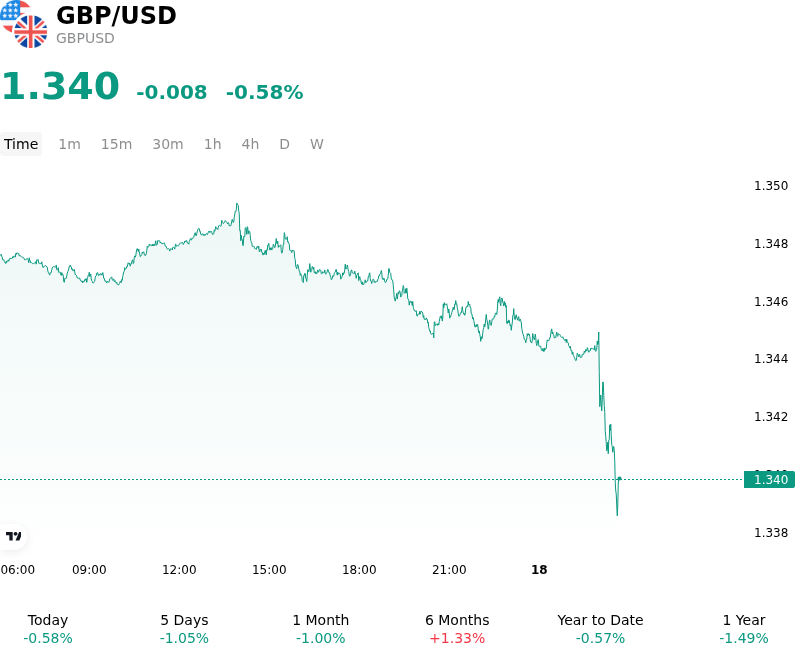
What is driving GBP/USD (GBPUSD)’s stock price down today?
The pullback in GBP/USD was primarily driven by a widening interest-rate differential in favor of the U.S. Dollar following the Federal Reserve's policy decision to raise the federal funds target range by 25 basis points to 3.75%–4.00%. This move shifted the upper bound of U.S. interest rates above the Bank of England's 3.75% benchmark rate, effectively eliminating the interest-rate premium that had previously provided structural support to Sterling. Hawkish guidance from the Federal Reserve, anchored by economic resilience and rate projections signaling potential further tightening, drove U.S. Treasury yields higher and triggered broad-based demand for the greenback.
On the British side of the pair, domestic data releases failed to deliver the hawkish impetus required to support the currency. While August headline consumer price inflation accelerated to 3.1%, the figure matched consensus expectations, while underlying price pressures offered little urgency for an immediate Bank of England response. Core inflation remained flat at 2.6%, and services inflation—the central bank’s favored measure of domestic price stickiness—came in slightly below forecasts at 3.4%. Following recent evidence of cooling wage growth and rising labor market slack, the inflation report prompted market participants to pare back near-term rate-hike expectations for the Bank of England.
Beyond central bank policy dynamics, Sterling remains constrained by a persistent fiscal risk premium ahead of the upcoming UK government budget release. Elevated gilt yields reflect sovereign supply and fiscal concerns rather than expectations of monetary tightening, limiting their ability to support the exchange rate. Additionally, cautious global risk sentiment and elevated energy prices reinforced demand for safe-haven assets, benefiting the greenback over pro-cyclical currencies. In the short term, GBP/USD remains structurally vulnerable to downside risk until interest-rate differentials stabilize or the Bank of England delivers a clear hawkish pivot to re-establish its yield advantage.
Technical Analysis of GBP/USD (GBPUSD)
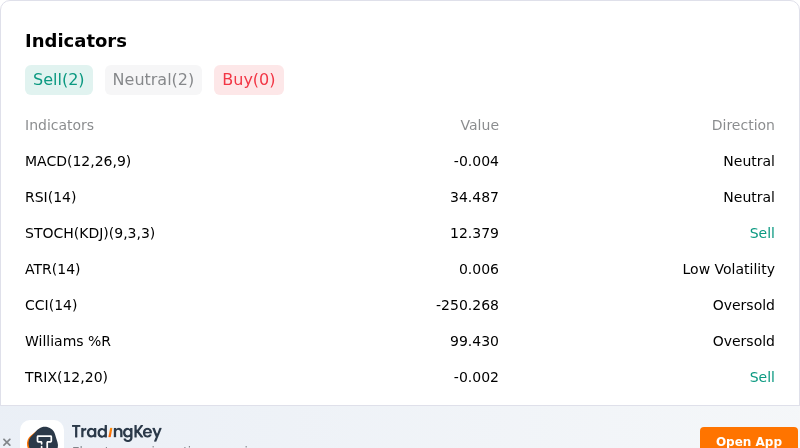
Technically, GBP/USD (GBPUSD) shows a MACD (12,26,9) value of -0.004, indicating a neutral signal. The RSI at 34.487 suggests neutral condition and the Williams %R at 99.430 suggests oversold condition. Please monitor closely.
More details about GBP/USD (GBPUSD)
Recent Events and Risks:
- Dovish Repricing Risk on BoE Rate Expectations: Markets have priced in aggressive Bank of England rate hikes following elevated energy prices, but analysts warn Sterling is highly vulnerable to downside repricing. With UK private-sector wage growth slowing to 2.9% and the economy operating below capacity, any dovish signaling from the BoE regarding its 3.75% policy rate could trigger sharp selling in GBP/USD.
- US Dollar Yield Spikes and Safe-Haven Capital Inflows: Escalate Middle East geopolitical tensions and rising global oil benchmark prices have driven safe-haven flows into the US dollar while pushing 10-year US Treasury yields above 5%. The widening policy rate trajectory favoring the Federal Reserve increases yield differential pressure against Sterling, weighing heavily on intraday GBP/USD price action.
- UK Labor Market Weakness and Stagflation Risks: Recent economic data revealed UK claimant counts jumping to a two-year high alongside softening wage inflation. The combination of sticky energy-driven CPI and a cooling employment sector raises stagflation concerns for the UK economy, constraining the central bank's capacity to tighten policy without deepening economic downside.
- UK Fiscal Policy Deliberations and Gilt Market Volatility: Approaching UK fiscal budget discussions and elevated gilt issuance plans introduce renewed fiscal policy uncertainty. Potential fiscal tightening or sudden yield volatility in the UK sovereign bond market poses a direct threat to domestic growth sentiment and institutional confidence in Sterling assets.
This article may include AI-generated content that is human-reviewed, which is for reference and general information purposes only and does not constitute investment advice.
Recommended Articles









Comments (0)
Click the $ button, enter the symbol, and select to link a stock, ETF, or other ticker.