


HSBC Holdings PLC Stock (HSBC) Moved Down by 3.09% on Aug 5: Drivers Behind the Movement



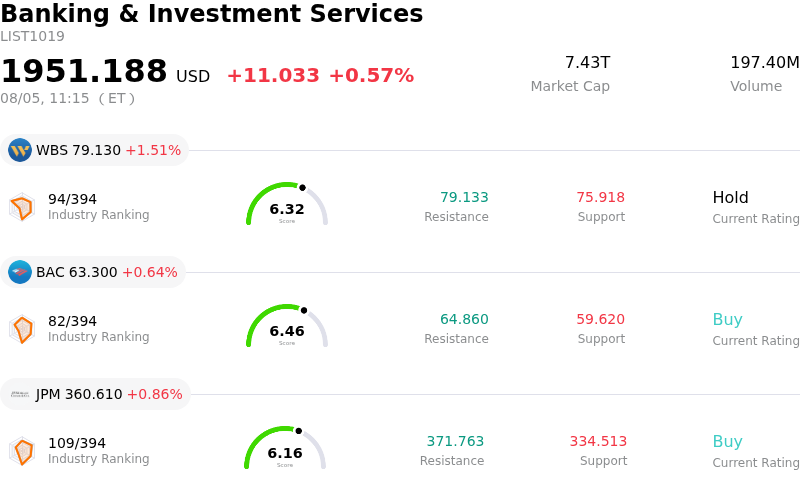
HSBC Holdings PLC (HSBC) moved down by 3.09%. The Banking & Investment Services sector is up by 0.57%. The company underperformed the industry. Top 3 stocks by turnover in the sector: Webster Financial Corp (WBS) up 1.51%; Bank of America Corp (BAC) up 0.64%; JPMorgan Chase & Co (JPM) up 0.86%.
What is driving HSBC Holdings PLC (HSBC)’s stock price down today?
HSBC’s recent price decline reflects a confluence of macroeconomic headwinds and sector-specific concerns that have weighed heavily on institutional sentiment. The primary driver appears to be a shift in the global interest rate environment. As central banks, particularly the Federal Reserve and the Bank of England, signal a transition toward more aggressive monetary easing, investors are increasingly concerned about the erosion of Net Interest Margins. For a bank like HSBC, which has benefited significantly from the higher-for-longer rate environment of previous years, the prospect of narrower spreads between lending and borrowing costs directly impacts profitability projections.
Geopolitical tensions continue to cast a shadow over the bank’s dual-hub strategy. Recent regulatory developments in East Asia have introduced new uncertainties regarding capital mobility and compliance costs. Given HSBC’s substantial exposure to the Hong Kong and mainland China markets, any perceived friction in cross-border financial flows or shifts in regional economic stability leads to immediate risk-off behavior among global asset managers. The intraday volatility suggests that market participants are reacting to specific headlines regarding trade policy or regional growth forecasts that could dampen loan demand in the bank’s most profitable geography.
Internal financial performance indicators also play a role in the current downward pressure. Market sentiment has been dampened by concerns regarding rising loan loss provisions, particularly within the commercial real estate sector. While the bank has maintained a robust capital position, the necessity of setting aside larger reserves for potential defaults signals a more cautious institutional outlook on credit quality. This shift often prompts professional investors to rebalance their portfolios, moving away from large-cap financial institutions toward more defensive sectors until the credit cycle shows signs of stabilization.
Finally, the broader market environment is characterized by an uptick in volatility and a general retreat from banking equities. As global growth expectations are revised downward, the financial sector often serves as a proxy for economic health. The selling pressure seen is not isolated to HSBC but is exacerbated by its systemic importance. Analysts have begun adjusting their forward-looking earnings estimates, reflecting a consensus that the peak earnings cycle for global lenders may have passed. Without a catalyst to prove resilient revenue growth in a lower-rate environment, the stock remains vulnerable to continued volatility and downward revisions.
Technical Analysis of HSBC Holdings PLC (HSBC)
Technically, HSBC Holdings PLC (HSBC) shows a MACD (12,26,9) value of 0.664, indicating a buy signal. The RSI at 63.468 suggests neutral condition and the Williams %R at 19.685 suggests overbought condition. Please monitor closely.
Fundamental Analysis of HSBC Holdings PLC (HSBC)
HSBC Holdings PLC (HSBC) is in the Banking & Investment Services industry. Its latest annual revenue is $69.62B, ranking 4 in the industry. The net profit is $21.10B, ranking 3 in the industry. Company Profile
Over the past month, multiple analysts have rated the company as Buy, with an average price target of $107.50, a high of $115.24, and a low of $99.75.
More details about HSBC Holdings PLC (HSBC)
Company Specific Risks:
- Net Interest Margin Compression: Financial disclosures from the H1 2026 interim report indicate a sharper-than-anticipated decline in net interest income as global rate cuts begin to erode lending spreads, leading to immediate analyst downgrades of full-year revenue targets.
- China Commercial Real Estate Exposure: A surprise increase in expected credit loss (ECL) provisions related to the mainland China property sector has reignited concerns over asset quality and the long-term recovery of the bank's primary Asian growth engine.
- Restructuring Execution Costs: Recent management commentary regarding the "simplification" of global banking and commercial divisions has highlighted significant one-off restructuring charges that threaten to exceed previous guidance and suppress short-term return on equity.
- Regulatory Capital Constraints: New guidance from the Prudential Regulation Authority concerning systemic risk buffers has introduced uncertainty regarding the bank's surplus capital, potentially limiting the scale of projected share buybacks for the remainder of the fiscal year.
This article may include AI-generated content that is human-reviewed, which is for reference and general information purposes only and does not constitute investment advice.
Recommended Articles







Comments (0)
Click the $ button, enter the symbol, and select to link a stock, ETF, or other ticker.