


USD/JPY (USDJPY) is up 0.69% on Jul 31: The Reason Has Emerged



USD/JPY (USDJPY) is up 0.69% at Jul 31 00:00(ET), now at $160.609, with a 7-day down of 1.96%.
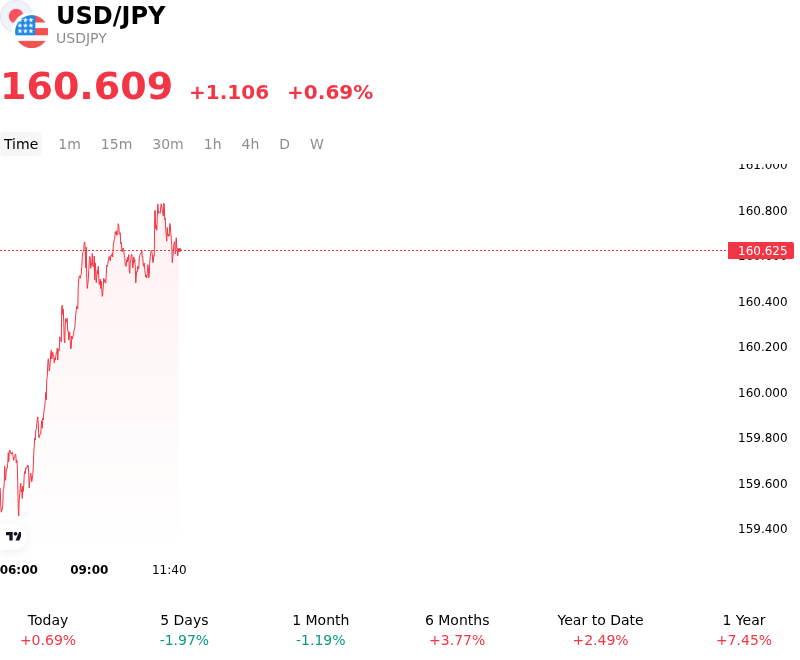
What is driving USD/JPY (USDJPY)’s stock price up today?
The appreciation in USDJPY reflects a combination of a dovish-leaning Bank of Japan policy outcome and a resilient US interest rate outlook that continues to favor the dollar through the interest rate differential channel. The primary catalyst was the Bank of Japan interest rate decision and subsequent press conference, where policymakers likely downplayed the urgency of immediate consecutive rate hikes, disappointing market participants who had positioned for a more aggressive hawkish shift. This perceived hesitation by Japanese authorities has allowed the yen to weaken as the search for yield persists in a relatively stable global risk environment.
Simultaneously, the US dollar found support from recent macroeconomic indicators suggesting that the US economy remains on a solid footing, reducing the immediate pressure on the Federal Reserve to implement aggressive policy easing. With US Treasury yields climbing relative to Japanese Government Bond yields, the widening spread has incentivized capital flows into dollar-denominated assets. Institutional investors are reassessing the timing of the narrowing of this differential, concluding that the yen remains a preferred funding currency for carry trades so long as Japanese real rates stay deeply in negative territory.
From a macro perspective, the move underscores the divergence between the Fed’s data-dependent caution and the BoJ’s struggle to move away from ultra-easy policy without destabilizing domestic financial conditions. As long as US labor market data and core inflation remain sticky, the dollar is likely to maintain its upper hand. The intraday volatility was further exacerbated by the clearing of short-USD positions as key technical resistance levels were breached, triggering a momentum-driven move that saw the yen underperform across most major crosses.
Looking ahead, market participants will remain focused on the sustainability of this yield gap. Any intervention rhetoric from Japanese officials might provide temporary support for the yen, but without a structural shift in the BoJ’s policy trajectory or a significant downturn in US growth prospects, the path of least resistance for USDJPY remains skewed to the upside. The current price action suggests that the market has largely priced out a hawkish surprise from Tokyo for the current quarter, shifting the burden of proof back onto upcoming US employment data to justify current dollar valuations.
Technical Analysis of USD/JPY (USDJPY)
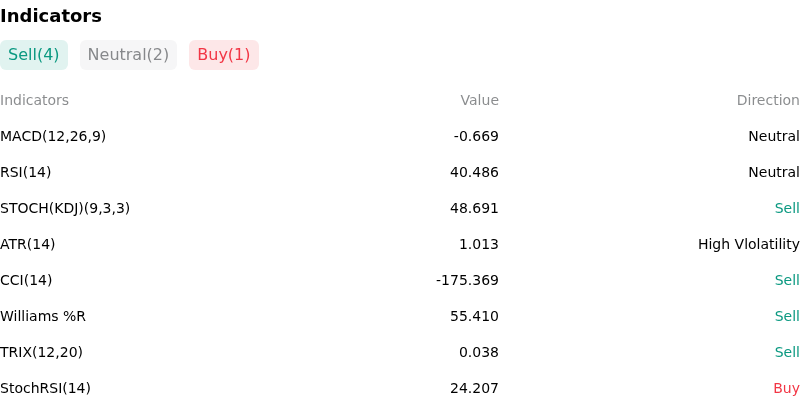
Technically, USD/JPY (USDJPY) shows a MACD (12,26,9) value of -0.669, indicating a neutral signal. The RSI at 40.486 suggests neutral condition and the Williams %R at 55.410 suggests sell condition. Please monitor closely.
More details about USD/JPY (USDJPY)
Recent Events and Risks:
- Coordinated Currency Intervention: The suspected multi-trillion yen intervention on July 30, reportedly involving coordinated dollar-selling with South Korean authorities, has introduced massive two-way volatility and established a heavy "policy ceiling" near the recent 40-year high of 163.99.
- Bank of Japan Policy Surprise: With the BoJ policy decision concluding today, July 31, markets are on high alert for an aggressive reduction in JGB purchases or a hawkish shift in the inflation outlook, which could trigger a violent unwinding of yen carry trades and a break below the 157.50 support level.
- Commodity-Driven Terms-of-Trade Shock: A sudden 6.7% surge in crude oil prices to $92 per barrel has exacerbated Japan’s trade deficit and intensified domestic inflationary pressures, raising the risk of an emergency policy response from the Ministry of Finance to curb further yen depreciation.
- Yield Spread Compression Volatility: Despite the Fed's 3.50-3.75% rate base, aggressive futures pricing for a September hike leaves the dollar highly vulnerable to any downside surprises in US manufacturing or labor data, which would trigger a rapid narrowing of the US-Japan yield differential.
This article may include AI-generated content that is human-reviewed, which is for reference and general information purposes only and does not constitute investment advice.
Recommended Articles









Comments (0)
Click the $ button, enter the symbol, and select to link a stock, ETF, or other ticker.