


WTI (USOIL) Volatility Intensified on Jul 31: What to Watch



WTI (USOIL) is down 2.04% at Jul 31 00:00(ET), now at $81.474, with a 7-day down of 9.52%.
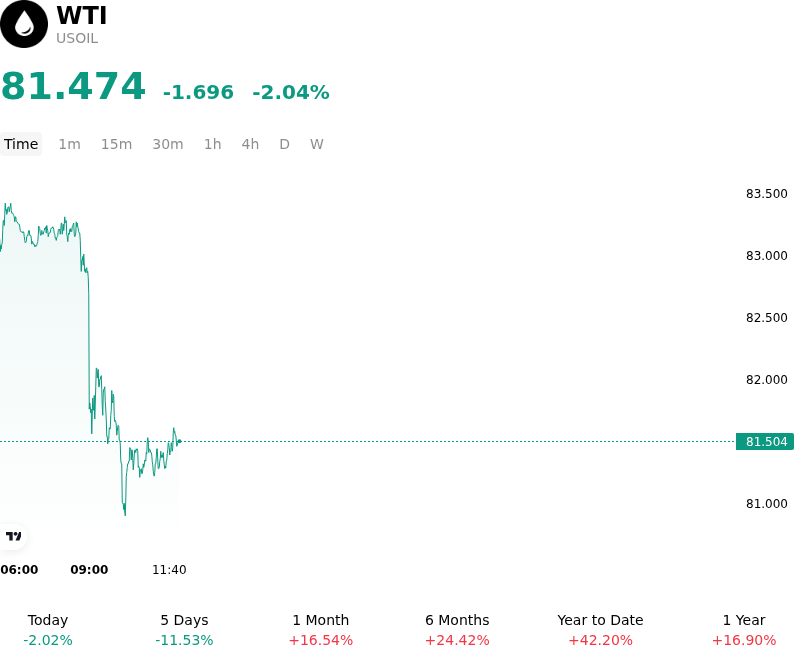
What is driving WTI (USOIL)’s stock price down today?
The decline in WTI crude today is primarily driven by a convergence of weakening demand signals from Asia and a shift in market sentiment regarding OPEC+ supply transparency. The release of July manufacturing purchasing managers index data from China showed a persistent contraction in industrial activity, heightening concerns that the world's largest crude importer is struggling to maintain momentum despite recent stimulus measures. This demand-side fragility has tempered the summer driving season optimism that supported prices earlier in the month.
Simultaneously, supply-side pressures are mounting as market participants price in the anticipated unwinding of voluntary production cuts by key OPEC+ members scheduled for the coming quarters. While the alliance has maintained a public stance of market stability, recent export tracking data indicates a creeping increase in seaborne shipments, leading to skepticism about strict adherence to quotas. The prospect of higher regional supply entering a market where inventory draws have been less aggressive than seasonally expected has created a bearish imbalance in the short-term outlook.
Macroeconomic factors contributed to the downward pressure as the US dollar strengthened following robust labor market indicators and end-of-month flows. The stronger dollar makes dollar-denominated crude more expensive for international buyers, further dampening global demand expectations. Additionally, month-end institutional rebalancing likely accelerated the price slide as portfolio managers reduced energy exposure following a period of range-bound trading, leading to an increase in systematic selling once key technical support levels were breached.
Technical factors also played a role as the price fell through the 50-day moving average, triggering automated liquidation of long positions. While geopolitical risks in the Middle East remain a background consideration, the lack of immediate escalations has allowed the market to refocus on fundamental oversupply risks for the second half of the year. Investors are now pivoting their attention to the upcoming OPEC+ ministerial monitoring committee meeting and US inventory trends to determine if this retracement marks a structural shift in the energy complex toward a surplus environment.
Technical Analysis of WTI (USOIL)
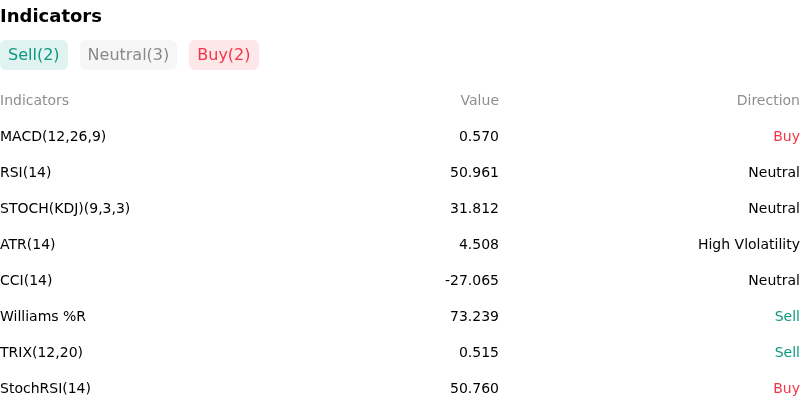
Technically, WTI (USOIL) shows a MACD (12,26,9) value of 0.570, indicating a buy signal. The RSI at 50.961 suggests neutral condition and the Williams %R at 73.239 suggests sell condition. Please monitor closely.
More details about WTI (USOIL)
Recent Events and Risks:
- Unexpected US Inventory Builds: Recent EIA data reported a surprise increase in commercial crude and gasoline stockpiles, suggesting that the anticipated seasonal surge in summer driving demand is underperforming expectations and creating an immediate supply overhang.
- Softening Chinese Demand Signals: Tepid manufacturing activity and reduced refinery run rates in China indicate a slowdown in industrial consumption, raising concerns that the world's largest oil importer will not provide the necessary demand support to maintain current price floors.
- OPEC+ Tapering Speculation: Market participants are increasingly concerned that OPEC+ may announce a gradual phase-out of voluntary production cuts during their upcoming ministerial meeting, risking a return to oversupply at a time when non-OPEC production remains at record levels.
- US Dollar Appreciation and Macro Headwinds: Resilient US inflation data has reinforced a "higher for longer" interest rate outlook, strengthening the US Dollar and making oil more expensive for international buyers while heightening the risk of a broader macro-driven liquidation of long positions.
This article may include AI-generated content that is human-reviewed, which is for reference and general information purposes only and does not constitute investment advice.
Recommended Articles









Comments (0)
Click the $ button, enter the symbol, and select to link a stock, ETF, or other ticker.