


Philip Morris International Inc Stock (PM) Moved Down by 3.21% on Jul 30: What Signal Does It Send?



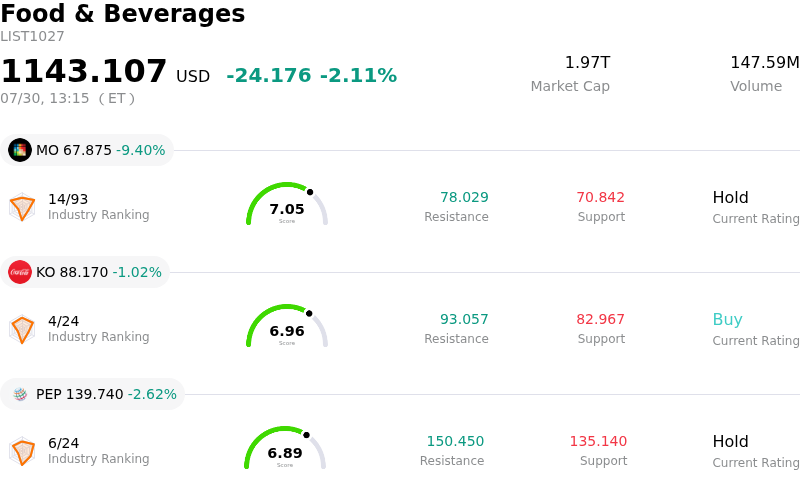
Philip Morris International Inc (PM) moved down by 3.21%. The Food & Beverages sector is down by 2.11%. The company underperformed the industry. Top 3 stocks by turnover in the sector: Altria Group Inc (MO) down 9.40%; Coca-Cola Co (KO) down 1.02%; PepsiCo Inc (PEP) down 2.62%.
What is driving Philip Morris International Inc (PM)’s stock price down today?
Philip Morris International experienced a notable pullback during today's session, primarily driven by investor concerns regarding the sustainability of its smoke-free product growth margins and recent regulatory headwinds in the nicotine pouch category. While the company has been aggressively transitioning its portfolio away from traditional combustibles, the capital expenditures required for this pivot appear to be weighing on short-term free cash flow expectations. Investors are particularly focused on the latest volume data for heated tobacco and oral nicotine products in the North American market, where any sign of deceleration is met with swift selling pressure given the premium valuation currently attached to the stock's growth prospects.
The volatility was further exacerbated by reports of potential new excise tax proposals in several key European markets, which could impact the pricing power of heat-not-burn products. As a company with significant international revenue exposure, Philip Morris remains sensitive to currency fluctuations. A strengthening of the U.S. dollar against a basket of major currencies creates a translation headwind that threatens to dilute earnings per share, prompting institutional investors to trim positions ahead of broader macroeconomic uncertainty. This currency risk, combined with the shifting regulatory landscape for reduced-risk products, has created a cautious atmosphere among market participants.
From a technical perspective, the intraday movement suggests a breach of near-term support levels, likely triggered by institutional portfolio rebalancing. As defensive sectors face competition from shifting fixed-income yields, high-dividend-yielding stocks like Philip Morris are seeing capital outflows as traders seek higher risk-adjusted returns elsewhere. Despite the long-term strategic shift toward a smoke-free future, the immediate market reaction reflects a prioritizing of near-term margin stability and regulatory clarity over future growth potential. Analyst sentiment has also cooled slightly as several firms adjusted their price targets to account for the heightened operational risks and potential supply chain disruptions in emerging markets.
Technical Analysis of Philip Morris International Inc (PM)
Technically, Philip Morris International Inc (PM) shows a MACD (12,26,9) value of 2.433, indicating a buy signal. The RSI at 62.944 suggests neutral condition and the Williams %R at 29.125 suggests buy condition. Please monitor closely.
Media Coverage of Philip Morris International Inc (PM)
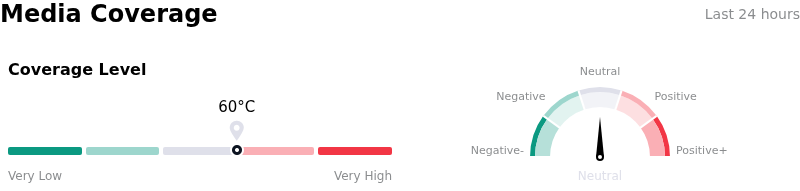
In terms of media coverage, Philip Morris International Inc (PM) shows a coverage score of 60, indicating a moderate level of media attention. The overall market sentiment index is currently in neutral zone.
Fundamental Analysis of Philip Morris International Inc (PM)
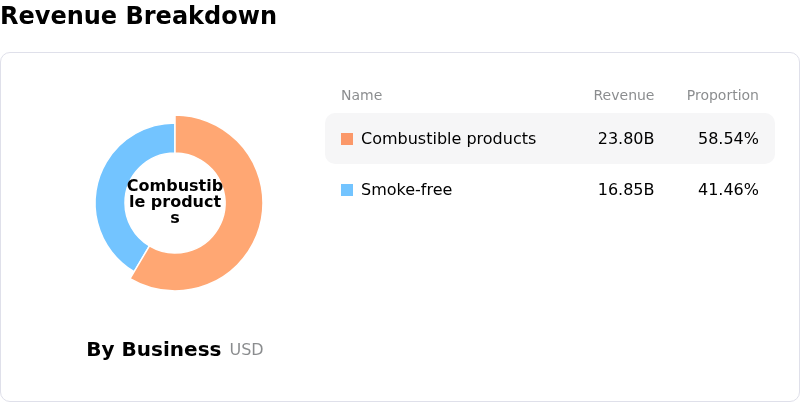
Philip Morris International Inc (PM) is in the Food & Beverages industry. Its latest annual revenue is $40.65B, ranking 5 in the industry. The net profit is $11.32B, ranking 1 in the industry. Company Profile
Over the past month, multiple analysts have rated the company as Buy, with an average price target of $199.65, a high of $225.00, and a low of $151.00.
More details about Philip Morris International Inc (PM)
Company Specific Risks:
- Regulatory and Compliance Legal Risk: Philip Morris is currently responding to a subpoena from the District of Columbia’s Attorney General regarding the sale of flavored nicotine pouches, which may violate local bans and expose the company to significant legal penalties and product delisting in specific jurisdictions.
- Supply Chain and Inventory Deficiencies: Widespread retail shortages and out-of-stock issues for the ZYN nicotine pouch brand in the U.S. market have triggered concerns over supply chain mismanagement, potentially stalling the company's primary growth engine and driving consumers toward competing products.
- Currency Translation Vulnerability: Due to its significant international exposure and reporting in U.S. dollars, the company faces ongoing earnings-per-share (EPS) pressure from a strengthening dollar, which analysts indicate could lead to a downward revision of full-year financial guidance.
- High Execution Risk in U.S. IQOS Rollout: The massive capital investment required to build the U.S. infrastructure for IQOS poses a threat to short-term margins, with heightened uncertainty regarding consumer adoption rates and the speed of regulatory clearance for new product versions.
This article may include AI-generated content that is human-reviewed, which is for reference and general information purposes only and does not constitute investment advice.
Recommended Articles









Comments (0)
Click the $ button, enter the symbol, and select to link a stock, ETF, or other ticker.