


T-Mobile US Inc Stock (TMUS) Moved Up by 3.96% on Jul 28: Facts Behind the Movement



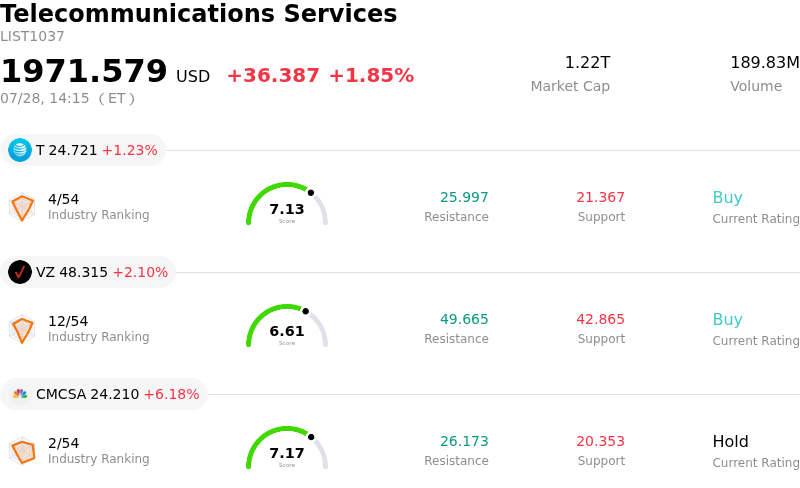
T-Mobile US Inc (TMUS) moved up by 3.96%. The Telecommunications Services sector is up by 1.85%. The company outperformed the industry. Top 3 stocks by turnover in the sector: AT&T Inc (T) up 1.34%; Verizon Communications Inc (VZ) up 2.10%; Comcast Corp (CMCSA) up 6.18%.
What is driving T-Mobile US Inc (TMUS)’s stock price up today?
T-Mobile US has demonstrated significant upward momentum following the release of its latest financial results, which exceeded consensus estimates across several key performance indicators. The primary driver for the positive price action is the company's superior subscriber growth, particularly in the post-paid phone segment where it continues to outpace its primary peers. By leveraging its mid-band spectrum advantage, the carrier has successfully maintained a lower churn rate than anticipated, signaling strong brand loyalty and the effectiveness of its latest value-added service bundles.
Beyond traditional wireless services, the expansion of the high-speed internet business has become a critical pillar of the company’s growth narrative. The continued adoption of fixed wireless access has allowed the firm to capture market share from traditional cable providers in both rural and suburban markets. Furthermore, the market is reacting favorably to management's revised full-year guidance, which suggests that the synergy realization from previous network integrations is ahead of schedule, leading to improved free cash flow projections for the remainder of the fiscal year.
Investor sentiment has also been bolstered by the company’s disciplined capital allocation strategy. The confirmation of an enhanced share repurchase program highlights management’s confidence in the long-term valuation of the business. As the company transitions from a high-growth disruptor to a dominant cash-flow generator, institutional investors are increasingly viewing the stock as a core defensive holding with growth characteristics. This shift is reflected in the sustained buying pressure and the positive reaction to the company's ability to maintain margins despite competitive pricing across the industry.
From a macroeconomic perspective, the telecom industry is benefiting from a stabilization in interest rate expectations, which lowers the perceived risk regarding the cost of servicing debt associated with network upgrades. As T-Mobile continues to explore deeper integration with fiber-optic assets and edge computing, it is positioning itself as a comprehensive connectivity provider rather than a pure-play mobile operator. This strategic evolution, combined with consistent operational execution, provides a solid foundation for the current movement and reinforces the company's competitive moat against its rivals.
Technical Analysis of T-Mobile US Inc (TMUS)
Technically, T-Mobile US Inc (TMUS) shows a MACD (12,26,9) value of -1.950, indicating a neutral signal. The RSI at 43.863 suggests neutral condition and the Williams %R at 74.909 suggests sell condition. Please monitor closely.
Media Coverage of T-Mobile US Inc (TMUS)
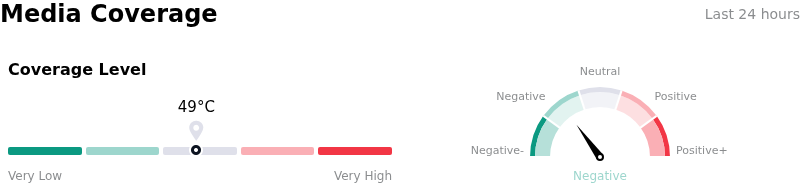
In terms of media coverage, T-Mobile US Inc (TMUS) shows a coverage score of 49, indicating a moderate level of media attention. The overall market sentiment index is currently in bearish zone.
Fundamental Analysis of T-Mobile US Inc (TMUS)
T-Mobile US Inc (TMUS) is in the Telecommunications Services industry. Its latest annual revenue is $88.31B, ranking 4 in the industry. The net profit is $10.99B, ranking 4 in the industry. Company Profile
Over the past month, multiple analysts have rated the company as Buy, with an average price target of $242.53, a high of $310.00, and a low of $169.00.
More details about T-Mobile US Inc (TMUS)
Company Specific Risks:
- Antitrust and Regulatory Hurdles: The recently announced $4.4 billion acquisition of UScellular’s wireless operations and spectrum assets is expected to face intense scrutiny from the DOJ and FCC, potentially leading to prolonged litigation or forced divestitures that could diminish the deal's strategic value.
- Capital Expenditure and Integration Costs: Integrating UScellular’s customers and infrastructure, alongside T-Mobile's significant pivot toward fiber-to-the-home joint ventures, creates a high-intensity capital expenditure cycle that may pressure short-term free cash flow and delay deleveraging goals.
- Postpaid Subscriber Growth Deceleration: Despite strong recent performance, institutional analysts have expressed concern over "peak wireless" saturation in the U.S. market, suggesting T-Mobile may face diminishing returns on its "Un-carrier" marketing strategy as competitors AT&T and Verizon intensify retention efforts.
- Ongoing Cybersecurity Vulnerability: T-Mobile remains under heightened regulatory oversight following previous high-profile data breaches; any new reports of network anomalies or security lapses trigger immediate institutional sell-side pressure due to the threat of recurring class-action liabilities and brand erosion.
This article may include AI-generated content that is human-reviewed, which is for reference and general information purposes only and does not constitute investment advice.
Recommended Articles








Comments (0)
Click the $ button, enter the symbol, and select to link a stock, ETF, or other ticker.