


BP PLC Stock (BP) Closed Down by 3.37% on Jul 27: Facts Behind the Movement



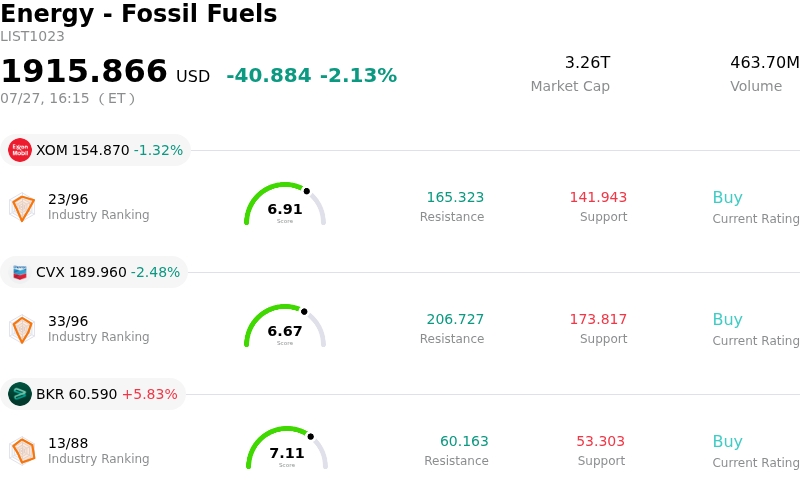
BP PLC (BP) closed down by 3.37%. The Energy - Fossil Fuels sector is down by 2.13%. The company underperformed the industry. Top 3 stocks by turnover in the sector: Exxon Mobil Corp (XOM) down 1.32%; Chevron Corp (CVX) down 2.48%; Baker Hughes Co (BKR) up 5.83%.
What is driving BP PLC (BP)’s stock price down today?
The downward pressure on BP today primarily reflects a broader correction in the global energy sector, driven by a sudden cooling in crude oil futures. As a major integrated oil and gas player, the company's valuation remains highly sensitive to the underlying price of Brent crude. Market participants are reacting to revised demand forecasts from major importing economies, which suggest a softening of industrial consumption amid persistent high-interest rate environments. This macroeconomic headwind has effectively offset recent supply-side constraints, leading institutional investors to de-risk their energy holdings in favor of more defensive sectors.
Beyond commodity price fluctuations, internal industry metrics are weighing heavily on investor sentiment. Early data suggests that global refining margins have contracted more sharply than anticipated during the current cycle. For an integrated firm like BP, these refining spreads are critical for balancing the volatility inherent in upstream production. The market appears to be pricing in a more conservative earnings outlook ahead of the company's next formal financial disclosure. Analysts are increasingly concerned that the combination of elevated operating costs and lower realized prices for refined products could lead to a downward revision of full-year free cash flow projections.
Investor uncertainty also stems from the ongoing strategic tension regarding the company's long-term energy transition. Recent updates suggesting a potential deceleration in low-carbon investment growth, while intended to protect short-term dividend stability, have created a divide among institutional portfolios. Some ESG-focused funds may be reducing their exposure due to the perceived shift in climate commitments, while value-driven investors remain cautious about the long-term sustainability of the firm's growth trajectory in a rapidly evolving regulatory landscape. This lack of a clear, unified narrative regarding the pace of the energy pivot is exacerbating the stock's intraday volatility.
Furthermore, the strengthening of the U.S. dollar has created transactional headwinds for the London-based giant. Since the company’s costs and revenues are globally distributed but heavily influenced by dollar-denominated commodity prices, currency volatility can negatively impact the perceived value of its American Depositary Shares. Combined with a shift in technical indicators that saw the stock break below key moving average support levels earlier in the session, the current downward movement appears to be a confluence of fundamental commodity weakness and a broader reassessment of the energy sector's risk-reward profile in an uncertain economic climate.
Technical Analysis of BP PLC (BP)
Technically, BP PLC (BP) shows a MACD (12,26,9) value of 1.298, indicating a buy signal. The RSI at 67.368 suggests neutral condition and the Williams %R at 9.321 suggests overbought condition. Please monitor closely.
Fundamental Analysis of BP PLC (BP)
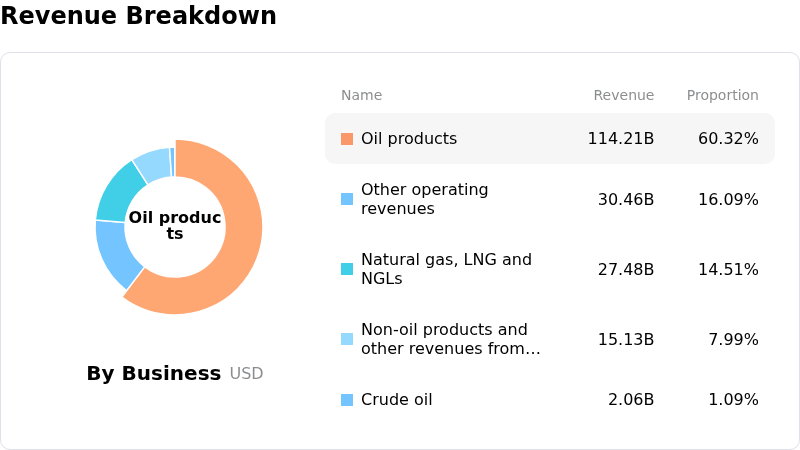
BP PLC (BP) is in the Energy - Fossil Fuels industry. Its latest annual revenue is $189.34B, ranking 3 in the industry. The net profit is $54.00M, ranking 63 in the industry. Company Profile
Over the past month, multiple analysts have rated the company as Hold, with an average price target of $47.68, a high of $63.00, and a low of $35.00.
More details about BP PLC (BP)
Company Specific Risks:
- Compressed Refining Margins: The company reported a significant year-over-year decline in realized refining margins during its most recent quarterly update, which has severely eroded downstream profitability and contributed to the lowest net income levels observed in nearly four years.
- Escalating Net Debt Levels: BP’s net debt rose to $24.3 billion in the third quarter, driven by lower operating cash flows and high capital expenditure, creating concerns regarding the long-term sustainability of the current share buyback program if oil prices continue to soften.
- Strategic Execution Uncertainty: Recent management commentary indicating a pivot away from aggressive renewable energy targets toward core oil and gas production has introduced significant transition risk, potentially alienating ESG-mandated institutional capital and increasing exposure to future carbon-related regulatory penalties.
- Upstream Production Volatility: Operational disruptions and price lags, particularly within the North Sea and Gulf of Mexico assets, have resulted in weaker-than-expected cash flow from operations, limiting the firm’s ability to de-lever the balance sheet relative to its supermajor peers.
This article may include AI-generated content that is human-reviewed, which is for reference and general information purposes only and does not constitute investment advice.
Recommended Articles









Comments (0)
Click the $ button, enter the symbol, and select to link a stock, ETF, or other ticker.