


Union Pacific Corp Stock (UNP) Moved Down by 3.15% on Jul 27: What Signal Does It Send?



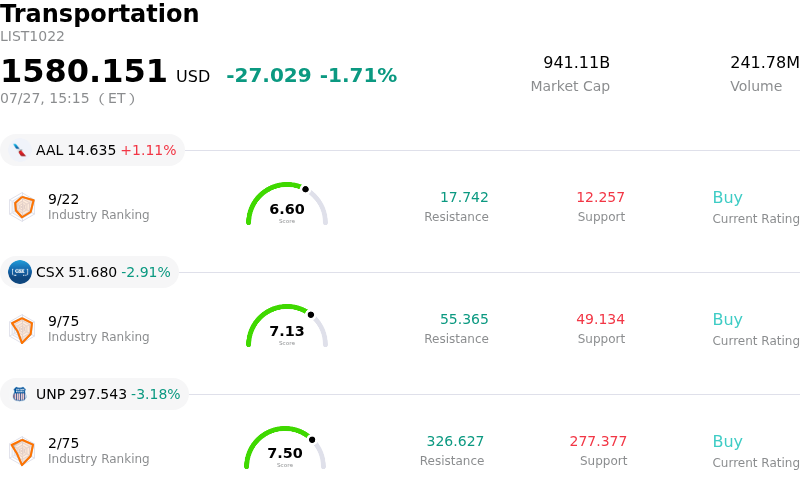
Union Pacific Corp (UNP) moved down by 3.15%. The Transportation sector is down by 1.71%. The company underperformed the industry. Top 3 stocks by turnover in the sector: American Airlines Group Inc (AAL) up 1.11%; CSX Corp (CSX) down 2.91%; Union Pacific Corp (UNP) down 3.18%.
What is driving Union Pacific Corp (UNP)’s stock price down today?
The recent decline in Union Pacific Corporation valuation reflects broader concerns regarding the health of the North American industrial economy. As a bellwether for domestic trade, the railroad is highly sensitive to shifts in manufacturing output and consumer spending. Recent macroeconomic data, including a cooling manufacturing index and softening retail sales, have led investors to recalibrate their expectations for freight volumes. The volatility observed today suggests that market participants are pricing in a more protracted slowdown in the movement of intermodal containers and industrial chemicals, which are core pillars of the company revenue stream.
Operational challenges have further exacerbated the downward pressure on the stock. Recent updates from the company indicate that inflationary pressures, particularly in labor and equipment maintenance, are beginning to compress operating margins more severely than previously anticipated. Despite the company historical focus on precision scheduled railroading to drive efficiency, the rising costs associated with recent labor agreements and safety-related infrastructure investments are proving difficult to offset through freight rate increases. This margin squeeze is a primary concern for institutional investors who have historically relied on the company robust cash flow and dividend stability.
Regulatory scrutiny remains a persistent headwind for the rail industry, and Union Pacific is no exception. Increased oversight from the Surface Transportation Board regarding service reliability and competitive access has created an environment of uncertainty. Speculation regarding potential new mandates that could limit the company pricing power or necessitate significant capital expenditures has dampened sentiment. Furthermore, a series of downward revisions by sell-side analysts has triggered a wave of institutional portfolio rebalancing, as funds shift away from cyclical industrials toward more defensive sectors in anticipation of continued economic turbulence.
Market sentiment has also been impacted by fluctuations in energy markets. While lower fuel prices can sometimes benefit operating ratios, they also signal a reduction in the demand for hauling energy-related commodities, such as coal and fracking sand. The interplay between these factors has resulted in heightened intraday volatility as investors weigh the benefits of lower input costs against the risks of declining top-line growth. Until there is more clarity regarding the trajectory of domestic production and a stabilization of the regulatory environment, the company shares are likely to remain under pressure from macro-driven selling.
Technical Analysis of Union Pacific Corp (UNP)
Technically, Union Pacific Corp (UNP) shows a MACD (12,26,9) value of 2.753, indicating a buy signal. The RSI at 72.835 suggests buy condition and the Williams %R at 24.198 suggests buy condition. Please monitor closely.
Media Coverage of Union Pacific Corp (UNP)
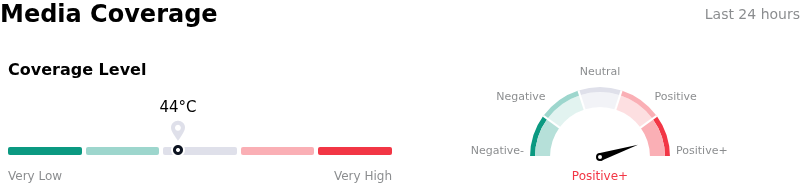
In terms of media coverage, Union Pacific Corp (UNP) shows a coverage score of 44, indicating a moderate level of media attention. The overall market sentiment index is currently in extremely bullish zone.
Fundamental Analysis of Union Pacific Corp (UNP)
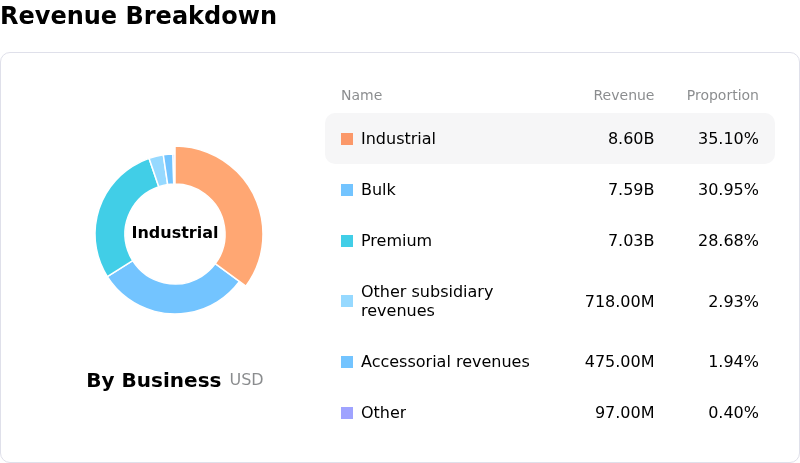
Union Pacific Corp (UNP) is in the Transportation industry. Its latest annual revenue is $24.51B, ranking 3 in the industry. The net profit is $7.14B, ranking 1 in the industry. Company Profile
Over the past month, multiple analysts have rated the company as Buy, with an average price target of $318.49, a high of $375.00, and a low of $176.50.
More details about Union Pacific Corp (UNP)
Company Specific Risks:
- Revenue Growth Stagnation: The company’s recent quarterly revenue miss underscores a fundamental difficulty in growing the top line, primarily driven by a 15% year-over-year contraction in coal and renewables volumes.
- Persistent Margin Pressure: Elevated labor costs following recent union agreements and an increase in casualty expenses are hindering management's ability to drive the operating ratio significantly below current levels.
- Macro-Sensitive Guidance: Cautious management commentary regarding the second half of the year highlights vulnerabilities to sustained high interest rates, which continue to suppress demand in the intermodal and forest products segments.
- Regulatory Service Scrutiny: Ongoing oversight from the Surface Transportation Board (STB) regarding service reliability and the threat of new reciprocal switching mandates pose a risk to pricing power and operational control.
This article may include AI-generated content that is human-reviewed, which is for reference and general information purposes only and does not constitute investment advice.
Recommended Articles








Comments (0)
Click the $ button, enter the symbol, and select to link a stock, ETF, or other ticker.