


GBP/USD (GBPUSD) Drops on Jul 23: What Are the Key Reasons?



GBP/USD (GBPUSD) is down 0.53% at Jul 23 11:35(ET), now at $1.33019, with a 7-day down of 1.28%.
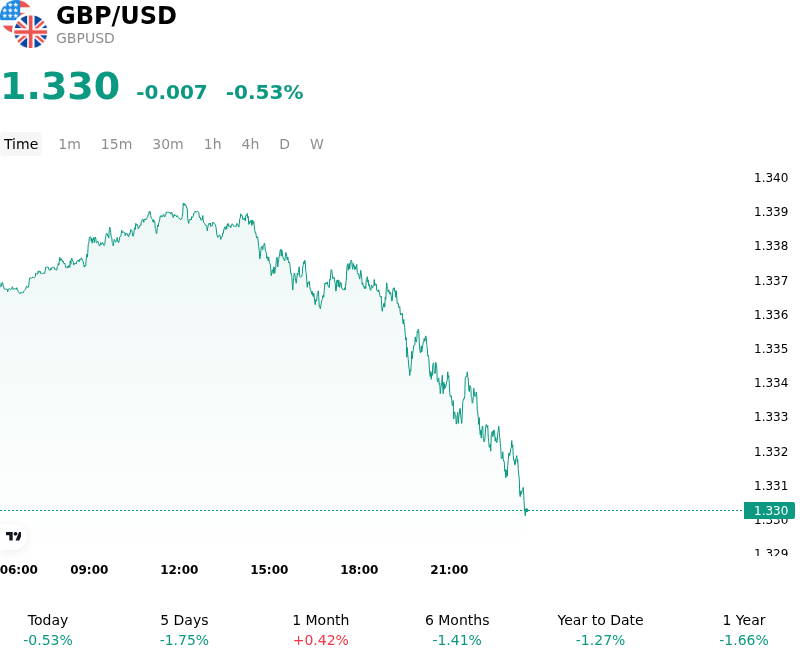
What is driving GBP/USD (GBPUSD)’s stock price down today?
The decline in the GBPUSD pair is primarily driven by a widening divergence in economic momentum between the United Kingdom and the United States, underscored by the latest preliminary Purchasing Managers Index data. The UK composite output index showed a sharper than anticipated contraction in the services sector, raising concerns that the prolonged high interest rate environment is stifling domestic consumption. In contrast, US flash PMIs surprised to the upside, signaling continued resilience in the American labor market and industrial sector. This divergence has led institutional investors to recalibrate their growth expectations, favoring the dollar as the US economy continues to exhibit structural outperformance.
Interest rate expectations have shifted significantly following the soft UK data, prompting a dovish repricing of the Bank of England policy path. Market participants are now pricing in a higher probability of an interest rate cut at the next Monetary Policy Committee meeting, as cooling wage growth and weakening service sector activity suggest that inflationary pressures are receding faster than previously forecast. Meanwhile, the Federal Reserve stance remains comparatively restrictive. Recent commentary from Fed officials suggests a reluctance to pivot toward easing while US consumer demand remains robust, causing a hawkish shift in the front end of the US Treasury curve.
The resulting shift in the interest rate differential between UK Gilts and US Treasuries has placed substantial downward pressure on the British pound. As the yield spread widens in favor of the dollar, capital flows are moving toward US fixed income assets, seeking higher risk adjusted returns. The backup in US 10 year yields, fueled by the stronger economic outlook and ongoing fiscal concerns, has further incentivized dollar accumulation. Conversely, the softening of Gilt yields reflects a market that is increasingly concerned about a potential growth slowdown in the UK, leading to a liquidation of long GBP positions by systematic and macro hedge funds.
Broader risk sentiment is also playing a role in the pair weakness. A shift toward a risk off environment, triggered by heightened geopolitical uncertainties and a retreat in global equity markets, has increased the appeal of the US dollar as a primary safe haven asset. The pound, which remains sensitive to global growth cycles and capital market volatility, is underperforming as investors reduce exposure to pro cyclical currencies. From a technical perspective, the break below key support levels has triggered automated sell orders, accelerating the intraday move as liquidity remains concentrated in the greenback.
Technical Analysis of GBP/USD (GBPUSD)
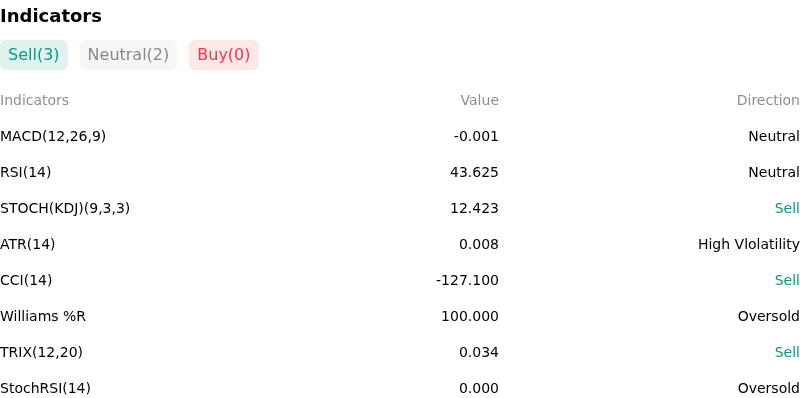
Technically, GBP/USD (GBPUSD) shows a MACD (12,26,9) value of -0.001, indicating a neutral signal. The RSI at 43.625 suggests neutral condition and the Williams %R at 100.000 suggests oversold condition. Please monitor closely.
More details about GBP/USD (GBPUSD)
Recent Events and Risks:
- Divergent Monetary Policy Expectations: Recent commentary from Bank of England (BoE) officials suggesting that a summer rate cut remains "on the table" contrasts with the Federal Reserve's more cautious "higher-for-longer" stance, creating downward pressure on the GBPUSD pair as yield spreads widen in favor of the Dollar.
- UK General Election Uncertainty: As the July 4th election approaches, market participants are pricing in risks associated with potential fiscal policy shifts and manifesto commitments that could impact the UK’s debt-to-GDP trajectory, leading to increased sterling volatility and a potential "wait-and-see" discount.
- Sticky Services Inflation vs. Cooling Growth: While headline inflation has reached the 2% target, the persistence of elevated services inflation combined with recent disappointing retail sales and PMI data creates a stagflationary risk profile that complicates the BoE’s terminal rate outlook.
- Safe-Haven USD Inflows: Ongoing geopolitical tensions and recent hawkish shifts in U.S. Treasury yields have revived "risk-off" sentiment, driving capital toward the greenback and exposing GBPUSD to downside liquidity shocks in the event of further equity market corrections.
This article may include AI-generated content that is human-reviewed, which is for reference and general information purposes only and does not constitute investment advice.
Recommended Articles









Comments (0)
Click the $ button, enter the symbol, and select to link a stock, ETF, or other ticker.