


Citigroup Inc Stock (C) Moved Up by 3.66% on Jul 21: A Full Analysis



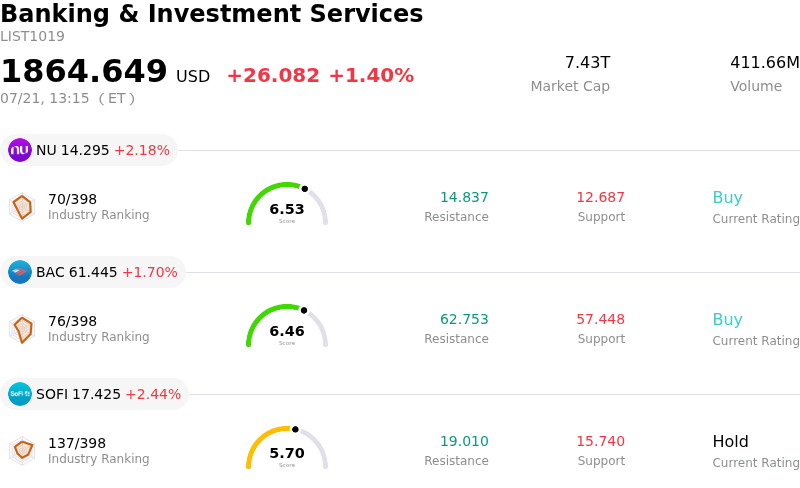
Citigroup Inc (C) moved up by 3.66%. The Banking & Investment Services sector is up by 1.40%. The company outperformed the industry. Top 3 stocks by turnover in the sector: Nu Holdings Ltd (NU) up 2.18%; Bank of America Corp (BAC) up 1.70%; SoFi Technologies Inc (SOFI) up 2.44%.
What is driving Citigroup Inc (C)’s stock price up today?
Citigroups recent upward trajectory is largely driven by a stronger-than-expected quarterly earnings cycle that has recently concluded for the major money-center banks. The market is reacting positively to the banks continued progress in its multi-year organizational restructuring. Investors are increasingly confident that management is successfully streamlining operations and reducing legacy costs, which has historically been a drag on the firms valuation compared to its primary peers.
The broader macroeconomic backdrop is providing a significant tailwind for the financial sector. With recent economic data suggesting a soft landing and the Federal Reserve maintaining a stable but restrictive interest rate environment, net interest margins for large-scale lenders remain resilient. The intraday volatility observed likely reflects shifting expectations regarding the pace of future rate adjustments, but the overall sentiment remains bullish as credit quality across the commercial and consumer portfolios appears more robust than previously feared.
Market participants are also responding to positive developments regarding capital adequacy requirements. Speculation surrounding a potential softening of the Basel III Endgame proposals has boosted the entire banking sector, with Citigroup standing out as a potential beneficiary due to its significant international footprint and complex capital structure. The prospect of reduced capital buffers implies a higher capacity for stock buybacks and dividend increases in the coming quarters, attracting institutional investors looking for yield and value in an otherwise expensive equity market.
Further supporting the move are recent adjustments from several prominent sell-side analysts who have revised their price targets upward. These upgrades cite improved efficiency ratios and a more disciplined approach to risk management as core drivers for future growth. As the stock breaches key technical resistance levels, it has triggered momentum buying from quantitative funds and retail investors alike. Despite the inherent volatility of the days trading session, the underlying trend suggests a re-rating of the banks book value as it narrows the valuation gap with its industry rivals.
Technical Analysis of Citigroup Inc (C)
Technically, Citigroup Inc (C) shows a MACD (12,26,9) value of -3.748, indicating a neutral signal. The RSI at 36.046 suggests neutral condition and the Williams %R at 90.698 suggests oversold condition. Please monitor closely.
Media Coverage of Citigroup Inc (C)
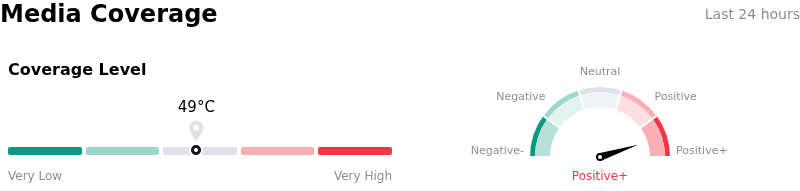
In terms of media coverage, Citigroup Inc (C) shows a coverage score of 49, indicating a moderate level of media attention. The overall market sentiment index is currently in extremely bullish zone.
Fundamental Analysis of Citigroup Inc (C)
Citigroup Inc (C) is in the Banking & Investment Services industry. Its latest annual revenue is $81.18B, ranking 4 in the industry. The net profit is $13.02B, ranking 3 in the industry. Company Profile
Over the past month, multiple analysts have rated the company as Buy, with an average price target of $150.60, a high of $176.00, and a low of $96.40.
More details about Citigroup Inc (C)
Company Specific Risks:
- Regulatory Non-Compliance Penalties: Federal regulators recently imposed $136 million in fines due to the bank's "insufficient progress" in resolving data quality and risk management deficiencies mandated by previous consent orders, highlighting persistent internal control failures.
- Deteriorating Credit Quality: Recent financial reporting reveals a sharp year-over-year increase in net credit losses and delinquency rates within the Branded Cards and Retail Services portfolios, indicating heightened vulnerability to consumer financial stress.
- Transformation Execution Risk: Management continues to face elevated "remediation" and "transformation" expenses which are inflating the efficiency ratio and offsetting top-line gains, leading to analyst skepticism regarding the bank's ability to meet mid-term profitability targets.
- Capital Return Limitations: Following the most recent Federal Reserve stress test results, the bank is subject to a higher Stress Capital Buffer (SCB) requirement, which restricts management’s flexibility to engage in aggressive share buybacks compared to its Tier-1 peers.
This article may include AI-generated content that is human-reviewed, which is for reference and general information purposes only and does not constitute investment advice.
Recommended Articles










Comments (0)
Click the $ button, enter the symbol, and select to link a stock, ETF, or other ticker.