


GBP/USD (GBPUSD) Moved Sharply on Jul 21: Are Central Bank Expectations Shifting?



GBP/USD (GBPUSD) is down 0.51% at Jul 21 09:40(ET), now at $1.336, with a 7-day down of 0.18%.
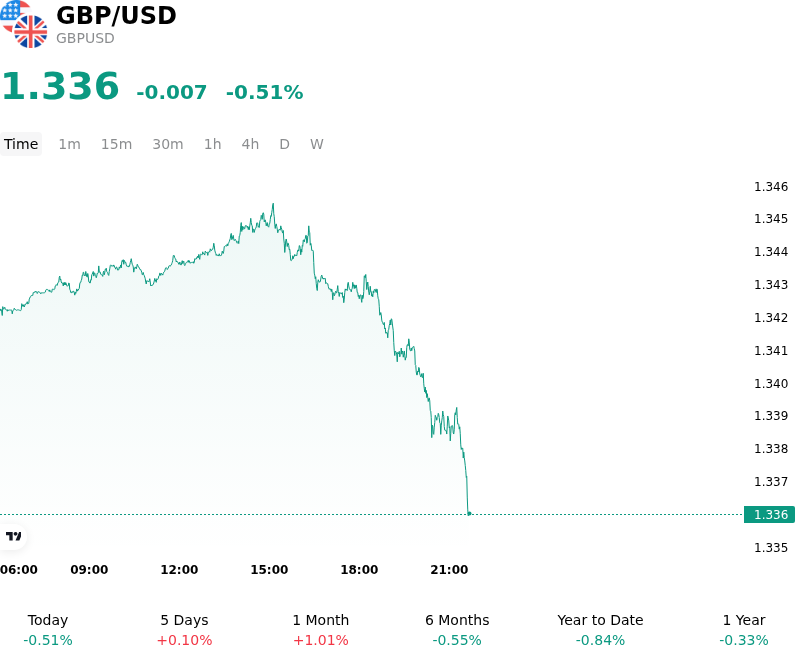
What is driving GBP/USD (GBPUSD)’s stock price down today?
The depreciation of sterling against the US dollar is largely a function of a broadening policy divergence between the Bank of England and the Federal Reserve. Following the latest round of US economic indicators, which highlighted persistent strength in domestic demand and a resilient labor market, market participants have significantly pared back bets on imminent Fed rate cuts. This repricing has driven a sharp ascent in front-end US Treasury yields, widening the spread over UK Gilts and attracting robust capital inflows into the greenback.
On the UK side, the pound is being undermined by a growing consensus that the Bank of England’s tightening cycle has reached its plateau. Recent domestic data prints have signaled a cooling in core inflation and a moderation in average weekly earnings, providing the Monetary Policy Committee with the necessary room to adopt a more neutral stance. The shift in market pricing toward an earlier-than-expected pivot by the BoE has stripped the pound of its interest-rate support, leaving it vulnerable to the strengthening dollar.
The broader market environment has also tilted toward a risk-averse posture, which typically favors the US dollar’s liquidity and safe-haven status. Concerns regarding the global growth outlook, particularly in the manufacturing sector, have weighed on high-beta currencies like the sterling. As institutional investors move to hedge against downside risks, the liquidation of long sterling positions has accelerated, further exacerbated by the pair’s breach of psychological support levels.
The outlook for GBPUSD remains heavily contingent on the evolution of service-sector inflation in both economies. While the dollar currently benefits from its yield advantage and the relative outperformance of the US economy, any signs of cooling in US inflation could mitigate the current downward pressure on the pair. However, as long as US real yields remain elevated and the UK growth narrative stays subdued, the path of least resistance for the pair appears to be toward the downside in the near term.
Technical Analysis of GBP/USD (GBPUSD)
Technically, GBP/USD (GBPUSD) shows a MACD (12,26,9) value of 0.002, indicating a buy signal. The RSI at 49.459 suggests neutral condition and the Williams %R at 64.055 suggests sell condition. Please monitor closely.
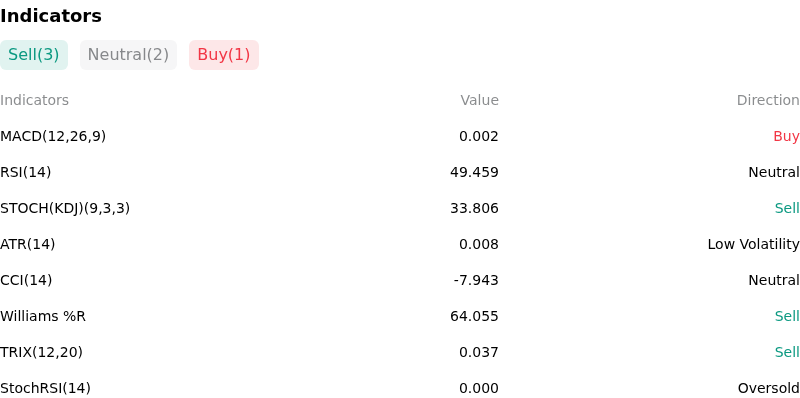
More details about GBP/USD (GBPUSD)
Recent Events and Risks:
- UK Political Uncertainty: The sudden announcement of a general election for July 4 has introduced immediate domestic policy risk, as investors price in potential fiscal instability and the uncertainty surrounding a possible change in government leadership.
- Hawkish Federal Reserve Signals: Recent FOMC minutes and subsequent official commentary have highlighted a lack of confidence in US disinflation, reinforcing the "higher-for-longer" rate narrative and driving broad-based US Dollar strength against the pound.
- Persistent Services Inflation: Although headline UK inflation has moderated, the continued stickiness in services-sector prices and high wage growth increases the risk of a stagflationary environment where the Bank of England is forced to maintain restrictive rates despite cooling economic growth.
- Yield Spread Compression: Stronger-than-expected US private sector activity data has pushed US Treasury yields higher relative to UK Gilts, narrowing the interest rate advantage for the pound and triggering intraday capital outflows from the GBPUSD pair.
This article may include AI-generated content that is human-reviewed, which is for reference and general information purposes only and does not constitute investment advice.
Recommended Articles










Comments (0)
Click the $ button, enter the symbol, and select to link a stock, ETF, or other ticker.