


HDFC Bank Ltd Stock (HDB) Moved Down by 9.83% on Jul 20: What Investors Need To Know



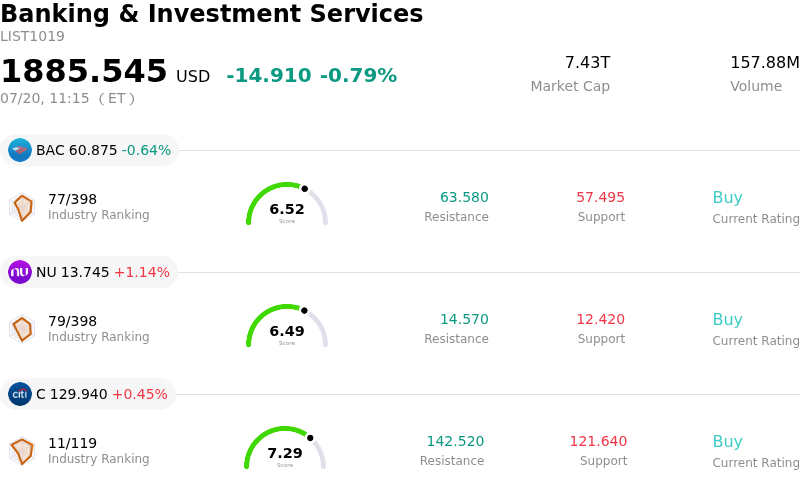
HDFC Bank Ltd (HDB) moved down by 9.83%. The Banking & Investment Services sector is down by 0.79%. The company underperformed the industry. Top 3 stocks by turnover in the sector: Bank of America Corp (BAC) down 0.64%; Nu Holdings Ltd (NU) up 1.14%; Citigroup Inc (C) up 0.45%.
What is driving HDFC Bank Ltd (HDB)’s stock price down today?
HDFC Bank is experiencing a sharp downturn today primarily driven by disappointing quarterly financial results that have heightened concerns regarding its profitability trajectory. The bank reported a significant contraction in its net interest margins, a metric that investors have been monitoring closely since its high-profile merger. This compression suggests that the cost of deposits is rising faster than the yield on advances, creating a structural headwind that the market had hoped would stabilize by this fiscal period.
Further compounding the negative sentiment are deteriorating asset quality indicators within the bank retail and unsecured lending portfolios. An unexpected uptick in non-performing assets has raised questions about the bank credit underwriting standards in a high-interest-rate environment. Institutional investors are reacting to these figures by recalibrating their risk premiums for the Indian banking sector, leading to heavy sell-off pressure on the ADR.
Regulatory headwinds also appear to be playing a role in the current price action. Speculation regarding more stringent capital adequacy requirements or potential restrictions on specific lending segments from the Reserve Bank of India has created an overhang. Such regulatory uncertainty often triggers immediate de-risking by global fund managers who prioritize stability in emerging market financial holdings.
Macroeconomic factors, specifically the weakening of the local currency against the dollar, are adding another layer of complexity. As a US-listed ADR, the bank valuation is sensitive to exchange rate volatility. A depreciation in the rupee diminishes the dollar-denominated returns for international shareholders, prompting a technical sell-off that exacerbates the fundamental concerns raised during the earnings call.
Market sentiment has shifted decisively bearish as several major brokerages issued immediate downgrades following the data release. The removal of the stock from top-pick lists by influential analysts has accelerated the exit of retail and institutional capital alike. This lack of immediate support levels suggests that the market is waiting for clearer guidance from management regarding a recovery roadmap for margins before re-establishing long positions.
Technical Analysis of HDFC Bank Ltd (HDB)
Technically, HDFC Bank Ltd (HDB) shows a MACD (12,26,9) value of -0.056, indicating a neutral signal. The RSI at 57.513 suggests neutral condition and the Williams %R at 51.613 suggests neutral condition. Please monitor closely.
Fundamental Analysis of HDFC Bank Ltd (HDB)
HDFC Bank Ltd (HDB) is in the Banking & Investment Services industry. Its latest annual revenue is $35.33B, ranking 14 in the industry. The net profit is $8.61B, ranking 12 in the industry. Company Profile
Over the past month, multiple analysts have rated the company as Buy, with an average price target of $34.30, a high of $36.00, and a low of $31.20.
More details about HDFC Bank Ltd (HDB)
Company Specific Risks:
- Elevated Loan-to-Deposit Ratio (LDR): The post-merger balance sheet continues to show a high LDR compared to historical benchmarks, creating a structural liquidity constraint that limits the bank's ability to accelerate credit growth without incurring significantly higher funding costs.
- Net Interest Margin (NIM) Stagnation: Recent analyst commentary highlights persistent pressure on margins as the bank prioritizes deposit mobilization over yield, resulting in a slower-than-expected recovery of NIMs following the HDFC Ltd merger.
- Deposit Mobilization Challenges: Intensifying competition in the Indian banking sector for low-cost CASA (Current Account Savings Account) deposits is forcing the bank to rely on more expensive term deposits, which threatens to compress spreads and impact overall return on assets (ROA).
- Regulatory and Compliance Headwinds: The Reserve Bank of India’s (RBI) recent focus on tightening liquidity coverage ratios and increasing risk weights for unsecured consumer credit has increased capital requirement pressures, potentially curbing the bank's expansion in high-margin retail segments.
This article may include AI-generated content that is human-reviewed, which is for reference and general information purposes only and does not constitute investment advice.
Recommended Articles










Comments (0)
Click the $ button, enter the symbol, and select to link a stock, ETF, or other ticker.