


Bitcoin (BTCUSD) Is down 1.11% on Jul 20: What Do On-Chain Data and Market Sentiment Show?



Bitcoin (BTCUSD) is down 1.11% at Jul 20 02:45(ET), now at $63790.67, with a 7-day up of 2.59%.
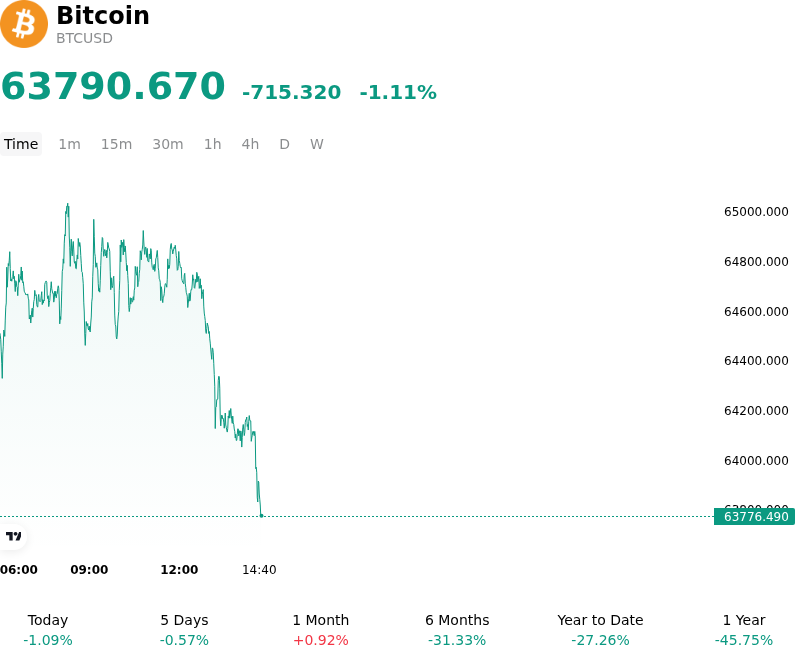
What is driving Bitcoin (BTCUSD)’s stock price down today?
Bitcoin is currently experiencing downward pressure as institutional investors recalibrate their exposure in response to a firmer U.S. Dollar and rising Treasury yields. The renewed strength in the Dollar Index has historically served as a headwind for digital assets, as it increases the opportunity cost of holding non-yielding stores of value. This macro-driven shift is further compounded by a hawkish lean in Federal Reserve rhetoric, which has led market participants to price in a more restrictive liquidity environment for the remainder of the year.
Institutional capital flows, particularly through spot Bitcoin ETFs, have shown signs of fatigue. After a period of consistent accumulation, net outflows from several major providers indicate that large-scale allocators are moving into a defensive posture. This de-risking behavior is often observed ahead of critical macroeconomic data releases, where institutional desks prefer to sit in cash or short-dated government securities rather than maintain high-beta crypto exposure. The reduction in ETF-led demand has removed a critical support pillar that previously absorbed sell-side pressure from long-term holders.
On-chain metrics suggest a temporary slowdown in network activity and a reduction in stablecoin minting, signaling that fresh capital entry is stalling. The lack of immediate bullish catalysts has left the market susceptible to liquidity-driven volatility. In the derivatives market, the funding rates for perpetual swaps have moderated, and the recent price action triggered a wave of long liquidations. These forced exits have created a localized feedback loop, accelerating the retreat as automated trading systems respond to the breach of short-term technical support levels.
Furthermore, the broader risk-off sentiment across global equity markets has spilled over into the digital asset space. As correlations between Bitcoin and technology-heavy indices remain elevated, the cautious outlook for corporate earnings and global growth is weighing on investor appetite for speculative assets. While the long-term structural narrative for Bitcoin as a decentralized reserve asset remains intact, the current movement reflects a tactical retreat driven by tightening financial conditions and a temporary shift in institutional risk preferences.
Investors are now closely monitoring the interaction between spot price discovery and institutional buy-walls. The primary risk remains a further tightening of global liquidity, which could test the conviction of recent institutional entrants. However, the current consolidation is largely viewed by strategists as a healthy deleveraging event that flushes out excess speculative froth, though it necessitates a more cautious approach to near-term capital deployment until macro stability returns.
Technical Analysis of Bitcoin (BTCUSD)
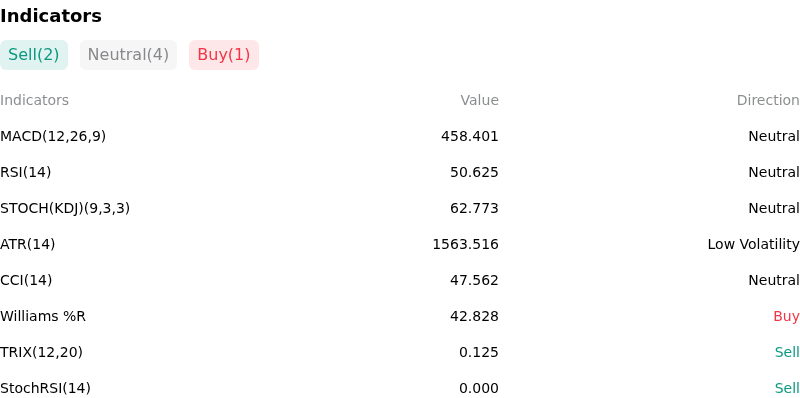
Technically, Bitcoin (BTCUSD) shows a MACD (12,26,9) value of 458.401, indicating a neutral signal. The RSI at 50.625 suggests neutral condition and the Williams %R at 42.828 suggests buy condition. Please monitor closely.
More details about Bitcoin (BTCUSD)
Recent Events and Risks:
- Institutional Outflow Momentum: Recent data indicating a pivot toward net outflows in U.S. Spot Bitcoin ETFs suggests a cooling of institutional appetite, potentially removing the primary liquidity floor that supported recent price levels.
- Mt. Gox Distribution Anxiety: Continued on-chain activity involving the transfer of thousands of BTC from Mt. Gox-linked cold wallets has heightened market sensitivity to potential large-scale creditor liquidations in the spot market.
- Macroeconomic Policy Pressure: Stronger-than-anticipated economic data and hawkish Federal Reserve rhetoric have sustained high U.S. Treasury yields, creating a "risk-off" environment that incentivizes capital flight from non-yielding digital assets.
- Post-Halving Miner Selling: Elevated hash ribbons and data showing a decrease in miner-held balances suggest that mining firms are liquidating portions of their treasury to offset reduced block rewards and operational costs, increasing intraday sell-side pressure.
This article may include AI-generated content that is human-reviewed, which is for reference and general information purposes only and does not constitute investment advice.
Recommended Articles










Comments (0)
Click the $ button, enter the symbol, and select to link a stock, ETF, or other ticker.