


Alphabet Inc Class A Stock (GOOGL) Moved Down by 3.85% on Jul 16: Key Drivers Unveiled



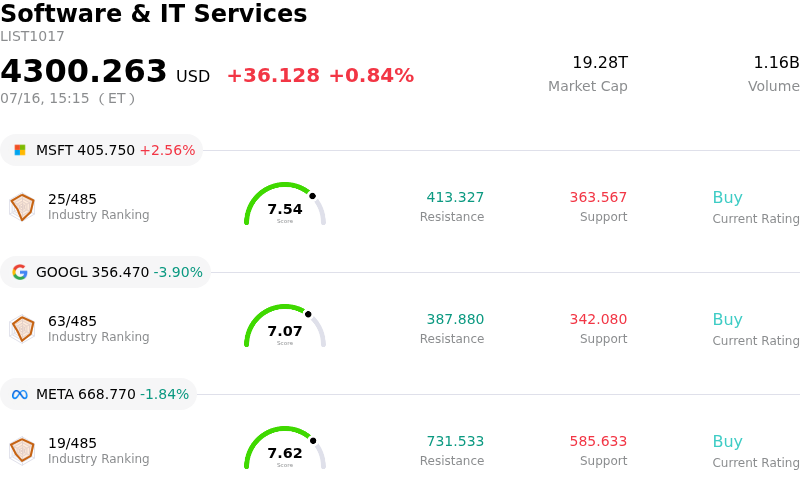
Alphabet Inc Class A (GOOGL) moved down by 3.85%. The Software & IT Services sector is up by 0.84%. The company underperformed the industry. Top 3 stocks by turnover in the sector: Microsoft Corp (MSFT) up 2.56%; Alphabet Inc Class A (GOOGL) down 3.85%; Meta Platforms Inc (META) down 1.84%.
What is driving Alphabet Inc Class A (GOOGL)’s stock price down today?
Alphabet's recent performance reflects a confluence of regulatory headwinds and shifting investor expectations regarding the monetization of artificial intelligence. The primary driver of the current downward pressure appears to be renewed scrutiny from the Department of Justice regarding the company's search and advertising dominance. Institutional investors are increasingly sensitive to legal developments that could potentially mandate structural changes to the company’s core revenue engines. This uncertainty is compounded by a broader rotation out of mega-cap technology stocks as the market digests recent macroeconomic data.
From a financial perspective, although the underlying fundamentals remain robust, there is a growing concern over the sustainability of capital expenditure levels. As Alphabet continues to invest heavily in specialized hardware and data center infrastructure to maintain its lead in the generative AI space, some analysts have expressed skepticism regarding the immediate return on investment. If the revenue growth from cloud services and AI-integrated search does not keep pace with these rising operational costs, margin compression becomes a significant risk factor that the market is now beginning to price in more aggressively.
The broader industry dynamics are also playing a role in the stock’s volatility. The competitive landscape in search is becoming increasingly crowded, with rivals launching sophisticated alternatives that threaten to erode Google’s traditional market share. This has led to a re-evaluation of the company’s long-term moat. When combined with recent reports of cooling advertiser demand in key retail sectors, the short-term outlook has become more clouded, prompting some large-scale institutional portfolio adjustments and a cautious stance from the brokerage community.
Macroeconomic factors also weigh on the equity, as the latest inflation readings and subsequent commentary from Federal Reserve officials have led to a recalibration of interest rate expectations. High-growth technology firms are particularly sensitive to these shifts, as higher-for-longer rate environments discount the present value of future cash flows. This systemic pressure, paired with the idiosyncratic risks associated with Alphabet's ongoing regulatory battles, has created a challenging environment for the stock, leading to the notable intraday weakness observed in the current session.
Technical Analysis of Alphabet Inc Class A (GOOGL)
Technically, Alphabet Inc Class A (GOOGL) shows a MACD (12,26,9) value of 2.952, indicating a neutral signal. The RSI at 56.869 suggests neutral condition and the Williams %R at 6.283 suggests overbought condition. Please monitor closely.
Media Coverage of Alphabet Inc Class A (GOOGL)
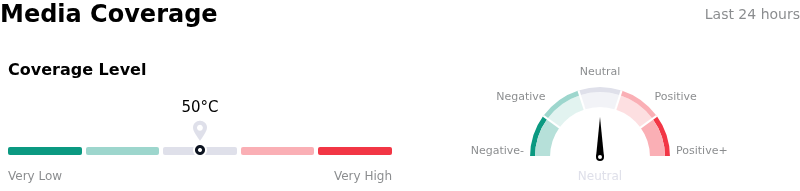
In terms of media coverage, Alphabet Inc Class A (GOOGL) shows a coverage score of 50, indicating a moderate level of media attention. The overall market sentiment index is currently in neutral zone.
Fundamental Analysis of Alphabet Inc Class A (GOOGL)
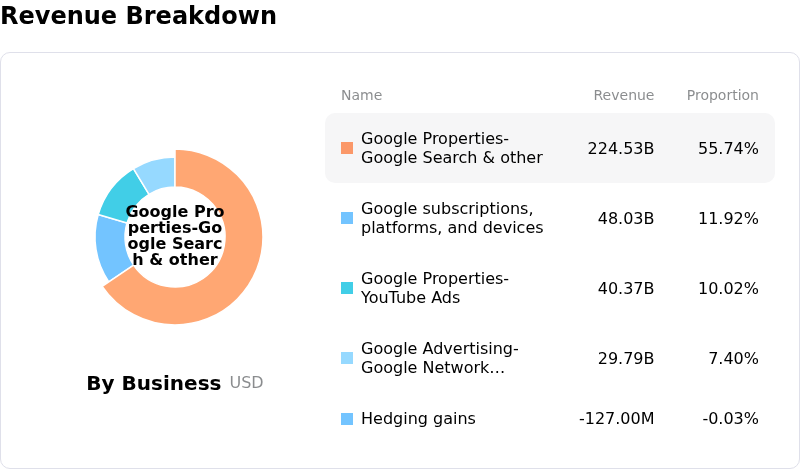
Alphabet Inc Class A (GOOGL) is in the Software & IT Services industry. Its latest annual revenue is $402.84B, ranking 1 in the industry. The net profit is $132.17B, ranking 2 in the industry. Company Profile
Over the past month, multiple analysts have rated the company as Buy, with an average price target of $416.53, a high of $515.00, and a low of $220.00.
More details about Alphabet Inc Class A (GOOGL)
Company Specific Risks:
- Antitrust Structural Remedies: The Department of Justice is moving forward with proposed remedies following the search monopoly ruling, which include the potential forced divestiture of the Chrome browser or Android operating system, threatening the integrated ecosystem that drives Google's search volume.
- AI-Driven Margin Compression: Alphabet’s commitment to high capital expenditure for AI infrastructure—expected to continue at or above $13 billion per quarter—raises investor concerns regarding near-term free cash flow and the long-term return on investment as AI search results carry higher compute costs than traditional queries.
- Competitive Search Fragmentation: The emergence of Meta’s independent search engine initiative and the full-scale rollout of OpenAI’s SearchGPT represent a direct threat to Google’s core advertising moat, potentially leading to a decline in market share and increased Traffic Acquisition Costs (TAC) to maintain default status on mobile devices.
- Regulatory Ad-Tech Vulnerability: Ongoing developments in the federal "Ad-Tech" antitrust trial indicate a significant risk of a court-mandated breakup of Google’s advertising exchange and server business, which would disrupt the company's vertically integrated "walled garden" and reduce its overall take-rate from digital ad auctions.
This article may include AI-generated content that is human-reviewed, which is for reference and general information purposes only and does not constitute investment advice.
Recommended Articles









Comments (0)
Click the $ button, enter the symbol, and select to link a stock, ETF, or other ticker.