


Palladium (XPDUSD) Is down 2.13% on Jun 23: What Is Driving the Move?



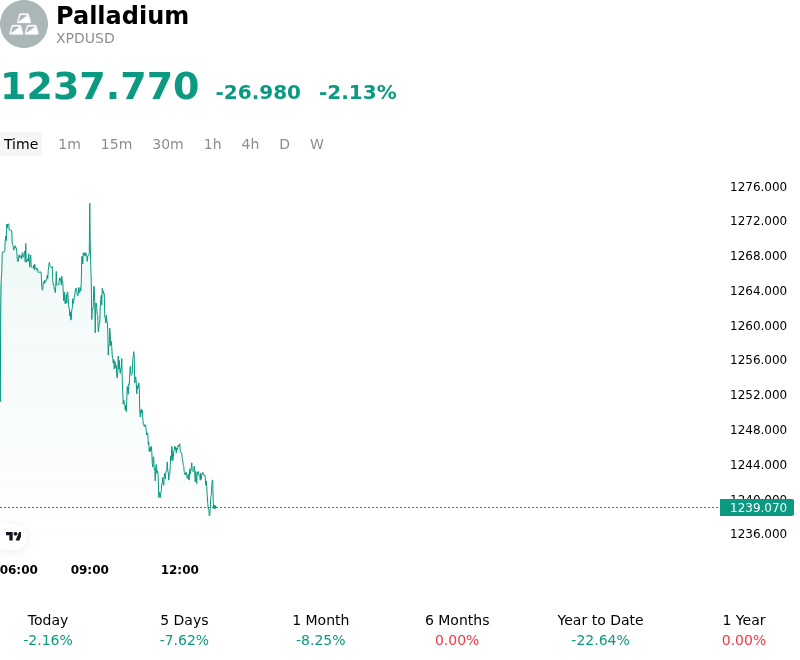
Palladium (XPDUSD) is down 2.13% at Jun 23 01:10(ET), now at $1237.77, with a 7-day down of 8.15%.
What is driving Palladium (XPDUSD)’s stock price down today?
The recent downward pressure on spot palladium is primarily driven by a combination of a hawkish macroeconomic outlook, easing geopolitical risk premiums, and persistent structural headwinds in its primary demand sector.
From a macroeconomic perspective, the Federal Open Market Committee's mid-June policy meeting introduced a hawkish surprise by signaling a higher-for-longer interest rate path. The upward revision of year-end rate projections and the potential for further tightening have supported the US dollar and elevated US Treasury yields. Because palladium is a non-yielding asset, the high-interest-rate environment has triggered a broader liquidation across the precious and industrial metals complexes, forcing capital out of the platinum-group metals sector.
Compounding this macroeconomic pressure is the significant easing of geopolitical risk premiums. Diplomatic progress, specifically around de-escalation talks regarding key maritime trade routes like the Strait of Hormuz, has significantly reduced fears of supply chain and logistics disruptions. The establishment of de-confliction mechanisms has calmed the market, unwinding the risk premiums that previously supported prices amidst broader Middle East tensions.
On the demand side, palladium continues to face severe structural headwinds from the automotive sector, which accounts for the vast majority of its consumption in catalytic converters. High global borrowing costs have weighed on vehicle production and manufacturing activity globally. More structurally, the rapid and ongoing transition to battery electric vehicles, particularly in major automotive markets like China, represents a long-term threat to demand. As electric vehicles displace traditional internal combustion engines, long-term industrial demand expectations for palladium continue to be downgraded.
Furthermore, institutional sentiment remains cautious as market participants price in a projected global market surplus for the platinum-group metals complex in 2026. This oversupply outlook is exacerbated by rising secondary recycling rates and recent price target cuts from major financial institutions, which have capped any short-term technical rebounds. Without a significant supply disruption or a pivot toward looser monetary policy, the structural surplus and soft industrial demand are expected to keep a lid on palladium prices.
Technical Analysis of Palladium (XPDUSD)
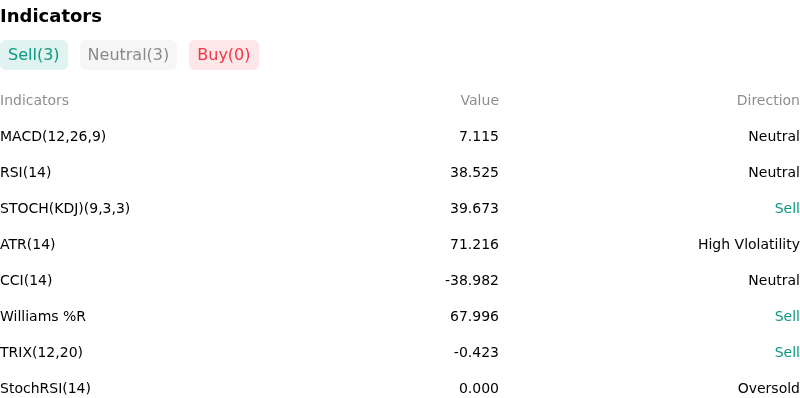
Technically, Palladium (XPDUSD) shows a MACD (12,26,9) value of 7.115, indicating a neutral signal. The RSI at 38.525 suggests neutral condition and the Williams %R at 67.996 suggests sell condition. Please monitor closely.
More details about Palladium (XPDUSD)
Recent Events and Risks:
- Hawkish Federal Reserve Shock and Dollar Strength: The Federal Open Market Committee's mid-June policy meeting under new leadership surprised markets with a highly hawkish outlook, raising year-end rate projections and driving the U.S. Dollar Index (DXY) higher. This tighter monetary environment has triggered broad-based liquidation across precious and industrial metals, putting heavy downward pressure on XPDUSD and dragging spot prices down from their recent peak near $1,366 toward the $1,250 range.
- Unwinding of Geopolitical Risk Premiums: Recent diplomatic progress between the U.S. and Iran in Switzerland, which established a formal communication mechanism to secure safe passage through the Strait of Hormuz, has significantly defused maritime supply chain and energy security fears. The resulting drop in crude oil prices and inflation expectations has prompted a rapid unwind of safe-haven risk premiums, removing a key layer of upward support for palladium.
- Structural Demand Destruction from the EV Transition and Substitution: Palladium is experiencing persistent industrial demand headwinds as China's automotive sector rapidly shifts toward battery electric vehicles (BEVs) that do not require catalytic converters. This transition is exacerbated by ongoing high global borrowing costs that weigh on vehicle manufacturing and the accelerating physical substitution of platinum for palladium in gasoline engines.
- Bearish Market Structure and Rising Supply Surplus: Recent Commitment of Traders (COT) data reveals a bearish divergence, with commercial producers hedging aggressively at current prices while speculative net-long positions weaken. This aggressive selling comes amid institutional forecasts warning of a transition into a global palladium supply surplus, leaving spot prices vulnerable to a technical breakdown below key support at $1,225.
This article may include AI-generated content that is human-reviewed, which is for reference and general information purposes only and does not constitute investment advice.
Recommended Articles








Comments (0)
Click the $ button, enter the symbol, and select to link a stock, ETF, or other ticker.