


ConocoPhillips Stock (COP) Moved Down by 3.12% on Jun 20: What Signal Does It Send?



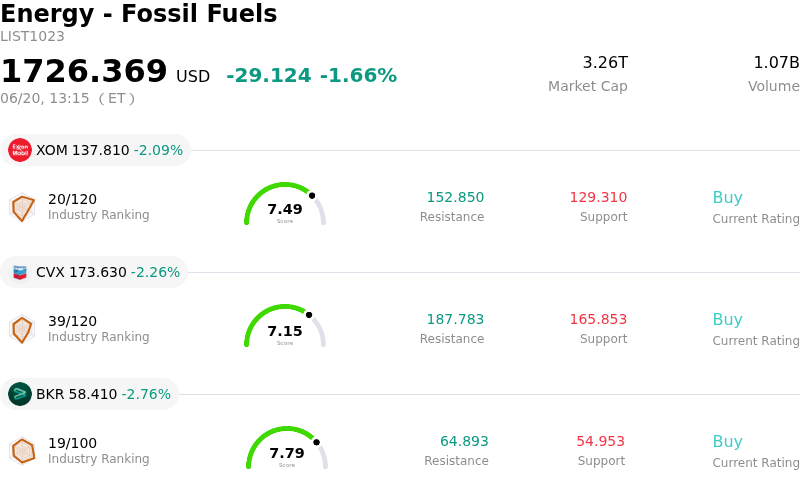
ConocoPhillips (COP) moved down by 3.12%. The Energy - Fossil Fuels sector is down by 1.66%. The company underperformed the industry. Top 3 stocks by turnover in the sector: Exxon Mobil Corp (XOM) down 2.09%; Chevron Corp (CVX) down 2.26%; Baker Hughes Co (BKR) down 2.76%.
What is driving ConocoPhillips (COP)’s stock price down today?
ConocoPhillips has experienced notable downward pressure and heightened volatility, primarily driven by a sharp correction in global commodity prices. The announcement of a peace agreement between the United States and Iran has significantly altered global oil market dynamics. By lifting the naval blockade on Iran and securing toll-free access to the crucial Strait of Hormuz, the pact has re-established substantial physical supply pathways, effectively stripping the geopolitical risk premium out of the energy market. Consequently, benchmark Brent and West Texas Intermediate crude prices tumbled, triggering a broad selloff across the exploration and production sector, with ConocoPhillips feeling the direct brunt of this pricing retreat.
Compounding these systemic commodity headwinds are company-specific strategic moves that have heightened investor risk aversion. ConocoPhillips recently finalized a binding contract with the state-owned Syrian Petroleum Company to develop onshore natural gas fields and explore offshore reserves. Although this venture positions the company as the first major U.S. energy firm to re-enter postwar Syria, offering potential long-term natural gas reserve expansion, it introduces immense geopolitical, regulatory, and compliance risks. Operating in a recovering, politically unstable region with complex sanction dynamics raises operational uncertainty, prompting many institutional investors to de-risk their positions.
Furthermore, underlying operational adjustments continue to weigh on the company's near-term valuation upside. ConocoPhillips previously lowered its full-year production guidance due to soft regional natural gas pricing and weaker-than-expected realized volumes in the Permian Basin. This downward revision has cooled growth expectations and triggered a series of analyst downgrades to neutral ratings. At the same time, the company is under pressure to execute on the targeted capital and operating cost reductions stemming from its multi-billion-dollar acquisition of Marathon Oil. In a depressed commodity price environment, integrating these newly acquired assets and extracting the projected synergies becomes highly challenging, raising concerns that the assets could become marginal.
This combination of unfavorable macro developments and company-specific execution risks has severely damaged market sentiment. Technical momentum has deteriorated as the stock fell below its key moving averages, establishing a bearish trend. This technical weakness has been exacerbated by heavy insider liquidations and portfolio adjustments by large institutional investors who have trimmed their stakes in favor of more defensive assets. As capital flows out of the fossil fuel sector amid fears of oversupply and lower margins, ConocoPhillips remains caught in a challenging near-term transition phase, balancing ambitious expansion plans with immediate operational and macroeconomic headwinds.
Technical Analysis of ConocoPhillips (COP)
Technically, ConocoPhillips (COP) shows a MACD (12,26,9) value of -1.652, indicating a sell signal. The RSI at 33.843 suggests neutral condition and the Williams %R at 94.838 suggests oversold condition. Please monitor closely.
Media Coverage of ConocoPhillips (COP)
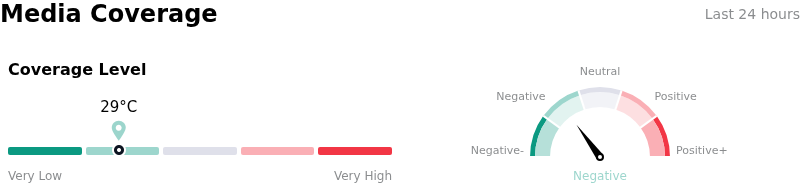
In terms of media coverage, ConocoPhillips (COP) shows a coverage score of 29, indicating a low level of media attention. The overall market sentiment index is currently in bearish zone.
Fundamental Analysis of ConocoPhillips (COP)
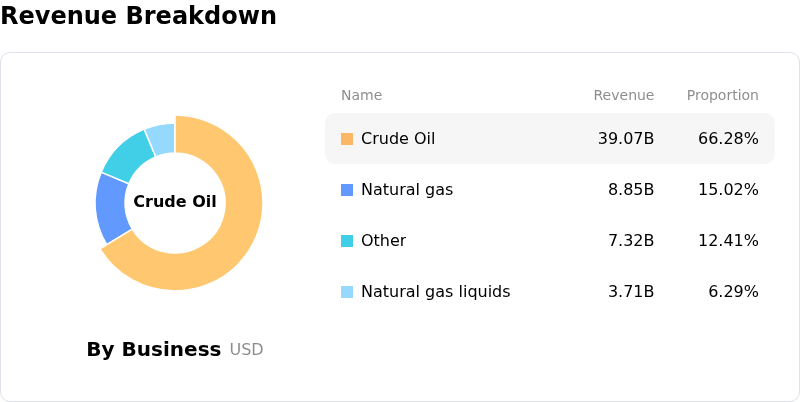
ConocoPhillips (COP) is in the Energy - Fossil Fuels industry. Its latest annual revenue is $58.94B, ranking 13 in the industry. The net profit is $7.96B, ranking 7 in the industry. Company Profile
Over the past month, multiple analysts have rated the company as Buy, with an average price target of $143.51, a high of $183.00, and a low of $120.23.
More details about ConocoPhillips (COP)
Company Specific Risks:
- Geopolitical and Sanctions Exposure in Post-War Syria: ConocoPhillips' move to finalize a landmark contract with the state-owned Syrian Petroleum Company to redevelop and explore onshore gas fields introduces extreme physical security threats, regional instability, and complex international compliance and sanctions risks as the first major U.S. energy firm to enter the post-conflict territory.
- Dampened Growth Outlook from Lowered Production Guidance: Driven by soft Permian Basin natural gas prices and lower realized volumes, the company recently revised its full-year production guidance downward to 2.295–2.325 MMBOED. This reduction has tempered growth and cash-flow expectations, triggering analyst downgrades and capping near-term valuation upside.
- High Sensitivity to Crashing Crude Benchmarks: As a pure-play exploration and production (E&P) giant, ConocoPhillips is highly vulnerable to the recent sharp downward correction in Brent and WTI crude benchmarks. This price drop was precipitated by a landmark U.S.-Iran peace agreement that reopens the Strait of Hormuz, threatening to flood global markets with oil and eliminate the geopolitical risk premium that previously supported higher realizations.
- Aggressive Insider Liquidations and Valuation Premium: Over $81.6 million in insider sales over the last three months—headlined by CEO Ryan Lance's liquidation of over 500,000 shares with zero corresponding buying—has elevated institutional anxiety. This intensive selling pressure is compounded by the stock trading at a trailing P/E of 18.3x, representing a significant 46% premium over its five-year historical median.
This article may include AI-generated content that is human-reviewed, which is for reference and general information purposes only and does not constitute investment advice.
Recommended Articles








Comments (0)
Click the $ button, enter the symbol, and select to link a stock, ETF, or other ticker.