


AT&T Inc Stock (T) Moved Down by 3.17% on Jun 17: What Signal Does It Send?



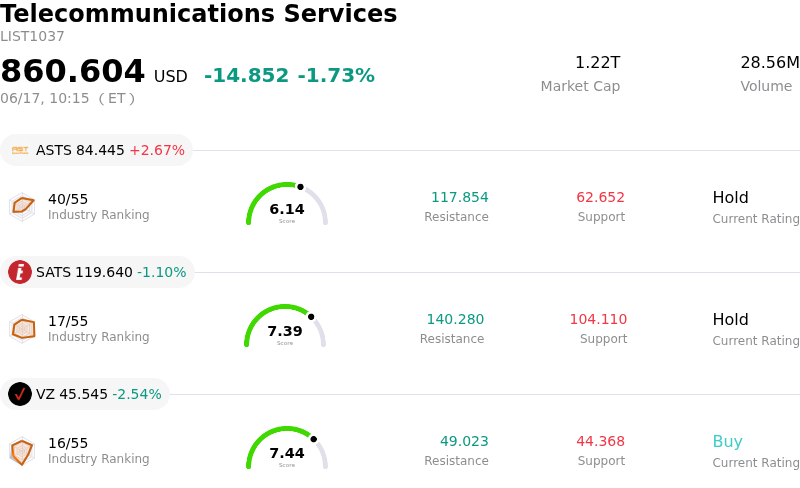
AT&T Inc (T) moved down by 3.17%. The Telecommunications Services sector is down by 1.73%. The company underperformed the industry. Top 3 stocks by turnover in the sector: AST SpaceMobile Inc (ASTS) up 3.42%; EchoStar Corp (SATS) down 1.30%; Verizon Communications Inc (VZ) down 2.60%.
What is driving AT&T Inc (T)’s stock price down today?
The notable downward momentum and heightened intraday volatility observed in AT&T shares are primarily driven by a significant transition in the company's financial leadership, compounded by underlying worries over its leverage and the competitive environment.
The immediate trigger for the selloff was AT&T’s formal regulatory filing announcing the upcoming retirement of its highly regarded Senior Executive Vice President and Chief Financial Officer, Pascal Desroches, effective at the end of the year. He will be succeeded by Jennifer Biry, who will step into the Deputy CFO role in July before fully taking over as CFO at the start of next year. While Biry brings extensive industry and internal experience, having previously served as WarnerMedia's CFO, the sudden announcement of Desroches' retirement introduces strategic uncertainty. Investors are particularly sensitive to leadership changes at a time when the telecom giant is executing a complex financial restructuring and heavy capital expenditure program.
Beyond the C-suite transition, market sentiment has been pressured by recent Wall Street downgrades. Analysts at Oppenheimer recently lowered their rating on the stock from Outperform to Perform, pointing to intensifying competition in the telecommunications sector, particularly from low-earth-orbit satellite services. This downgrade has amplified concerns about AT&T's legacy wireline revenues, which are projected to face steep declines throughout the year.
Furthermore, AT&T's balance sheet remains a point of caution. The company is in the middle of an aggressive nationwide fiber rollout and has taken on significant commitments, pushing expected net leverage higher following its recent industry transactions. For dividend and income-focused investors, any change in financial leadership raises questions about the long-term sustainability of the capital return program, share buybacks, and debt reduction goals, leading to defensive positioning.
Finally, broader macroeconomic factors are contributing to the stock's volatility. As Wall Street awaits the Federal Reserve’s impending interest rate decision, investors are exhibiting risk-averse behavior. In a high-interest-rate environment, heavily leveraged companies with substantial capital requirements face increased scrutiny, magnifying the impact of any corporate uncertainty. The combination of leadership transition, competitive pressures, and macro caution has ultimately weighed heavily on investor sentiment, sending the stock lower.
Technical Analysis of AT&T Inc (T)
Technically, AT&T Inc (T) shows a MACD (12,26,9) value of 0.031, indicating a neutral signal. The RSI at 38.204 suggests neutral condition and the Williams %R at 70.088 suggests sell condition. Please monitor closely.
Media Coverage of AT&T Inc (T)
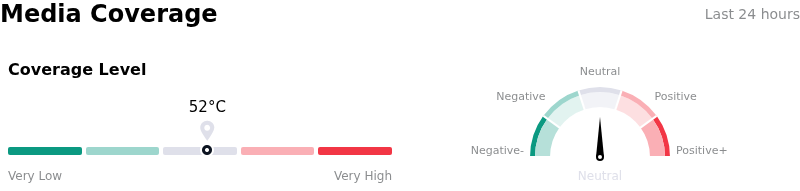
In terms of media coverage, AT&T Inc (T) shows a coverage score of 52, indicating a moderate level of media attention. The overall market sentiment index is currently in neutral zone.
Fundamental Analysis of AT&T Inc (T)
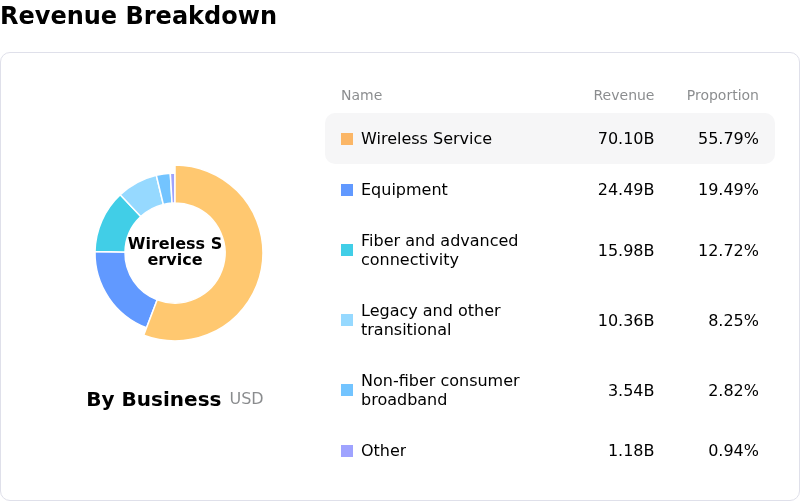
AT&T Inc (T) is in the Telecommunications Services industry. Its latest annual revenue is $125.65B, ranking 2 in the industry. The net profit is $21.89B, ranking 1 in the industry. Company Profile
Over the past month, multiple analysts have rated the company as Buy, with an average price target of $29.86, a high of $36.00, and a low of $25.00.
More details about AT&T Inc (T)
Company Specific Risks:
- Executive Leadership Transition Uncertainty: On June 16, 2026, AT&T filed an 8-K disclosing that Chief Financial Officer Pascal Desroches will retire effective December 31, 2026. The appointment of successor Jennifer Biry introduces strategic transition risks as the company navigates aggressive cost-cutting and debt-reduction plans, which prompted an immediate 1.7% drop in share price during after-hours trading.
- Regulatory Friction and Backlash Over Legacy Landline Decommissioning: AT&T faces severe public and county-level opposition in California over its Federal Communications Commission (FCC) Section 214 application to discontinue "domestic legacy voice service" (copper landlines). Local supervisory boards and rural advocacy groups actively mobilized consumer objections ahead of the June 15, 2026, regulatory comment deadline, threatening to delay the company's transition away from costly legacy infrastructure.
- Structural Threat to Broadband From LEO Satellite Expansion: Wall Street analysts have highlighted growing competitive pressure on AT&T's wireline division from emerging Low Earth Orbit (LEO) satellite constellations like Starlink. Because AT&T possesses the highest broadband wireline exposure relative to its mobile-centric peers, satellite competition is projected to cause long-term ARPU compression and potentially stall the terminal value of its multi-billion-dollar fiber build-outs.
- Leveraged Balance Sheet and Weak Solvency Indicators: AT&T remains burdened by a massive net debt load of approximately $126.4 billion, reflecting a net debt-to-adjusted EBITDA ratio of 2.71x. Analysts remain concerned over the company's tight liquidity profile and a concerning Altman Z-score of 0.96, which limits financial flexibility amid high capital expenditure requirements for 5G, fiber rollouts, and upcoming spectrum auctions.
This article may include AI-generated content that is human-reviewed, which is for reference and general information purposes only and does not constitute investment advice.
Recommended Articles










Comments (0)
Click the $ button, enter the symbol, and select to link a stock, ETF, or other ticker.