


Advanced Micro Devices Inc Stock (AMD) Opened Down by 5.44% on Jun 4: Key Drivers Unveiled



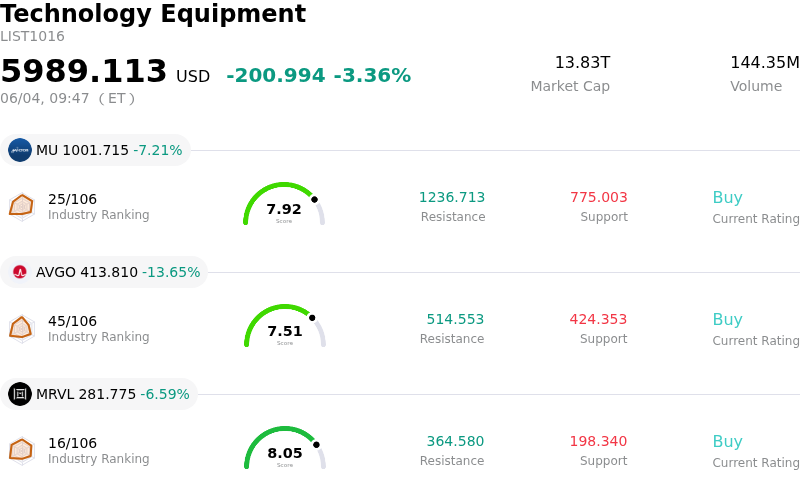
Advanced Micro Devices Inc (AMD) opened down by 5.44%. The Technology Equipment sector is down by 3.36%. The company underperformed the industry. Top 3 stocks by turnover in the sector: Micron Technology Inc (MU) down 7.21%; Broadcom Inc (AVGO) down 13.65%; Marvell Technology Inc (MRVL) down 6.59%.
What is driving Advanced Micro Devices Inc (AMD)’s stock price down today?
AMD's stock is experiencing a downward movement today, reflecting a broader cautious sentiment in the market, particularly within the semiconductor sector. Several factors appear to be contributing to this decline.
One significant element is the performance and outlook of other major players in the AI-linked chip industry. Broadcom, a peer company, reiterated its long-term AI semiconductor revenue forecasts rather than raising them, which disappointed investors seeking stronger guidance. This sparked a sell-off in Broadcom's shares and led to a sympathetic decline across other AI semiconductor stocks, including AMD, as investors engaged in profit-taking after a recent rally in the sector. Micron, Super Micro Computer, Qualcomm, and Intel also saw declines in pre-market trading, further highlighting this industry-wide reaction.
Furthermore, broader market sentiment is being affected by geopolitical risks. Escalating tensions in the Middle East, particularly between the U.S. and Iran, have led to increased oil prices and heightened concerns about inflation and energy costs. This risk-off sentiment is impacting equity markets globally, with U.S. stock futures showing mixed performance and Nasdaq futures, which typically house many tech and semiconductor companies, leading declines. The VIX, a measure of market volatility, also rose, reflecting increased demand for short-term protection.
While AMD announced new product developments at Computex 2026, including extended support for its AM5 platform and new Ryzen CPUs and Radeon GPUs, these positive company-specific news items do not appear to be strong enough to counteract the prevailing negative market and sector-specific pressures. Additionally, while AMD continues to benefit from strong AI and data-center demand, with positive analyst sentiment regarding its AI roadmap, some insider share sales have been noted, which can sometimes weigh on sentiment. There are also concerns about competitive pressure from Nvidia in the PC market and prior warnings from AMD regarding an expected decline in gaming revenue for the second half of 2026 due to higher memory and component costs, which could be contributing to investor caution.AMD's stock is moving lower today, influenced by a combination of sector-specific and broader market factors. A significant driver of this decline appears to be a cautious sentiment spreading across the artificial intelligence (AI)-linked chip sector. This follows Broadcom's recent earnings report, where the company reiterated its long-term AI semiconductor revenue forecasts instead of raising them, leading to a sell-off in its shares and negatively impacting other chip manufacturers like AMD. Several other AI-related chip stocks also experienced downward pressure, indicating a broader market reaction to the perception that expectations for AI growth might have been too high.
Compounding the pressure on equity markets, including the technology sector, are ongoing geopolitical concerns. Escalating tensions in the Middle East, particularly between the U.S. and Iran, have contributed to a risk-off sentiment globally. This has led to an increase in oil prices and raised fears about inflation and energy costs, prompting investors to trim risk exposure. Nasdaq futures, often a bellwether for tech stocks, have shown declines, reflecting this cautious market mood. The VIX, a measure of market volatility, has also risen, signaling increased demand for short-term market protection.
While AMD has recently made positive announcements at Computex 2026, including extending support for its AM5 platform and launching new Ryzen processors and Radeon graphics cards, these developments have not been sufficient to offset the prevailing negative forces. Despite continued strong demand for AMD's AI and data center products and generally positive analyst sentiment regarding its AI roadmap, competitive pressures from other industry players and some insider share sales could also be contributing to the current downward movement. Furthermore, previous company guidance had indicated an expected decline in gaming revenue for the latter half of 2026 due to rising component costs, which may also be a point of concern for investors.
Technical Analysis of Advanced Micro Devices Inc (AMD)
Technically, Advanced Micro Devices Inc (AMD) shows a MACD (12,26,9) value of [48.42], indicating a buy signal. The RSI at 77.78 suggests buy condition and the Williams %R at -2.56 suggests oversold condition. Please monitor closely.
Media Coverage of Advanced Micro Devices Inc (AMD)
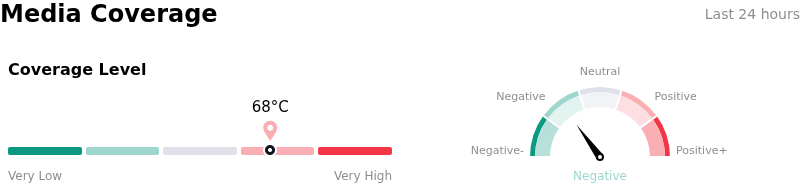
In terms of media coverage, Advanced Micro Devices Inc (AMD) shows a coverage score of 68, indicating a high level of media attention. The overall market sentiment index is currently in bearish zone.
Fundamental Analysis of Advanced Micro Devices Inc (AMD)
Advanced Micro Devices Inc (AMD) is in the Technology Equipment industry. Its latest annual revenue is $34.64B, ranking 8 in the industry. The net profit is $4.33B, ranking 10 in the industry. Company Profile
Over the past month, multiple analysts have rated the company as Buy, with an average price target of $462.12, a high of $665.00, and a low of $136.00.
More details about Advanced Micro Devices Inc (AMD)
Company Specific Risks:
- Heightened competitive pressure in the AI PC and accelerator markets following NVIDIA's recent "superchip" and RTX Spark chip launches, which may divert market share and institutional capital.
- Significant insider selling activity (including ARK Invest's recent offload) and analyst concerns regarding AMD's elevated valuation metrics indicate potential profit-taking and increased downside risk for the stock.
- New U.S. export restrictions on advanced AI chips create regulatory uncertainty and pose a threat to AMD's sales opportunities within the crucial Chinese market.
- Concerns among analysts suggest AMD's AI GPU roadmap may not be as competitive as previously assessed, potentially limiting its ability to challenge dominant players and gain market share in the rapidly evolving AI sector.
This article may include AI-generated content that is human-reviewed, which is for reference and general information purposes only and does not constitute investment advice.
Recommended Articles









Comments (0)
Click the $ button, enter the symbol, and select to link a stock, ETF, or other ticker.