


Microsoft Corp Stock (MSFT) Moved Down by 3.13% on Jun 3: Key Drivers Unveiled



Microsoft Corp (MSFT) moved down by 3.13%. The Software & IT Services sector is down by 1.65%. The company underperformed the industry. Top 3 stocks by turnover in the sector: Alphabet Inc Class A (GOOGL) down 0.21%; Microsoft Corp (MSFT) down 3.13%; Alphabet Inc Class C (GOOG) down 0.27%.
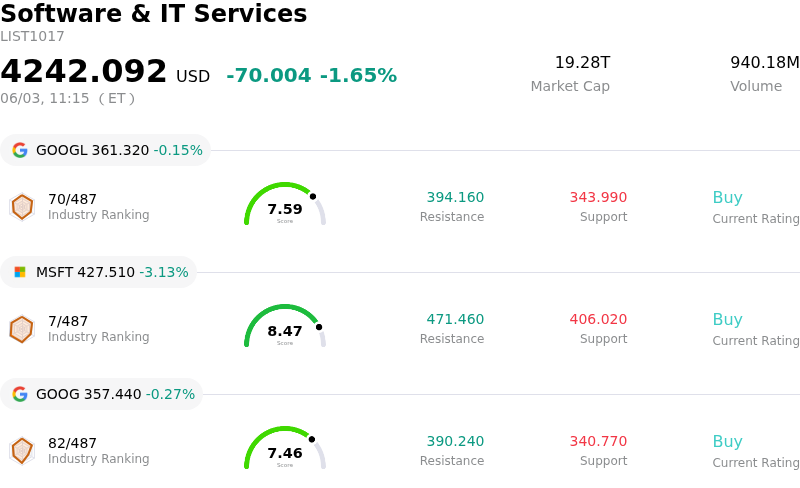
What is driving Microsoft Corp (MSFT)’s stock price down today?
Microsoft experienced a downturn in its share price today. This movement appears to be influenced by a combination of regulatory scrutiny, investor concerns regarding significant capital expenditures, and broader macroeconomic developments.
A key factor weighing on investor sentiment is the ongoing regulatory investigation by the U.S. Federal Trade Commission. This probe has expanded to include Microsoft's cloud services, artificial intelligence initiatives, and software bundling practices. Such governmental oversight introduces uncertainty regarding potential antitrust implications and could necessitate changes to the company's business models, leading to investor caution. Additionally, a recent executive order encouraging AI companies to submit new models for federal review, although voluntary, has also contributed to some unease among investors.
Furthermore, the company's aggressive investment strategy in artificial intelligence infrastructure, projected to involve substantial capital outlays throughout the calendar year 2026, is impacting short-term financial metrics. While these investments are crucial for long-term growth in the AI sector, they are seen as putting pressure on operating margins and free cash flow in the near term, leading some analysts to voice concerns about the pace of returns on invested capital.
On the macroeconomic front, the Organization for Economic Cooperation and Development (OECD) released a revised global economic growth forecast for 2026, lowering its projection. This broader economic deceleration, partly attributed to geopolitical tensions and rising energy prices, contributes to a more cautious market environment overall. Central bank signals, including hawkish reads on the Federal Reserve's rate path from recent job data and indications of potential rate hikes by the European Central Bank, also suggest a tightening monetary policy landscape that can temper investor enthusiasm for growth-oriented technology stocks. Geopolitical events, such as missile attacks in the Middle East, have further fueled market anxiety and contributed to rising crude oil prices, which can impact global economic stability and market performance.
Despite a recent stream of positive announcements from Microsoft's Build conference, including new AI coding tools and quantum computing advancements, and reiterated positive analyst ratings, these broader headwinds and specific company risks likely overshadowed the positive developments, contributing to the stock's negative performance. Market sentiment, while showing underlying AI enthusiasm in some areas, also reflected institutional hedging, suggesting that investors are preparing for potential volatility ahead.
Technical Analysis of Microsoft Corp (MSFT)
Technically, Microsoft Corp (MSFT) shows a MACD (12,26,9) value of [5.73], indicating a buy signal. The RSI at 59.92 suggests neutral condition and the Williams %R at -38.22 suggests oversold condition. Please monitor closely.
Media Coverage of Microsoft Corp (MSFT)
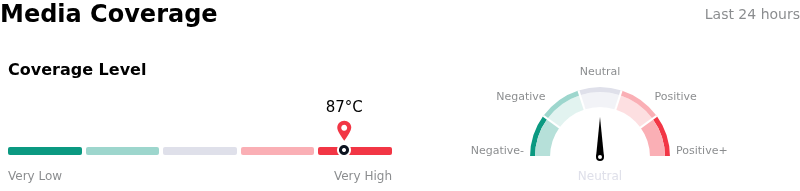
In terms of media coverage, Microsoft Corp (MSFT) shows a coverage score of 87, indicating a very high level of media attention. The overall market sentiment index is currently in neutral zone.
Fundamental Analysis of Microsoft Corp (MSFT)
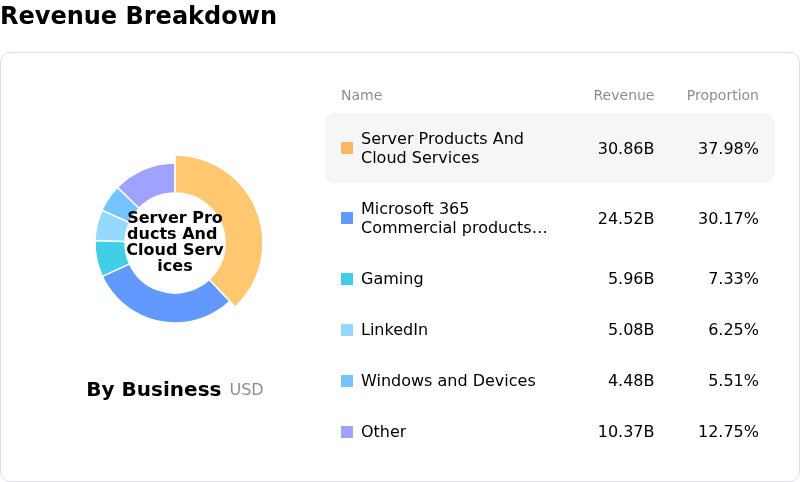
Microsoft Corp (MSFT) is in the Software & IT Services industry. Its latest annual revenue is $281.72B, ranking 3 in the industry. The net profit is $101.83B, ranking 3 in the industry. Company Profile
Over the past month, multiple analysts have rated the company as Buy, with an average price target of $565.39, a high of $870.00, and a low of $400.00.
More details about Microsoft Corp (MSFT)
Company Specific Risks:
- The U.S. Federal Trade Commission has broadened its antitrust probe into Microsoft's cloud computing, software licensing, and AI bundling practices, posing significant regulatory risk.
- Projected capital expenditures of approximately $190 billion for AI infrastructure this year are compressing operating margins, impacting free cash flow, and raising concerns about declining return on invested capital.
- Intensifying competition in the AI and cloud markets, alongside potentially slower-than-expected adoption and monetization of products like Copilot 365, threatens market share and the effective returns on substantial AI investments.
- Aggressive investments in AI and hardware introduce execution risks, particularly given the cautious sentiment observed among enterprise customers regarding the adoption of new AI technologies.
This article may include AI-generated content that is human-reviewed, which is for reference and general information purposes only and does not constitute investment advice.
Recommended Articles









Comments (0)
Click the $ button, enter the symbol, and select to link a stock, ETF, or other ticker.