


Why Casey's Stock Plunged 12%? Earnings Beat Expectations, Fuel Profits Become a Concern



AI Podcast


On September 9, Casey's shares plunged nearly 12% in U.S. pre-market trading despite beating fiscal first-quarter revenue and earnings expectations. Revenue rose 24% to $5.678 billion, and diluted EPS reached $7.37. However, profit growth relied heavily on volatile fuel gross margin expansions rather than core retail volume, raising concerns over growth quality. Furthermore, management maintained its fiscal 2027 guidance unchanged. This conservative outlook disappointed investors, especially given the stock's significant prior rally, fueling doubts about the sustainability of the company's core momentum.
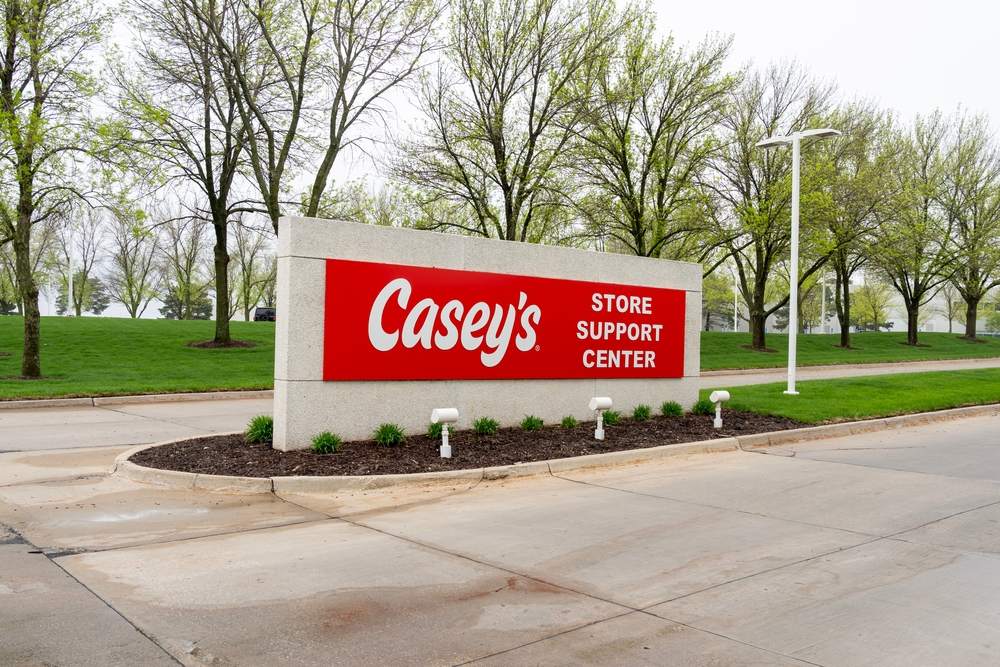
TradingKey - On September 9, general merchandise chain Casey's (CASY) plunged nearly 12% in U.S. pre-market trading. Although the company's latest first-quarter fiscal results exceeded market expectations, investors were disappointed by the quality of profit growth and the company's failure to raise its full-year guidance.
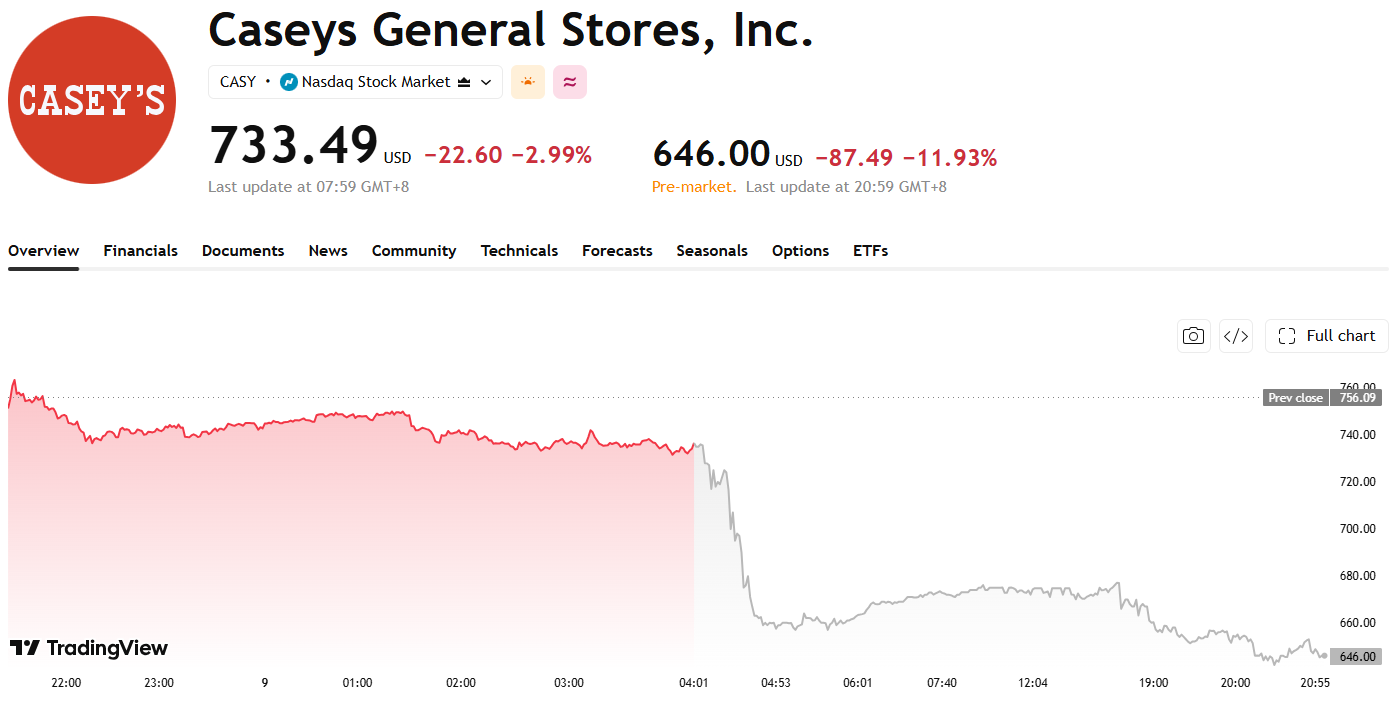
Source: TradingView
For the first quarter of fiscal 2027 ended July 31, Casey's revenue increased 24% year-over-year to $5.678 billion, beating market expectations of $5.56 billion; net profit grew 27.1% to $274 million, and diluted earnings per share rose to $7.37 from $5.77 in the same period last year, also topping analyst estimates of $6.78.
However, profit growth for the quarter was largely driven by the fuel business. The company's fuel gross margin per gallon rose from 41 cents in the prior-year period to 47.8 cents, boosting total fuel gross profit by 19.6% to $447 million. Meanwhile, same-store fuel sales volume fell 0.3%, indicating that profitability gains were mainly driven by expanding price spreads rather than volume growth. Because fuel profits are vulnerable to changes in wholesale prices and market competition, investors typically do not assign a high valuation to these earnings.
In contrast, investors are more focused on whether core retail operations, such as in-store merchandise sales, can achieve steady growth. In other words, while the quarter's impressive earnings performance surpassed expectations, part of the growth stemmed from the volatile fuel business, failing to fully eliminate market doubts regarding growth momentum in the company's main retail business.
Meanwhile, the company maintained its fiscal 2027 outlook unchanged, expecting inside same-store sales growth of 2% to 5% and EBITDA growth of 8% to 10%.
Given that the stock had already experienced a significant rally prior to the release, the market had expected a strong quarter to prompt management to raise forecasts; maintaining the original guidance was therefore viewed as relatively conservative.
This content was translated using AI and reviewed for clarity. It is for informational purposes only.
Recommended Articles












Comments (0)
Click the $ button, enter the symbol, and select to link a stock, ETF, or other ticker.