


Intel Rises Over 4% Premarket, UMC Jumps Over 13%; Duo Form Alliance to Tackle 3nm Process



AI Podcast


Intel and UMC have partnered to co-develop 12nm and 3nm chip processes, leveraging Intel’s Arizona facilities. The 12nm process verification is progressing, with mass production targeted for late 2027. This collaboration supports Intel’s IDM 2.0 strategy by enhancing capacity utilization and foundry market competitiveness. For UMC, the deal provides a strategic re-entry into advanced process nodes, bypassing massive capital expenditure on EUV equipment. By integrating Intel’s technical infrastructure with UMC’s foundry expertise and customer base, both firms aim to secure growth in IoT and Wi-Fi markets while addressing their respective operational challenges.
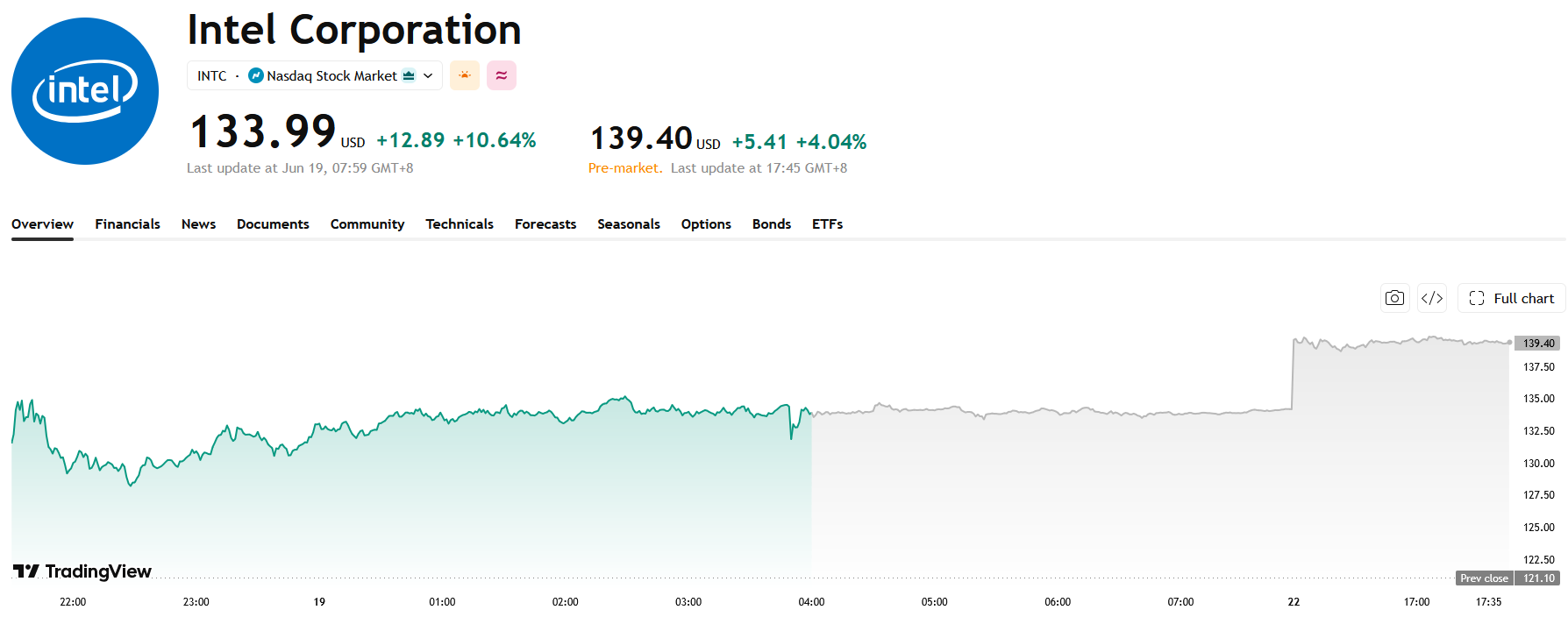
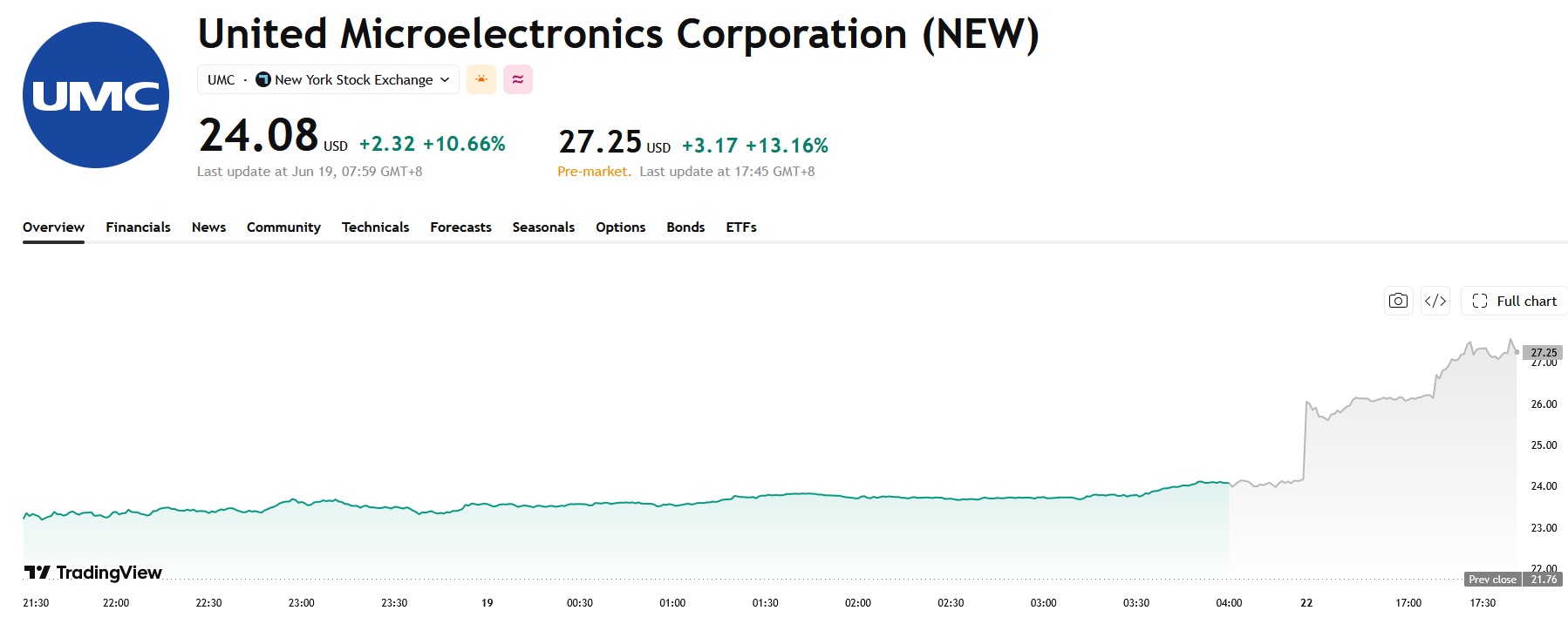
TradingKey - In Monday's US premarket trading, Intel ( INTC) rose over 4% to $139.40; United Microelectronics Corporation ( UMC) rose over 13% to $27.25.
Source: TradingView
Source: TradingView
On the news front, according to tech media outlet FundaAI, Intel and UMC have signed an agreement to jointly develop 12nm and 3nm chip manufacturing processes, with production to be centered at Intel's Ocotillo campus in Arizona, USA.
As early as January 2024, the two parties announced the joint development of a 12nm FinFET process platform, utilizing capacity at Intel's Ocotillo campus in Arizona to serve customers.
After more than two years of intense technical collaboration, the project's progress has exceeded expectations. UMC President Jason Wang confirmed in May 2026 that the verification of the 12nm process is progressing smoothly at Intel's Arizona plant, with verification expected to be completed by the end of 2026. The first batch of design kits will be delivered to customers within this year, tape-out is scheduled to begin in early 2027 with mass production by the end of that year, mainly targeting markets such as IoT and Wi-Fi chips.
According to reports, the cooperation model between UMC and Intel on 3nm is similar to the previous 12nm agreement, where Intel provides its technology accumulation in FinFET transistor design and advanced manufacturing capacity in Arizona, while UMC contributes its rich experience in foundry services on mature nodes and its broad customer resources to improve capacity utilization at Intel's factories.
For Intel, the partnership with UMC is a key step in advancing its IDM 2.0 strategy and challenging TSMC's dominance in the foundry market.
Since Pat Gelsinger proposed the IDM 2.0 strategy in 2021, Intel has been actively positioning its wafer foundry business, but financial pressure and underutilized capacity have previously constrained its development.
After the newly appointed CEO Lip-Bu Tan took office, he suspended several capacity expansion plans outside the United States, shifting focus to leading-edge nodes and domestic US foundry operations. The cooperation with UMC will not only help boost capacity utilization by leveraging UMC's rich customer resources but also allow a rapid entry into emerging markets like IoT and Wi-Fi, injecting new growth momentum into its foundry business.
For UMC, this collaboration represents an important opportunity to return to the advanced process track after nearly a decade. In 2017, UMC announced its exit from the competition in advanced processes below 10nm, focusing instead on mature and specialty processes over the long term.
As Taiwan's first wafer foundry, UMC has accumulated rich manufacturing experience in mature process nodes, with its products widely used in various industrial sectors. However, with the surging demand for advanced chips in the AI era, UMC's market share has continued to shrink, dropping to 3.9% in the first quarter of 2026, falling to fourth globally after being overtaken by SMIC.
The partnership with Intel allows UMC to gain a ticket into the leading-edge process market, achieving a technological leap and market breakthrough without investing massive capital to purchase cutting-edge equipment such as Extreme Ultraviolet (EUV) lithography systems.
This content was translated using AI and reviewed for clarity. It is for informational purposes only.
Recommended Articles










Comments (0)
Click the $ button, enter the symbol, and select to link a stock, ETF, or other ticker.