


Korea’s KOSPI Index Falls Over 3% as Chip Stocks Resume Declines: Samsung Electronics and SK Hynix Both Drop Over 5%



AI Podcast


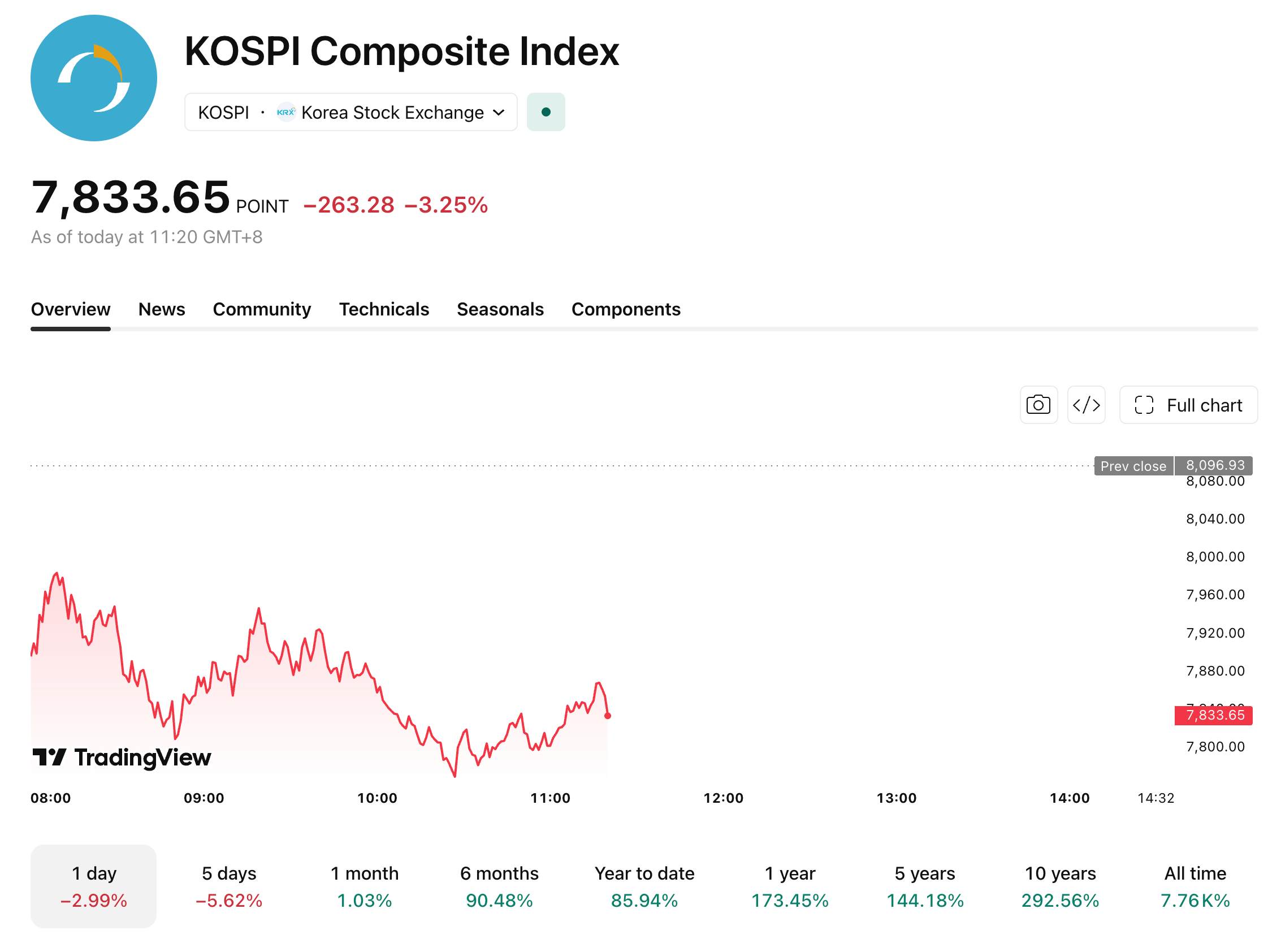
South Korean stocks declined during the Asian session on June 10, with the KOSPI index falling 3.25% to 7,833.65 points, following a sharp 8% rebound the prior day. Chip stocks led the downturn, with Samsung Electronics and SK Hynix down over 5%, mirroring overnight losses in U.S. semiconductor shares and Arm. Geopolitical risks, including U.S. strikes against Iran, weakened market sentiment. Analysts cite dollar strength, pressure on the won, and inflation data as contributing factors to increased market volatility and short-term profit-taking.

TradingKey - During the Asian trading session on June 10, South Korean stocks fluctuated lower as chip stocks again led the broader market decline, weighed down by rising geopolitical risks and an overnight slump in U.S. semiconductor shares.
The South Korean KOSPI index saw its intraday losses widen to as much as 4% at one point, touching a low of 7,772.35 points. As of press time, the KOSPI was down 3.25% at 7,833.65 points. In the previous trading session, the index had rebounded sharply by more than 8%, reclaiming the 8,000-point threshold.
[Source: TradingView]
The semiconductor sector once again became the primary drag, with both Samsung Electronics and SK Hynix falling more than 5%. Overnight, the Philadelphia Semiconductor Index fell 1.93%, while Arm ( ARM) dropped over 6%, and Qualcomm ( QCOM) fell more than 5%, weighing on sentiment for Asian chip stocks.
On the news front, the U.S. military launched strikes against Iran on the 9th, significantly weakening market risk appetite. A researcher at Kiwoom Securities analyzed that against the backdrop of recent dollar strength and ongoing pressure on the South Korean won, short-term profit-taking and a wait-and-see sentiment regarding inflation data have combined to intensify market volatility.
This content was translated using AI and reviewed for clarity. It is for informational purposes only.
Recommended Articles












Comments (0)
Click the $ button, enter the symbol, and select to link a stock, ETF, or other ticker.