


 Discount


Morgan Stanley Stock (MS) Moved Up by 4.65% on Nov 23: Key Drivers Unveiled


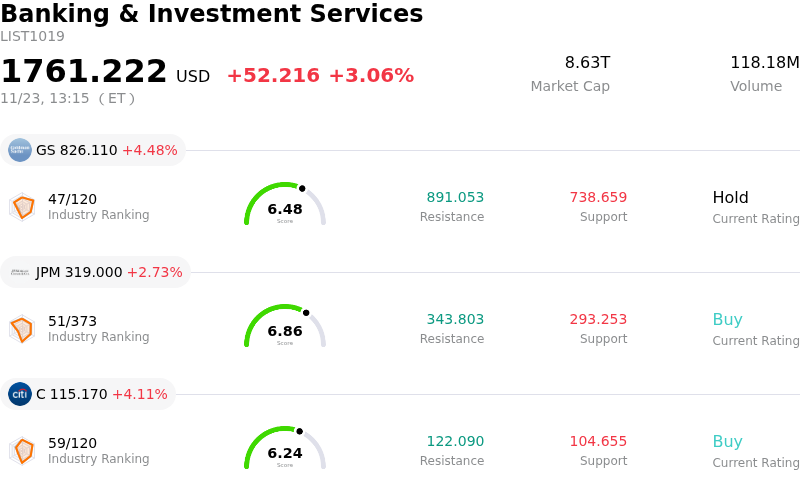
Morgan Stanley (MS) moved up by 4.65%. The Banking & Investment Services sector is up by 3.06%. The company outperformed the industry. Top 3 stocks by turnover in the sector: Goldman Sachs Group Inc (GS) up 4.48%; JPMorgan Chase & Co (JPM) up 2.73%; Citigroup Inc (C) up 4.11%.
What is driving Morgan Stanley (MS)’s stock price up today?
A confluence of macroeconomic tailwinds and a revitalized capital markets backdrop is driving positive momentum in Morgan Stanley. The firm is uniquely positioned to capitalize on a synchronized resurgence in corporate dealmaking, with accelerated momentum across global mergers and acquisitions, equity capital markets, and debt underwriting. Corporate issuers and sponsor-backed private equity funds are actively tapping public markets after prolonged dormancy, unlocking substantial advisory and underwriting fee pipelines. Concurrently, a more predictable monetary policy backdrop and a steepening yield curve are enhancing trading desk profitability within institutional securities, supporting solid net interest performance across wholesale and corporate lending books.
Beyond episodic investment banking recovery, the firm's foundational wealth management and investment management franchises continue to demonstrate resilient structural strength. Long-term net new asset inflows have maintained healthy trajectories, driven by the expansion of workplace solutions and digital advice channels alongside high-touch advisor networks. This elevated fee-based asset base generates durable recurring revenues and high pre-tax margins, shielding the broader franchise from short-term market turbulence while compounding shareholder value. Investors are assigning an expanded valuation multiple to this steadier, capital-light business model, which meaningfully reduces group earnings volatility compared to traditional Wall Street peers.
Institutional portfolio rebalancing has further catalyzed upside momentum, with market participants rotating heavily into large-cap financials to capture pro-cyclical operating leverage. Sentiment toward the tier-one investment banks has been bolstered by constructive regulatory developments, including anticipated relief and adjustments to proposed Basel capital frameworks. Reduced compliance headwinds and disciplined expense management have reinforced expectations for accelerated capital distributions through ongoing share buybacks and robust dividend yields. While macroeconomic volatility and geopolitical friction remain latent risk factors for equity underwriting volumes, the combination of strong fee pipelines, expanding wealth margins, and high capital adequacy maintains an attractive risk-reward profile for Morgan Stanley over the intermediate horizon.
Technical Analysis of Morgan Stanley (MS)
Technically, Morgan Stanley (MS) shows a MACD (12,26,9) value of -3.105, indicating a sell signal. The RSI at 39.752 suggests neutral condition and the Williams %R at 73.706 suggests sell condition. Please monitor closely.
Media Coverage of Morgan Stanley (MS)
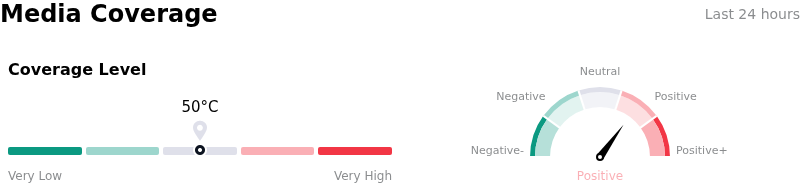
In terms of media coverage, Morgan Stanley (MS) shows a coverage score of 50, indicating a moderate level of media attention. The overall market sentiment index is currently in bullish zone.
Fundamental Analysis of Morgan Stanley (MS)
Morgan Stanley (MS) is in the Banking & Investment Services industry. Its latest annual revenue is $114.74B, ranking 3 in the industry. The net profit is $16.25B, ranking 2 in the industry. Company Profile
Over the past month, multiple analysts have rated the company as Buy, with an average price target of $214.10, a high of $262.00, and a low of $190.00.
More details about Morgan Stanley (MS)
Company Specific Risks:
- Regulatory Scrutiny and AML Deficiencies in Wealth Management: Expanded multi-agency investigations involving FINRA, the SEC, the OCC, and the Federal Reserve into client onboarding, risk-ranking, and anti-money laundering (AML) controls—specifically within international accounts and acquired E*Trade platforms—pose significant risks of severe financial penalties, mandated compliance expenditures, and operational curbs on high-net-worth client growth.
- Cash-Sorting Pressures and Wealth Margin Compression: Sustained client migration from low-cost transactional sweep deposits into higher-yielding money market funds and alternative fixed-income vehicles continues to drive up funding costs, eroding net interest income (NII) and dampening profitability across the wealth management segment.
- Decelerating Fee-Based Inflows and Asset Growth: Institutional analysts are flagging vulnerabilities around slowing organic net new asset (NNA) growth and softer long-term investment management flows, raising execution concerns regarding the firm's ability to maintain its target pretax profit margins in a more volatile market environment.
- Valuation Multiples Vulnerable to Advisory Deal Slumps: Trading at a persistent price-to-book premium compared to traditional universal bank peers, the equity is highly sensitive to multiple contraction if macroeconomic uncertainty or geopolitical shifts prolong client hesitation and delay the pipeline of mergers, debt underwritings, and IPO completions.
This article may include AI-generated content that is human-reviewed, which is for reference and general information purposes only and does not constitute investment advice.
Recommended Articles









Comments (0)
Click the $ button, enter the symbol, and select to link a stock, ETF, or other ticker.