


 Discount


Union Pacific Corp Stock (UNP) Moved Down by 3.13% on Nov 19: Key Drivers Unveiled


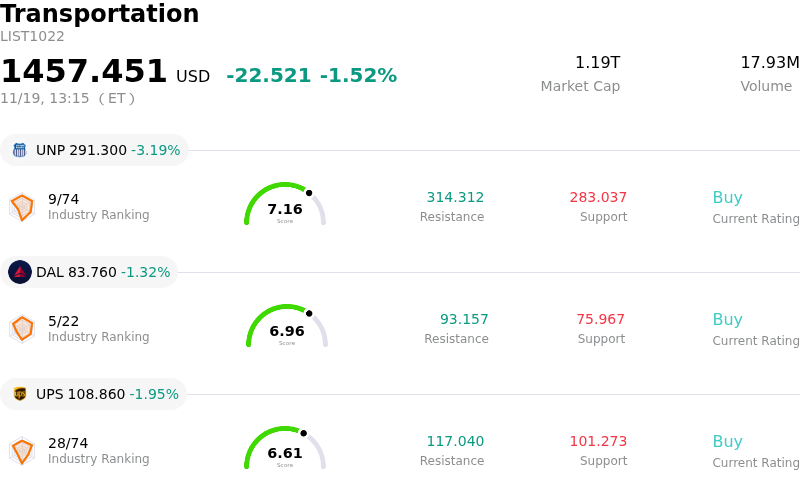
Union Pacific Corp (UNP) moved down by 3.13%. The Transportation sector is down by 1.52%. The company underperformed the industry. Top 3 stocks by turnover in the sector: Union Pacific Corp (UNP) down 3.19%; Delta Air Lines Inc (DAL) down 1.35%; United Parcel Service Inc (UPS) down 1.97%.
What is driving Union Pacific Corp (UNP)’s stock price down today?
Union Pacific faced pronounced downward pressure during today's trading session, driven primarily by renewed concerns over freight volume momentum and broad-based weakness across the industrial transportation complex. As a core bellwether for North American supply chain activity, railroad operators are highly sensitive to shifts in volume trends. Recent rail traffic indicators and softer carload activity across merchandise and intermodal segments have reinforced market apprehension that the broader freight recovery remains uneven and sluggish.
Operational and margin considerations are amplifying investor caution. While Union Pacific continues to pursue productivity gains and network fluidness, sticky cost headwinds, sustained capital reinvestment requirements, and shifting fuel surcharge dynamics continue to challenge improvements in the company's operating ratio. Market participants are increasingly wary that muted industrial output and cautious inventory replenishment strategies among retail and industrial shippers will constrain the carrier's pricing power, leaving revenue growth vulnerable if volume velocity does not reaccelerate.
Broader macroeconomic sentiment also contributed to the pullback. Mixed economic releases pointing to subdued domestic manufacturing activity prompted institutional portfolio managers to reduce exposure to economically sensitive cyclical equities in favor of more defensive asset classes. With the transportation sector facing headwinds from subdued freight fundamentals and macro uncertainty, capital rotated out of rail majors, placing sustained downward pressure on the shares.
Technical Analysis of Union Pacific Corp (UNP)
Technically, Union Pacific Corp (UNP) shows a MACD (12,26,9) value of -2.549, indicating a neutral signal. The RSI at 45.340 suggests neutral condition and the Williams %R at 90.758 suggests oversold condition. Please monitor closely.
Fundamental Analysis of Union Pacific Corp (UNP)
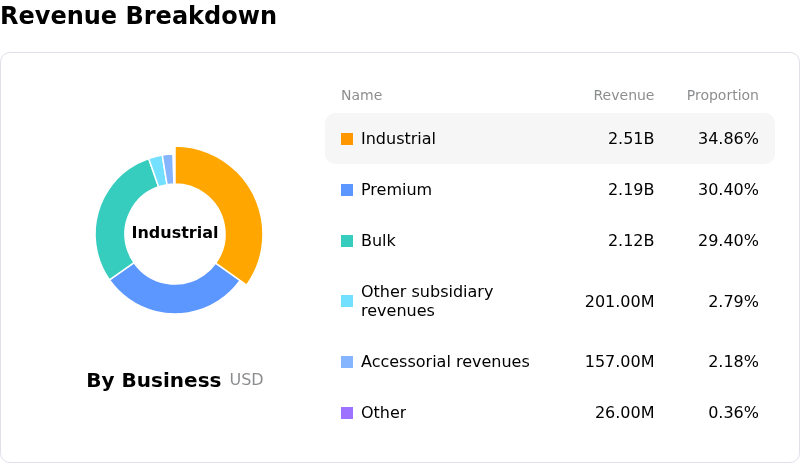
Union Pacific Corp (UNP) is in the Transportation industry. Its latest annual revenue is $24.51B, ranking 3 in the industry. The net profit is $7.14B, ranking 1 in the industry. Company Profile
Over the past month, multiple analysts have rated the company as Buy, with an average price target of $327.90, a high of $375.00, and a low of $245.00.
More details about Union Pacific Corp (UNP)
Company Specific Risks:
- Heightened Regulatory and Political Opposition to Norfolk Southern Merger: Scrutiny over the proposed transcontinental merger with Norfolk Southern escalated following the Surface Transportation Board (STB) public comment deadline, where agricultural shipping coalitions, competing Class I railroads, and bipartisan lawmakers formally urged regulators to block the transaction over anti-competitive concerns and network reliability risks.
- Operating Ratio Pressures from Escalating Fuel Costs: Persistent spikes in fuel expenses continue to compress operational margins, creating a 140-basis-point headwind against the reported operating ratio and limiting further bottom-line conversion despite recent gains in freight volume and pricing.
- Cross-Border Exposure and Secular Coal Weakness: Freight volume outlooks remain constrained by sustained utility displacement of coal shipments by low natural gas prices, alongside macro trade and tariff vulnerabilities surrounding cross-border freight with Mexico, which represents approximately 10% of total revenue via its Ferromex interline connections.
- Institutional Divestments and Executive Succession Uncertainty: Market pressure has increased following recent regulatory filings disclosing significant institutional selling—including position exits by major hedge funds and key transportation ETFs—while the announced retirement of Chief Financial Officer Jennifer Hamann introduces transitional execution risk during a complex, capital-heavy regulatory review cycle.
This article may include AI-generated content that is human-reviewed, which is for reference and general information purposes only and does not constitute investment advice.
Recommended Articles







Comments (0)
Click the $ button, enter the symbol, and select to link a stock, ETF, or other ticker.