


 Discount


HSBC Holdings PLC Stock (HSBC) Closed Down by 3.00% on Nov 18: Key Drivers Unveiled


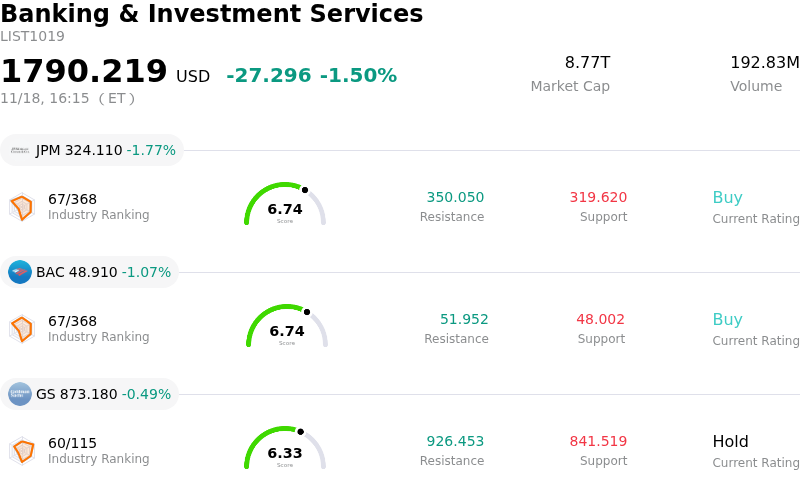
HSBC Holdings PLC (HSBC) closed down by 3.00%. The Banking & Investment Services sector is down by 1.50%. The company underperformed the industry. Top 3 stocks by turnover in the sector: JPMorgan Chase & Co (JPM) down 1.77%; Bank of America Corp (BAC) down 1.07%; Goldman Sachs Group Inc (GS) down 0.49%.
What is driving HSBC Holdings PLC (HSBC)’s stock price down today?
HSBC faced notable downward pressure during the trading session, reflecting a confluence of macroeconomic headwinds, shifting interest rate expectations, and persistent concerns surrounding its core regional credit exposures. As a globally systemic banking institution with heavy operational concentration across the United Kingdom and Asia, the group remains uniquely vulnerable to cross-border policy shifts and regional economic slowdowns.
A primary catalyst dampening investor sentiment is the evolving global monetary policy backdrop. With key central banks, including the Federal Reserve and the Bank of England, navigating easing cycles, market expectations for sustained net interest margins have deteriorated. Because the Hong Kong Monetary Authority tracks United States monetary policy due to the currency peg, lower policy rates translate directly into yield compression across HSBC’s substantial Asian liquidity pools. Investors are growing increasingly cautious that the peak interest margin tailwinds that buoyed banking profitability over recent reporting cycles are diminishing faster than non-interest revenues can compensate.
Compounding margin concerns is ongoing apprehension regarding credit quality and asset performance in Greater China. Exposure to commercial real estate and softer economic momentum across key Asian commercial hubs continue to loom over credit impairment forecasts. While HSBC has made substantial provisions and portfolio adjustments, market participants remain sensitive to any incremental signs of asset quality deterioration, prompting defensive positioning from institutional investors.
Additionally, internal restructuring initiatives continue to introduce near-term friction. The bank has been executing an extensive operational overhaul aimed at streamlining regional reporting lines and reducing long-term costs. However, the execution costs and severance outlays associated with reorganizing business units have raised questions regarding near-term operational leverage. Until the structural simplification yields demonstrable efficiency gains, these restructuring expenses weigh on earnings visibility and return on tangible equity expectations.
From a portfolio allocation standpoint, broader risk-off sentiment in international financial equities contributed to the decline. Institutional desks have exhibited caution toward multi-jurisdictional lenders exposed to regulatory complexities, trade tensions, and currency fluctuations. In the absence of an immediate upside catalyst for loan growth, HSBC shares experienced heightened selling pressure as capital rotated toward more defensive or domestic-oriented assets.
Technical Analysis of HSBC Holdings PLC (HSBC)
Technically, HSBC Holdings PLC (HSBC) shows a MACD (12,26,9) value of 0.429, indicating a neutral signal. The RSI at 35.428 suggests neutral condition and the Williams %R at 88.917 suggests oversold condition. Please monitor closely.
Fundamental Analysis of HSBC Holdings PLC (HSBC)
HSBC Holdings PLC (HSBC) is in the Banking & Investment Services industry. Its latest annual revenue is $69.62B, ranking 4 in the industry. The net profit is $21.10B, ranking 3 in the industry. Company Profile
Over the past month, multiple analysts have rated the company as Buy, with an average price target of $101.03, a high of $112.05, and a low of $90.00.
More details about HSBC Holdings PLC (HSBC)
Company Specific Risks:
- Regulatory AML Transaction Monitoring Sanctions: The Jersey Financial Services Commission (JFSC) imposed a £2,000,000 civil penalty on HSBC Bank plc (Jersey Branch) due to material failures in implementing effective automated transaction monitoring systems and scrutinizing high-risk transactions, exposing the group to renewed regulatory scrutiny and compliance cost pressures.
- Deposit Pricing Friction and Net Interest Margin Compression: Institutional analysts, including JPMorgan, have cut price targets and trimmed outer-year earnings estimates due to severe deposit competition and an unfavorable shift toward higher-cost deposits, threatening the sustainability of management's banking net interest income targets.
- Capital Buffer Depletion Below Target Ranges: Core Equity Tier 1 (CET1) capital has slipped to 13.9%—dropping below the bank's medium-term operational target range of 14.0% to 14.5%—driven by bond portfolio valuation losses under elevated sovereign yields, which limits capital flexibility amidst ongoing multi-billion-dollar share repurchase commitments.
- High Execution Overhead from Organizational Restructuring: Management’s aggressive operational overhaul to wind down portions of Western investment banking activities entails an estimated $1.8 billion in near-term restructuring expenses, with immediate headcount reductions in the global markets division risking business disruption and revenue attrition.
This article may include AI-generated content that is human-reviewed, which is for reference and general information purposes only and does not constitute investment advice.
Recommended Articles







Comments (0)
Click the $ button, enter the symbol, and select to link a stock, ETF, or other ticker.