


Delta Air Lines Inc Stock (DAL) Moved Down by 5.05% on Nov 12: What Investors Need To Know


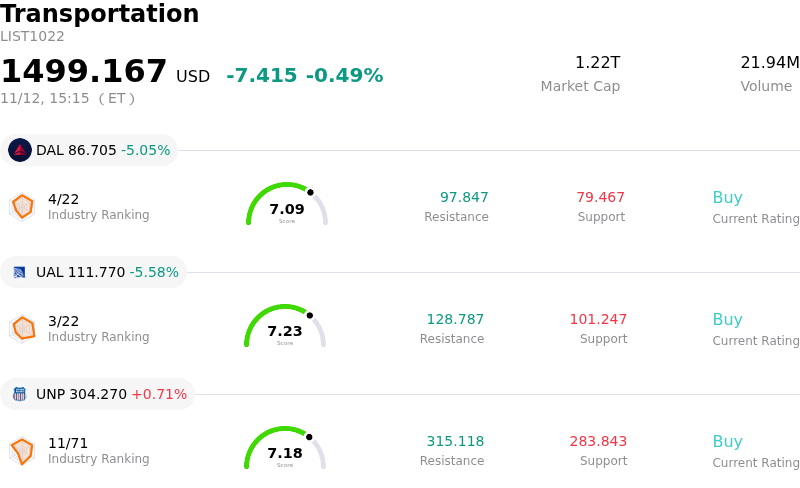
Delta Air Lines Inc (DAL) moved down by 5.05%. The Transportation sector is down by 0.49%. The company underperformed the industry. Top 3 stocks by turnover in the sector: Delta Air Lines Inc (DAL) down 5.05%; United Airlines Holdings Inc (UAL) down 5.66%; Union Pacific Corp (UNP) up 0.71%.
What is driving Delta Air Lines Inc (DAL)’s stock price down today?
Delta Air Lines experienced notable downward pressure during today's session, primarily driven by an abrupt resurgence in crude oil benchmarks and escalating concerns over airline operating margins. Jet fuel represents one of the largest variable expenses for network carriers, and sudden expansions in crack spreads quickly compress quarterly unit profitability. Today's broader uptick in energy commodities, spurred by supply-side tightness and renewed geopolitical risks, triggered immediate sector-wide selling across commercial aviation, with major legacy operators bearing significant pressure as investors recalibrated near-term cost assumptions.
In addition to rising input costs, sentiment was dampened by emerging caution surrounding domestic travel yields and booking momentum heading into the critical holiday travel window. While Delta has benefited from robust international and premium cabin demand over recent quarters, recent channel checks and industry updates suggest softening pricing power in standard main cabin seating. Increased promotional discounting across the domestic market to sustain load factors threatens passenger revenue per available seat mile. Coupled with persistent cost inflation in non-fuel categories, including labor contracts and maintenance expenses, institutional market participants are questioning the carrier's ability to maintain its margin expansion trajectory in the coming quarters.
From a market structure perspective, the decline was exacerbated by broader risk-off behavior within transport and consumer discretionary portfolios. Systematic funds and exchange-traded products tracking the airline sector witnessed accelerated outflows, creating elevated volume on the sell side. While Delta continues to boast an industry-leading loyalty revenue stream and a healthier balance sheet relative to legacy peers, cyclical headwinds and macro uncertainty are prompting a near-term compression in valuation multiples. Investors are likely to adopt a wait-and-see stance until clearer evidence surfaces regarding fuel price stabilization, capacity discipline, and holiday revenue realization.
Technical Analysis of Delta Air Lines Inc (DAL)
Technically, Delta Air Lines Inc (DAL) shows a MACD (12,26,9) value of 1.853, indicating a buy signal. The RSI at 54.869 suggests neutral condition and the Williams %R at 37.613 suggests buy condition. Please monitor closely.
Fundamental Analysis of Delta Air Lines Inc (DAL)
Delta Air Lines Inc (DAL) is in the Transportation industry. Its latest annual revenue is $63.36B, ranking 1 in the industry. The net profit is $5.00B, ranking 1 in the industry. Company Profile

Over the past month, multiple analysts have rated the company as Buy, with an average price target of $99.22, a high of $125.00, and a low of $51.39.
More details about Delta Air Lines Inc (DAL)
Company Specific Risks:
- Sustained Jet Fuel Cost Inflation: Lingering volatility in global crude benchmarks continues to pressure Delta's operating margins, reinforcing recent downward earnings revisions where an estimated multi-billion-dollar surge in annual fuel expenses heavily compresses pre-tax profitability and limits free cash flow flexibility.
- Cluster of Executive Insider Disposals: Recent SEC regulatory disclosures highlight notable insider divestitures by senior management—including multi-million-dollar open-market share sales by CEO Edward Bastian, President Peter Carter, and executive vice presidents—prompting institutional skepticism over valuation durability and triggering intraday distribution.
- Valuation Premium and Analyst Target Reductions: Quantitative valuation assessments indicate the stock trades at an elevated trailing price-to-earnings multiple of roughly 18x (nearly double its historical median), which alongside recent price target cuts from firms including Barclays, UBS, and Susquehanna exposes shares to sharp re-rating risk on any macroeconomic softening.
- Debt Refinancing Burden Amid Hawkish Monetary Signals: Following Delta's recent completion of a $500 million senior unsecured notes offering to repay legacy debt, hawkish Federal Reserve commentary advocating for further policy tightening threatens to elevate interest expenses and debt-servicing costs for Delta's capital-intensive operations.
This article may include AI-generated content that is human-reviewed, which is for reference and general information purposes only and does not constitute investment advice.
Recommended Articles









Comments (0)
Click the $ button, enter the symbol, and select to link a stock, ETF, or other ticker.