


Equinor ASA Stock (EQNR) Moved Up by 3.44% on Nov 12: Key Drivers Unveiled


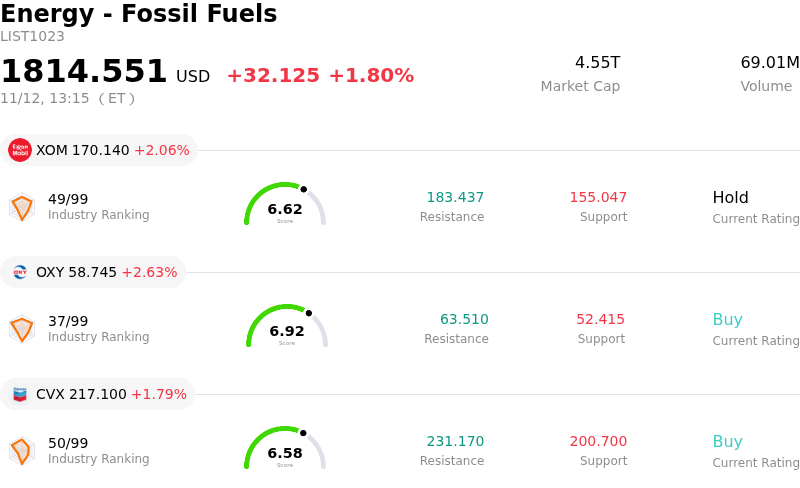
Equinor ASA (EQNR) moved up by 3.44%. The Energy - Fossil Fuels sector is up by 1.80%. The company outperformed the industry. Top 3 stocks by turnover in the sector: Exxon Mobil Corp (XOM) up 2.06%; Occidental Petroleum Corp (OXY) up 2.63%; Chevron Corp (CVX) up 1.79%.
What is driving Equinor ASA (EQNR)’s stock price up today?
Equinor shares advanced firmly during the session, propelled by a broad rally across the European energy complex and strengthening underlying commodity fundamentals. The primary catalyst behind the upward momentum was a sharp uptick in European natural gas benchmarks alongside solid gains in Brent crude oil. Heightened geopolitical uncertainty and tightening supply-demand balances in key regional hubs prompted market participants to price in an expanded energy security premium. As Europe’s dominant pipeline gas supplier, Equinor is uniquely leveraged to elevated Dutch Title Transfer Facility pricing, allowing positive price action in benchmark gas contracts to immediately filter through to upward revisions in near-term cash flow expectations.
Beyond top-line commodity momentum, institutional sentiment was reinforced by the company’s disciplined capital allocation and sustained operational reliability across the Norwegian Continental Shelf. Investors continue to favor Equinor’s low-cost asset base and superior cash conversion cycle, which provide substantial insulation against broader macroeconomic volatility. The market also responded favorably to ongoing management efforts to optimize capital expenditure across its integrated portfolio, particularly by balancing high-return upstream oil and gas investments with disciplined hurdles for its offshore wind and renewable power pipeline. This operational focus reassures institutional portfolios seeking stable capital return yields through consistent dividends and active share buyback tranches.
From a portfolio positioning perspective, the stock benefited from systematic sector rotation into European and international integrated energy names trading at compelling free cash flow yields relative to U.S. peers. Technical buying and options flow further amplified the upward move as momentum indicators broke above short-term resistance levels. Looking ahead, institutional investors will remain focused on winter weather trajectories across continental Europe, pipeline maintenance schedules, and management guidance on capital distribution sustainability, all of which will serve as critical determinants for whether this positive valuation re-rating can be sustained.
Technical Analysis of Equinor ASA (EQNR)
Technically, Equinor ASA (EQNR) shows a MACD (12,26,9) value of -1.290, indicating a sell signal. The RSI at 44.751 suggests neutral condition and the Williams %R at 64.092 suggests sell condition. Please monitor closely.
Fundamental Analysis of Equinor ASA (EQNR)
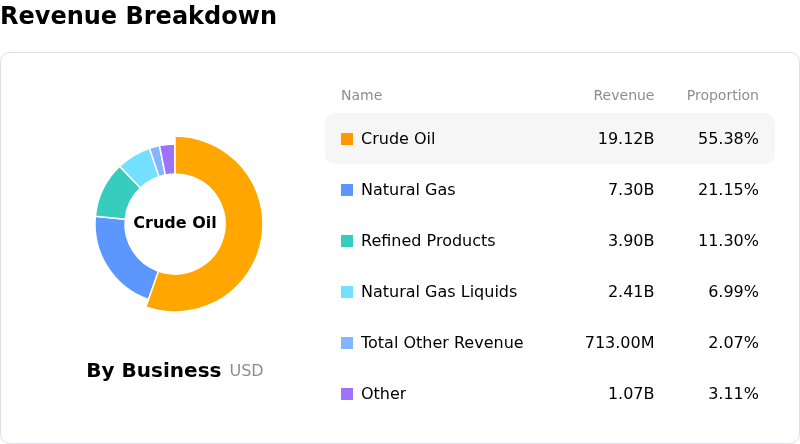
Equinor ASA (EQNR) is in the Energy - Fossil Fuels industry. Its latest annual revenue is $105.83B, ranking 9 in the industry. The net profit is $5.04B, ranking 9 in the industry. Company Profile
Over the past month, multiple analysts have rated the company as Hold, with an average price target of $42.02, a high of $51.00, and a low of $37.00.
More details about Equinor ASA (EQNR)
Company Specific Risks:
- Institutional Rating Downgrade and Cash Flow Concerns: Morgan Stanley downgraded Equinor to Underweight from Equal-weight, reducing valuation targets and highlighting mounting downside risks to near-term cash flow generation and margin sustainability.
- North Sea Production Outages Following Facility Fire: Equinor was forced to halt output and initiate unplanned repairs at its offshore Visund platform in the North Sea after an electrical fire broke out, elevating near-term volume disruption risks and maintenance expenditures.
- Earnings and Revenue Miss: The company fell short of consensus analyst expectations in its latest operating results, reporting adjusted earnings per share of $1.20 against an anticipated $1.38 as softening realized hydrocarbon prices and higher operating expenses compressed returns.
- Persistent Renewables Margins and Execution Drag: Continued losses in the renewable power development segment and slower-than-anticipated project execution across offshore wind installations present an ongoing operational drag on consolidated return on capital employed.
This article may include AI-generated content that is human-reviewed, which is for reference and general information purposes only and does not constitute investment advice.
Recommended Articles









Comments (0)
Click the $ button, enter the symbol, and select to link a stock, ETF, or other ticker.