


Toronto-Dominion Bank Stock (TD) Closed Down by 3.99% on Nov 5: Drivers Behind the Movement


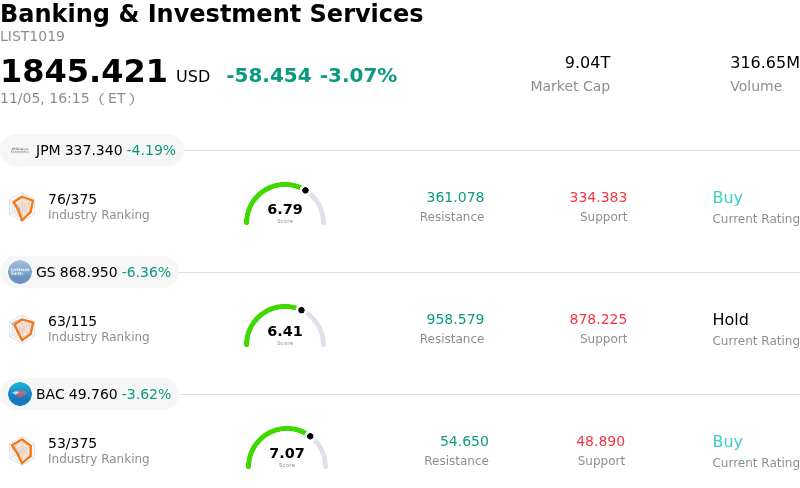
Toronto-Dominion Bank (TD) closed down by 3.99%. The Banking & Investment Services sector is down by 3.07%. The company underperformed the industry. Top 3 stocks by turnover in the sector: JPMorgan Chase & Co (JPM) down 4.19%; Goldman Sachs Group Inc (GS) down 6.36%; Bank of America Corp (BAC) down 3.62%.
What is driving Toronto-Dominion Bank (TD)’s stock price down today?
Toronto-Dominion Bank experienced pronounced selling pressure during the session, driven by mounting investor concerns over credit quality deterioration, margin compression, and lingering operational overhangs. Institutional capital adopted a cautious stance toward large North American diversified lenders as macroeconomic headwinds and sector-specific friction weighed on valuation multiples.
A primary catalyst behind the downward trajectory is deteriorating sentiment surrounding net interest margins and provisions for credit losses. With monetary policy entering an easing cycle across North America, asset yields are repricing downward faster than deposit funding costs can adjust, tightening net interest spreads. Compounding this challenge, elevated consumer borrowing costs and distress in commercial real estate portfolios have sparked fears of rising non-performing loans. Institutional investors are preemptively factoring in higher credit loss provisions, which directly threaten near-term earnings stability and dilute return on equity expectations.
In addition to cyclical headwinds, company-specific structural limitations continue to dampen sentiment. Regulatory remediation efforts, particularly constraints and intense scrutiny surrounding the bank’s cross-border footprint and compliance framework, continue to inhibit balance sheet expansion. The burden of heightened operational and legal expenditures, combined with restricted avenues for accretive capital deployment, limits management’s ability to aggressively pursue organic loan growth or initiate sizable capital return programs. These limitations have prompted several institutional desks to trim forward earnings estimates and lower terminal valuation multiples relative to less constrained domestic peers.
Broader equity market dynamics further exacerbated the intraday decline, characterized by defensive portfolio repositioning and reduced appetite for interest rate-sensitive financials. With market volatility elevated, institutional funds rotated toward sectors with clearer earnings visibility and unencumbered operational agility. Until Toronto-Dominion Bank demonstrates decisive stabilization in credit provisioning, cost containment in regulatory remediation, and a clear catalyst for margin expansion, shares are likely to remain range-bound and vulnerable to broader financial sector drawdowns.
Technical Analysis of Toronto-Dominion Bank (TD)
Technically, Toronto-Dominion Bank (TD) shows a MACD (12,26,9) value of 0.179, indicating a buy signal. The RSI at 51.304 suggests neutral condition and the Williams %R at 61.489 suggests sell condition. Please monitor closely.
Fundamental Analysis of Toronto-Dominion Bank (TD)
Toronto-Dominion Bank (TD) is in the Banking & Investment Services industry. Its latest annual revenue is $34.67B, ranking 14 in the industry. The net profit is $14.31B, ranking 6 in the industry. Company Profile
Over the past month, multiple analysts have rated the company as Buy, with an average price target of $180.50, a high of $192.88, and a low of $171.14.
More details about Toronto-Dominion Bank (TD)
Company Specific Risks:
- Regulatory Asset Cap Restricting U.S. Growth: Enforcement of the Office of the Comptroller of the Currency's (OCC) $434 billion asset cap on U.S. retail banking subsidiaries structurally constrains loan and deposit expansion, forcing active balance-sheet shrinking and portfolio divestitures in TD's primary geographic growth market.
- Persistent Compliance and Monitorship Overheads: Multi-year anti-money laundering remediation programs mandated by the Department of Justice and FinCEN impose an estimated $500 million in annual compliance expenses and independent monitorship costs, directly compressing operating leverage and net operating margins.
- Catastrophe Claims and Credit Provision Pressures: Earnings face near-term non-interest expense headwinds from roughly $130 million in recently reported one-off catastrophe insurance claim charges ahead of fiscal fourth-quarter reporting, alongside elevated provisions for credit losses across Canadian personal and commercial lending portfolios.
- Valuation Multiple Vulnerability Amid Structural Ceilings: Institutional analysts have raised caution over valuation multiples trading at an excessive premium relative to underlying earnings power, prompting intraday seller dominance as investors discount capital return programs against regulatory and macro growth limits.
This article may include AI-generated content that is human-reviewed, which is for reference and general information purposes only and does not constitute investment advice.
Recommended Articles







Comments (0)
Click the $ button, enter the symbol, and select to link a stock, ETF, or other ticker.