


Visa Inc Stock (V) Closed Down by 3.20% on Nov 5: Key Drivers Unveiled


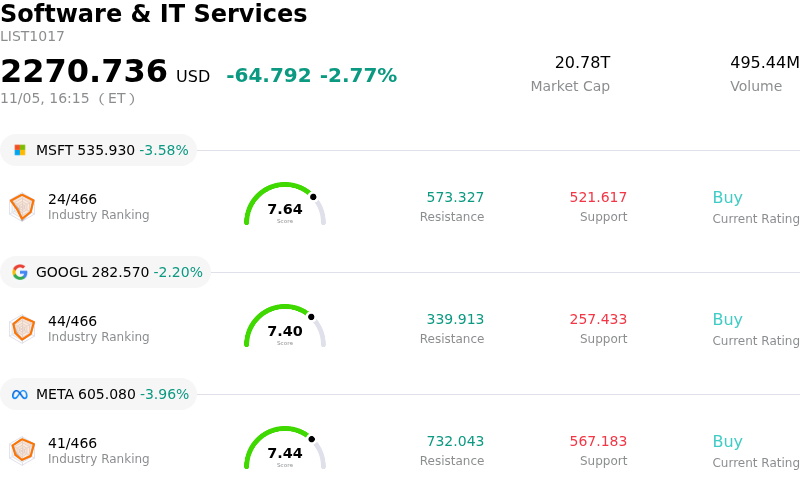
Visa Inc (V) closed down by 3.20%. The Software & IT Services sector is down by 2.77%. The company underperformed the industry. Top 3 stocks by turnover in the sector: Microsoft Corp (MSFT) down 3.58%; Alphabet Inc Class A (GOOGL) down 2.20%; Meta Platforms Inc (META) down 3.96%.
What is driving Visa Inc (V)’s stock price down today?
Visa experienced noticeable downward pressure as market participants digested updated forward guidance and reassessed near-term growth trajectories for global payment networks. Following the recent close of its fiscal year, institutional scrutiny has shifted toward signs of moderation in domestic payment volumes and discretionary retail spending. While headline transaction activity remains relatively healthy, incremental softening in middle- and lower-income consumer outlays has heightened concerns that volume growth may face persistent headwinds through the coming quarters, prompting tactical de-risking among asset managers.
Adding to the cautious sentiment, regulatory and legal overhangs continue to weigh on the company's valuation multiples. Scrutiny from antitrust authorities concerning debit routing practices, network fee structures, and market exclusivity remains an active concern for institutional investors. In tandem, ongoing legislative efforts surrounding interchange fee reform and merchant payment choice introduce medium-term uncertainty over Visa's pricing power and core fee retention. Even in the absence of immediate legal outcomes, the prolonged overhang dampens risk appetite and caps the premium multiple historically afforded to the payments giant.
Macroeconomic conditions and cross-border travel trends also contributed to the session's pullback. Elevated interest rates and persistent inflationary pressures in key overseas markets are beginning to moderate high-margin international travel spending, which serves as a primary engine for cross-border transaction revenue. Furthermore, foreign exchange volatility has generated translation drag on international merchant solutions. As sovereign yields hold firm, long-duration compounders with premium valuations are facing broader sector-wide valuation compression as institutional capital rotates into higher-yielding liquid instruments or cyclicals with immediate earnings revisions.
From an institutional perspective, the selloff reflects a recalibration of short-term expectations rather than structural deterioration in Visa's competitive moat. Value-added services and new payment flows continue to offer long-term diversification, but near-term earnings sensitivity to consumer sentiment leaves the equity vulnerable to multiple contraction. In the near term, institutional flows are likely to remain guarded until clearer evidence emerges that cross-border volumes and payment yields can withstand a decelerating consumer environment and heightened global regulatory scrutiny.
Technical Analysis of Visa Inc (V)
Technically, Visa Inc (V) shows a MACD (12,26,9) value of 3.115, indicating a buy signal. The RSI at 63.250 suggests neutral condition and the Williams %R at 33.138 suggests buy condition. Please monitor closely.
Media Coverage of Visa Inc (V)
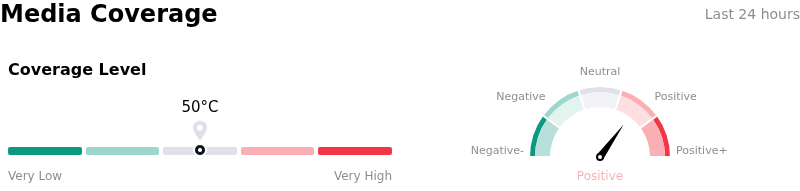
In terms of media coverage, Visa Inc (V) shows a coverage score of 50, indicating a moderate level of media attention. The overall market sentiment index is currently in bullish zone.
Fundamental Analysis of Visa Inc (V)
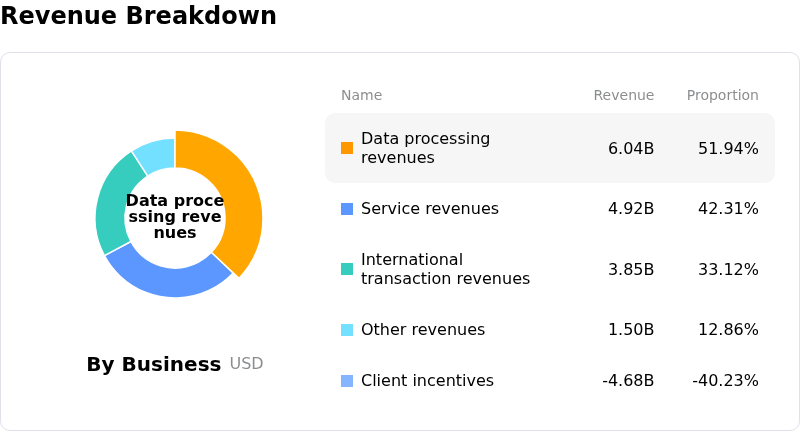
Visa Inc (V) is in the Software & IT Services industry. Its latest annual revenue is $45.90B, ranking 12 in the industry. The net profit is $23.50B, ranking 5 in the industry. Company Profile
Over the past month, multiple analysts have rated the company as Buy, with an average price target of $442.53, a high of $500.00, and a low of $339.68.
More details about Visa Inc (V)
Company Specific Risks:
- Escalating Multidistrict and Cross-Border Interchange Litigation: Recent filings and disclosures highlight mounting litigation reserves, including over $1.1 billion in accrued interchange multidistrict litigation liabilities and an active £5 billion U.K. interchange-fee claim, creating ongoing cash flow drag and widening the spread between GAAP results and adjusted operating margins.
- Antitrust Scrutiny and Federal Class Action Exposure: Persistent legal exposure from Department of Justice probes into core debit routing practices and an active federal securities fraud class action regarding antitrust compliance controls continue to generate regulatory overhang and headline vulnerability.
- Wall Street Downgrades Amid Multiple Compression: Recent analyst rating downgrades to Hold (including Freedom Broker) reflect institutional caution surrounding stretched valuation multiples approaching 39x trailing earnings, leaving the shares vulnerable to sharp intraday re-pricing during broader market drawdowns.
- Margin Compression from Technology Costs and Client Incentives: Elevated infrastructure, fraud-prevention, and processing expenditures, combined with higher client incentive payments necessary to defend transaction share against alternative payment rails, pose immediate headwinds to forward operating leverage.
This article may include AI-generated content that is human-reviewed, which is for reference and general information purposes only and does not constitute investment advice.
Recommended Articles







Comments (0)
Click the $ button, enter the symbol, and select to link a stock, ETF, or other ticker.