


LPL Financial Holdings Inc Stock (LPLA) Moved Down by 13.85% on Oct 28: Facts Behind the Movement



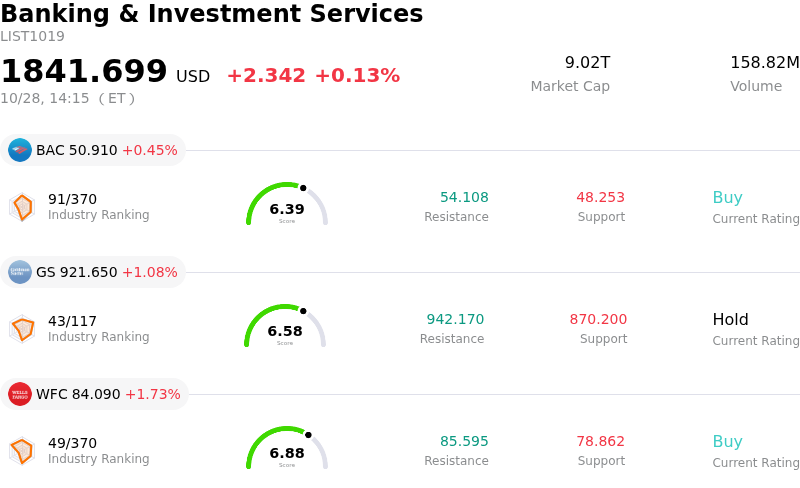
LPL Financial Holdings Inc (LPLA) moved down by 13.85%. The Banking & Investment Services sector is up by 0.13%. The company underperformed the industry. Top 3 stocks by turnover in the sector: Bank of America Corp (BAC) up 0.51%; Goldman Sachs Group Inc (GS) up 1.08%; Wells Fargo & Co (WFC) up 1.73%.
What is driving LPL Financial Holdings Inc (LPLA)’s stock price down today?
The sharp downward trajectory in LPL Financial Holdings stock stems primarily from forward-looking integration and retention concerns revealed during its third-quarter earnings update. Although the wealth management platform reported headline profitability that exceeded consensus earnings expectations, market participants focused heavily on downgraded expectations for its key acquisition of Commonwealth Financial Network. Management revised its projected asset retention rate for the Commonwealth transaction downward to roughly 83 percent from the prior target of 90 percent, citing advisor attrition ahead of the upcoming platform conversion. Consequently, estimated run-rate EBITDA from the deal was trimmed, undermining investor confidence in the near-term accretive potential of the integration.
Compounding the selloff was a deceleration in advisor recruiting dynamics and organic asset growth. Recruited assets contracted notably year-over-year during the quarter, while management signaled moderating net new asset inflows entering the final quarter of the fiscal year. Investors were further unnerved by forward expense guidance pointing to sequential cost pressures. Management outlined rising fourth-quarter outlays across transition-assistance loan amortization, interest expense, payout rates, and depreciation related to platform technology deployments. These cost headwinds threaten operating margins just as top-line asset gathering shows signs of temporary moderation.
Analyst sentiment reflected these near-term operational hurdles, prompting several major Wall Street brokerages to lower their price targets on the equity. While institutional investors recognize LPL Financial's enduring scale, expanding advisory platform, and continuous capital return efforts through dividends and share buybacks, near-term execution risks around acquisition integration and margin compression have dominated the market narrative. Until advisor retention stabilizes and deal synergies materialize as originally envisioned, the stock remains vulnerable to sentiment shifts tied to integration efficacy.
Technical Analysis of LPL Financial Holdings Inc (LPLA)
Technically, LPL Financial Holdings Inc (LPLA) shows a MACD (12,26,9) value of -5.281, indicating a sell signal. The RSI at 23.492 suggests sell condition and the Williams %R at 94.461 suggests oversold condition. Please monitor closely.
Fundamental Analysis of LPL Financial Holdings Inc (LPLA)
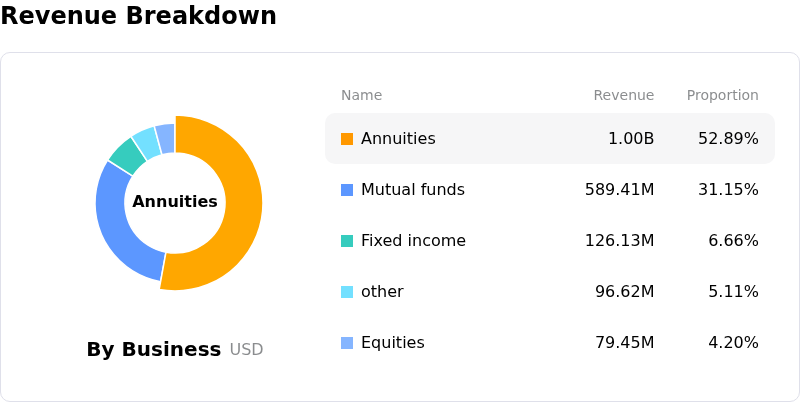
LPL Financial Holdings Inc (LPLA) is in the Banking & Investment Services industry. Its latest annual revenue is $16.81B, ranking 14 in the industry. The net profit is $863.02M, ranking 25 in the industry. Company Profile
Over the past month, multiple analysts have rated the company as Buy, with an average price target of $426.30, a high of $554.00, and a low of $362.00.
More details about LPL Financial Holdings Inc (LPLA)
Company Specific Risks:
- Lowered Commonwealth Retention Guidance: Management reduced the projected asset retention rate for the pending Commonwealth Financial Network acquisition from 90% to approximately 83% as several advisors opted not to transition, trimming expected annual run-rate EBITDA from $435 million to $415 million ahead of mid-November onboarding.
- Deceleration in Recruiting and Organic Growth: Recruited assets fell 26% year-over-year to $24.1 billion in Q3 2026, while management signaled slowing momentum with October organic asset growth expected at roughly 3% annualized, down from 5% in the third quarter.
- Wall Street Downgrades and Target Price Cuts: Multiple investment firms, including TD Cowen and Truist, downgraded the stock to Hold ratings while institutions like Wells Fargo and Barclays reduced price targets, reflecting heightened concern over integration execution and platform retention.
- Margin Compression from Escalating Q4 Costs: Profitability faces near-term pressure due to expected fourth-quarter expense increases, including higher advisor payout rates, transition-loan amortization escalating to $160 million, and deferred G&A expenditures shifting from Q3 into Q4.
This article may include AI-generated content that is human-reviewed, which is for reference and general information purposes only and does not constitute investment advice.
Recommended Articles







Comments (0)
Click the $ button, enter the symbol, and select to link a stock, ETF, or other ticker.