


Oracle Corp Stock (ORCL) Moved Down by 3.19% on Oct 12: Drivers Behind the Movement



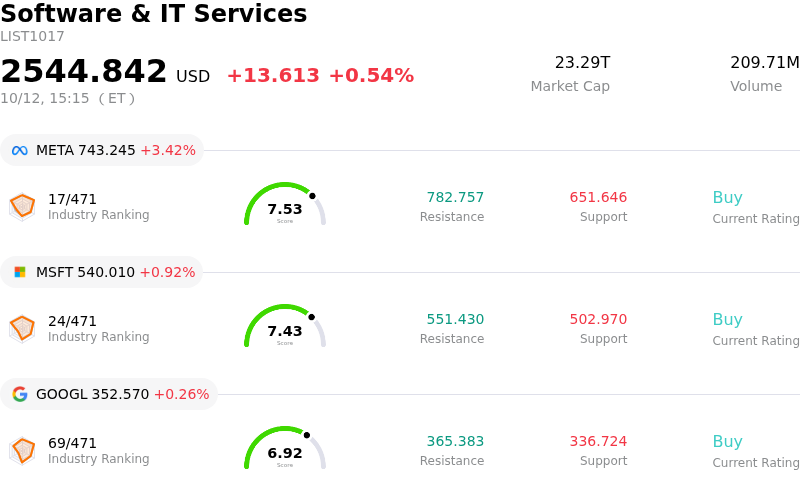
Oracle Corp (ORCL) moved down by 3.19%. The Software & IT Services sector is up by 0.54%. The company underperformed the industry. Top 3 stocks by turnover in the sector: Meta Platforms Inc (META) up 3.39%; Microsoft Corp (MSFT) up 0.90%; Alphabet Inc Class A (GOOGL) up 0.26%.
What is driving Oracle Corp (ORCL)’s stock price down today?
Oracle experienced downward momentum and heightened intraday volatility as broader technology equities faced selling pressure, driven primarily by emerging counterparty risk concerns surrounding key artificial intelligence partners. Reports revising annualized revenue expectations lower for major cloud infrastructure clients like OpenAI sparked institutional anxiety over whether these customers can fully monetize and fulfill their expansive multi-year cloud commitments with Oracle. Given that market valuations heavily weigh Oracle's ability to convert its massive contracted cloud backlog into sustainable high-margin revenue, any perceived risk to client demand or solvency immediately triggers profit-taking across the sector.
Compounding the sell-off are persistent balance sheet anxieties linked to Oracle's aggressive artificial intelligence buildout. The company's massive capital expenditure strategy has driven free cash flow into negative territory, requiring extensive debt financing and off-balance-sheet arrangements to secure expensive hardware and power infrastructure. Rising leverage and elevated credit default swap spreads have raised concerns among credit analysts and institutional investors regarding prospective borrowing costs and credit rating stability, overshadowing long-term backlog growth.
Operational challenges have further weighed on investor sentiment. Supply chain and regulatory hurdles, including local pipeline delays for major AI data center campuses, have introduced execution risks and potential cost overruns as the company considers temporary, higher-cost power logistics to keep construction schedules intact. Combined with broader macro caution around software valuations and bearish technical signals across major moving averages, these factors drove the stock lower as market participants adopted a risk-off posture.
Technical Analysis of Oracle Corp (ORCL)
Technically, Oracle Corp (ORCL) shows a MACD (12,26,9) value of -0.292, indicating a sell signal. The RSI at 44.490 suggests neutral condition and the Williams %R at 65.892 suggests sell condition. Please monitor closely.
Media Coverage of Oracle Corp (ORCL)
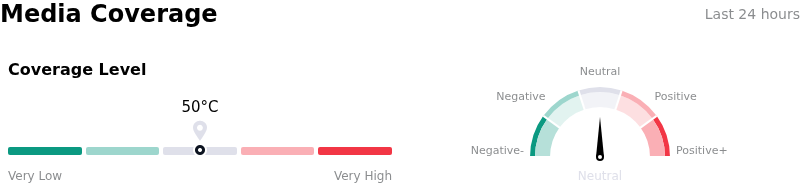
In terms of media coverage, Oracle Corp (ORCL) shows a coverage score of 50, indicating a moderate level of media attention. The overall market sentiment index is currently in neutral zone.
Fundamental Analysis of Oracle Corp (ORCL)
Oracle Corp (ORCL) is in the Software & IT Services industry. Its latest annual revenue is $67.36B, ranking 8 in the industry. The net profit is $16.98B, ranking 6 in the industry. Company Profile
Over the past month, multiple analysts have rated the company as Buy, with an average price target of $246.26, a high of $400.00, and a low of $110.00.
More details about Oracle Corp (ORCL)
Company Specific Risks:
- Data Center Execution Delays and Force Majeure Notices: Power grid bottlenecks and regulatory pipeline rejections in New Mexico and Wisconsin have delayed key AI data center projects such as Project Jupiter, forcing Oracle to issue force majeure notices to developers and explore expensive fuel workarounds that threaten cloud revenue recognition timelines.
- Debt Burden and Imminent Credit Rating Downgrade Vulnerability: Aggressive FY2027 capital expenditure guidance of $90–$95 billion following -$23.7 billion in free cash flow has heightened leverage concerns, driving 5-year credit default swap (CDS) spreads to record highs of 261 basis points and increasing the risk of a credit rating downgrade from BBB- to junk status.
- Customer Concentration and OpenAI Counterparty Risk: Approximately $300 billion of Oracle's $664 billion remaining performance obligation (RPO) backlog relies directly on OpenAI, exposing Oracle to severe volatility whenever market doubts surface concerning OpenAI's financial health, burn rate, or contract conversion schedule.
- Margin Compression from Escalating Infrastructure and Restructuring Costs: Soaring data center buildout costs, potential fourfold cost spikes from utilizing trucked natural gas for power generation, and up to $2.1 billion in anticipated charges under its 2026 Restructuring Plan continue to depress gross margins and short-term operational profitability.
This article may include AI-generated content that is human-reviewed, which is for reference and general information purposes only and does not constitute investment advice.
Recommended Articles





Comments (0)
Click the $ button, enter the symbol, and select to link a stock, ETF, or other ticker.