


Bristol-Myers Squibb Co Stock (BMY) Moved Down by 3.56% on Oct 5: What Investors Need To Know



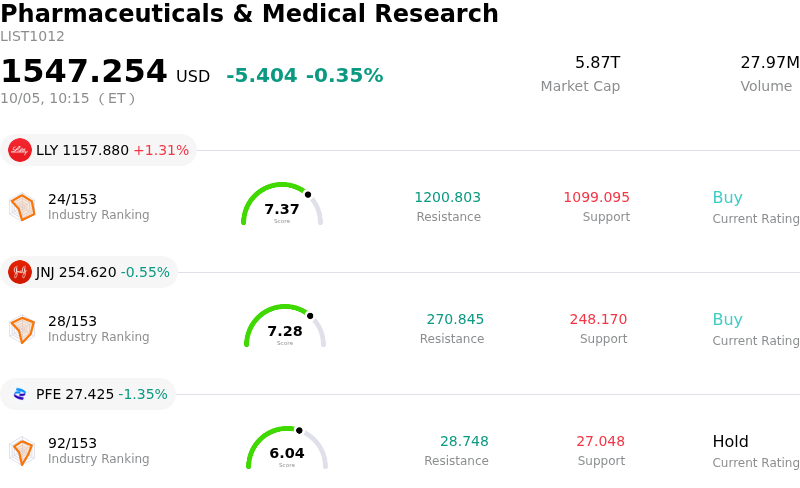
Bristol-Myers Squibb Co (BMY) moved down by 3.56%. The Pharmaceuticals & Medical Research sector is down by 0.35%. The company underperformed the industry. Top 3 stocks by turnover in the sector: Eli Lilly and Co (LLY) up 1.26%; Johnson & Johnson (JNJ) down 0.55%; Pfizer Inc (PFE) down 1.33%.
What is driving Bristol-Myers Squibb Co (BMY)’s stock price down today?
The downward movement in Bristol-Myers Squibb's shares is primarily driven by a high-profile Wall Street downgrade that eroded investor confidence in the company's mid-to-late-stage drug pipeline. Leerink Partners lowered its rating on the pharmaceutical giant to a market perform stance while substantially cutting its target price. Analysts highlighted heightened execution risks and lower conviction ahead of critical clinical readouts over the coming months, leading to reduced long-term revenue and earnings projections for key pipeline candidates.
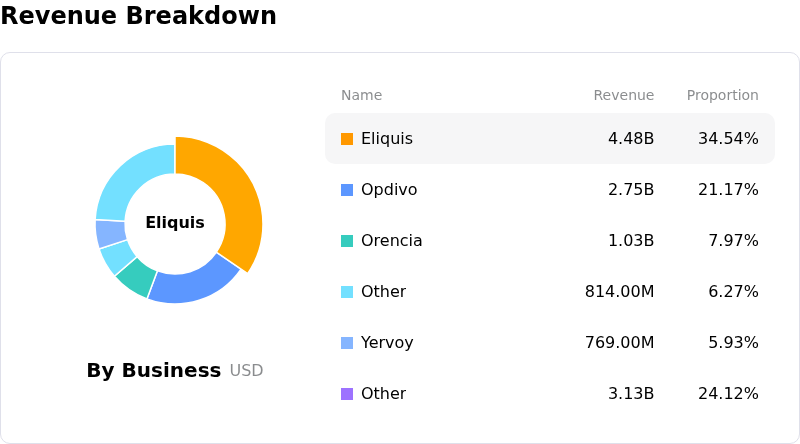
This analyst action amplifies long-standing structural anxieties regarding the company's growth trajectory. Investors remain sensitive to upcoming patent cliffs for core commercial franchises, most notably Eliquis and Opdivo, which account for a major portion of top-line revenue. As loss of exclusivity approaches in the latter half of the decade, market participants require high confidence in new drug development to offset impending revenue declines, making any negative reassessment of pipeline prospects particularly damaging to valuation multiples.
Additionally, broader policy headwinds continue to weigh on large-cap biopharmaceutical sentiment. Concerns surrounding U.S. Medicare drug price negotiations and ongoing pricing uncertainty across the healthcare sector add persistent structural pressure. Combined with broader market volatility, these pipeline and regulatory concerns catalyzed intraday selling as institutional investors recalibrated long-term cash flow models.
Technical Analysis of Bristol-Myers Squibb Co (BMY)
Technically, Bristol-Myers Squibb Co (BMY) shows a MACD (12,26,9) value of -0.527, indicating a sell signal. The RSI at 33.126 suggests neutral condition and the Williams %R at 94.147 suggests oversold condition. Please monitor closely.
Fundamental Analysis of Bristol-Myers Squibb Co (BMY)
Bristol-Myers Squibb Co (BMY) is in the Pharmaceuticals & Medical Research industry. Its latest annual revenue is $48.19B, ranking 11 in the industry. The net profit is $7.05B, ranking 12 in the industry. Company Profile
Over the past month, multiple analysts have rated the company as Buy, with an average price target of $66.81, a high of $82.00, and a low of $40.00.
More details about Bristol-Myers Squibb Co (BMY)
Company Specific Risks:
- Analyst Downgrade and Slashed Price Targets: Leerink Partners downgraded Bristol-Myers Squibb from Outperform to Market Perform while cutting its price target from $73 to $59, citing increased wall-street skepticism around the timing and commercial execution of pipeline replacements.
- Imminent Blockbuster Loss of Exclusivity: The business model faces a major patent cliff as key revenue-generating therapies—including Eliquis, Opdivo, and Revlimid—approach loss of exclusivity, exposing core top-line cash flows to rapid generic erosion.
- Regulatory Price Controls and IRA Margin Compression: Federal drug price negotiations under the U.S. Inflation Reduction Act directly target flagship drugs like Eliquis, establishing strict price ceilings that limit domestic pricing leverage and compress operating margins.
- High Leverage and Capital Allocation Pressure: Holding approximately $43.1 billion in long-term debt following costly acquisitions such as Karuna and RayzeBio, the company faces significant balance sheet risks if newly acquired clinical pipeline assets fail to achieve projected commercial velocity.
This article may include AI-generated content that is human-reviewed, which is for reference and general information purposes only and does not constitute investment advice.
Recommended Articles








Comments (0)
Click the $ button, enter the symbol, and select to link a stock, ETF, or other ticker.