


Morgan Stanley Stock (MS) Moved Down by 3.50% on Sep 22: What Signal Does It Send?



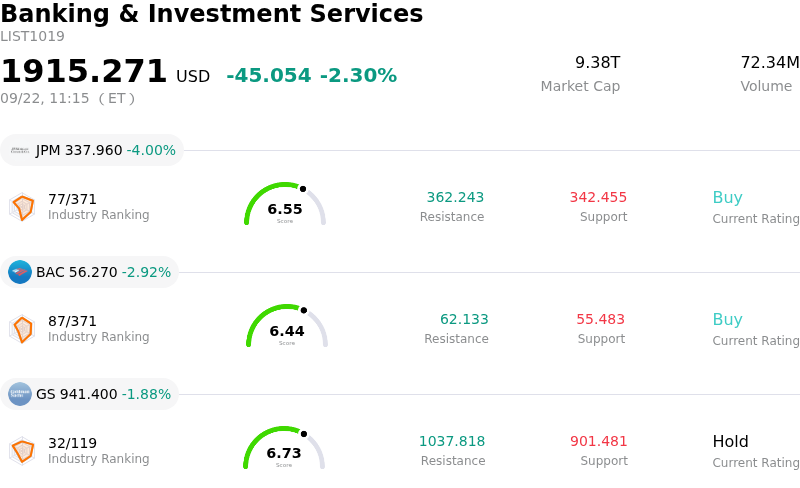
Morgan Stanley (MS) moved down by 3.50%. The Banking & Investment Services sector is down by 2.30%. The company underperformed the industry. Top 3 stocks by turnover in the sector: JPMorgan Chase & Co (JPM) down 4.00%; Bank of America Corp (BAC) down 2.92%; Goldman Sachs Group Inc (GS) down 1.88%.
What is driving Morgan Stanley (MS)’s stock price down today?
Morgan Stanley experienced downward pressure during trading, reflecting a broader pullback across major financial institutions and the wider market. Macroeconomic headwinds, including persistent volatility in benchmark Treasury yields and elevated energy prices, have raised concerns regarding overall market liquidity and corporate borrowing costs. As capital market conditions tighten, investor anxiety over persistent inflation and the Federal Reserve's monetary policy path has prompted a risk-off rotation away from financial stocks.
From a sector perspective, large investment banks and wealth managers are navigating a complex operating environment. Heightened market uncertainty and bond yield fluctuations tend to temper dealmaking activity, institutional equity issuance, and asset management inflows. While Morgan Stanley maintains robust capital reserves and strong long-term fundamentals within its wealth management and trading divisions, near-term caution regarding investment banking advisory fees and capital market activity has led traders to adopt a more conservative posture ahead of the upcoming third-quarter earnings cycle.
Institutional portfolio adjustments and profit-taking have further contributed to intraday price swings. Following a sustained period of solid performance across financial equities, institutional investors appear to be rebalancing portfolios to mitigate potential market pullbacks. Although consensus long-term analyst sentiment remains generally constructive on Morgan Stanley's diversified revenue model, short-term stock movement is currently dominated by broader macroeconomic factors, sector-wide valuation reassessments, and overall equity market turbulence.
Technical Analysis of Morgan Stanley (MS)
Technically, Morgan Stanley (MS) shows a MACD (12,26,9) value of -2.616, indicating a sell signal. The RSI at 34.545 suggests neutral condition and the Williams %R at 95.763 suggests oversold condition. Please monitor closely.
Media Coverage of Morgan Stanley (MS)
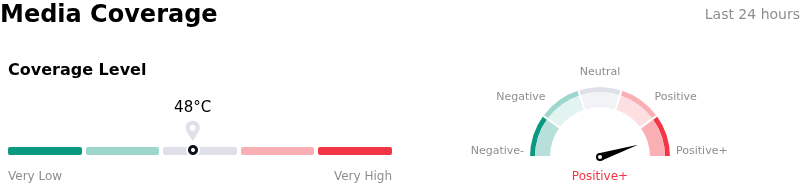
In terms of media coverage, Morgan Stanley (MS) shows a coverage score of 48, indicating a moderate level of media attention. The overall market sentiment index is currently in extremely bullish zone.
Fundamental Analysis of Morgan Stanley (MS)
Morgan Stanley (MS) is in the Banking & Investment Services industry. Its latest annual revenue is $114.74B, ranking 3 in the industry. The net profit is $16.25B, ranking 2 in the industry. Company Profile
Over the past month, multiple analysts have rated the company as Buy, with an average price target of $240.89, a high of $262.00, and a low of $200.00.
More details about Morgan Stanley (MS)
Company Specific Risks:
- Investment Banking Revenue Volatility: Recent sector-wide commentary warning of a sharp double-digit decline in Wall Street investment banking fees has highlighted Morgan Stanley's downside vulnerability to sluggish dealmaking and delayed underwriting activity.
- Wealth Management Fee Compression: Institutional analysis highlights structural risks in Morgan Stanley's core Wealth Management unit, where ongoing client asset migration from actively managed products into lower-cost passive strategies threatens advisory fee revenues.
- Capital Markets Disruption from Rate Volatility: Hawkish Federal Reserve rate policy and Treasury yield spikes above 5% have heightened fixed-income market volatility, dampening debt syndication revenues and corporate underwriting momentum.
- Commercial Credit and Real Estate Exposure: Increased provisions for credit losses tied to corporate lending and commercial real estate loans expose the firm's balance sheet to credit degradation during extended periods of elevated borrowing costs.
This article may include AI-generated content that is human-reviewed, which is for reference and general information purposes only and does not constitute investment advice.
Recommended Articles








Comments (0)
Click the $ button, enter the symbol, and select to link a stock, ETF, or other ticker.