


Union Pacific Corp Stock (UNP) Moved Down by 3.39% on Sep 21: What Signal Does It Send?



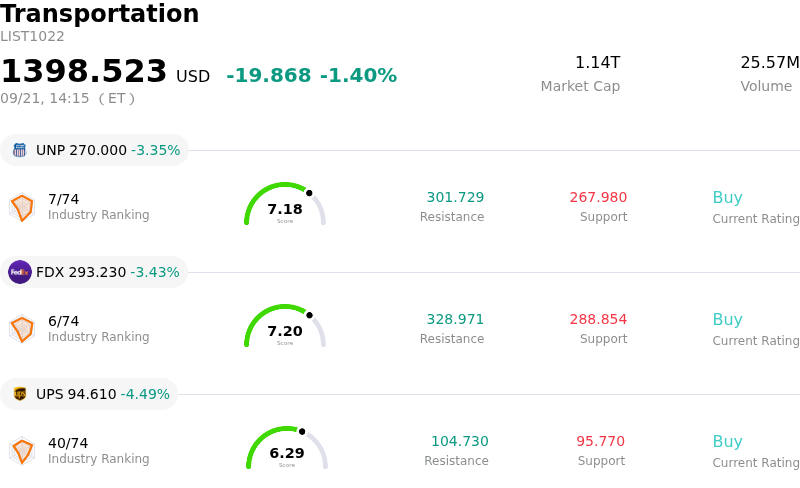
Union Pacific Corp (UNP) moved down by 3.39%. The Transportation sector is down by 1.40%. The company underperformed the industry. Top 3 stocks by turnover in the sector: Union Pacific Corp (UNP) down 3.35%; FedEx Corp (FDX) down 3.43%; United Parcel Service Inc (UPS) down 4.49%.
What is driving Union Pacific Corp (UNP)’s stock price down today?
Union Pacific Corporation experienced downward pressure during the trading session, driven by a combination of macroeconomic headwinds, regulatory uncertainty surrounding major sector deals, and institutional profit-taking within the broader transportation space. The primary driver of weakness stems from macroeconomic data pointing to a slowdown in domestic industrial production and unexpected softness in factory output. As a bellwether for the industrial supply chain, rail carriers are particularly sensitive to fluctuations in manufacturing volume, intermodal freight traffic, and commodity movement.
Company-specific headwinds have further amplified market caution. Ongoing regulatory scrutiny regarding major rail consolidation initiatives, including antitrust reviews and concerns raised by regulatory bodies and customer groups, continues to cast uncertainty over the timeline and potential synergies of long-term network expansion. Investor sentiment was also tempered by executive commentary at recent institutional conferences, where market participants critically evaluated near-term freight volume trends, operational efficiency metrics, and potential margin compression related to fuel cost dynamics.
From a market dynamics perspective, the movement reflects broader institutional portfolio adjustments. Following a period of share price gains that elevated valuation metrics, institutional investors executed sector-wide profit-taking. Weakness across peer rail operators and transportation benchmarks reinforced the negative sentiment, prompting risk-off repositioning among market participants.
Despite the near-term volatility, Union Pacific retains fundamental strengths, including robust free cash flow generation, strong profitability margins, and disciplined capital allocation anchored by consistent dividend payouts. However, until key macroeconomic indicators signal a firm recovery in industrial demand and regulatory pathways for strategic initiatives become clearer, the stock may remain subject to short-term fluctuations driven by broader economic sentiment.
Technical Analysis of Union Pacific Corp (UNP)
Technically, Union Pacific Corp (UNP) shows a MACD (12,26,9) value of -4.257, indicating a sell signal. The RSI at 24.908 suggests sell condition and the Williams %R at 99.875 suggests oversold condition. Please monitor closely.
Fundamental Analysis of Union Pacific Corp (UNP)
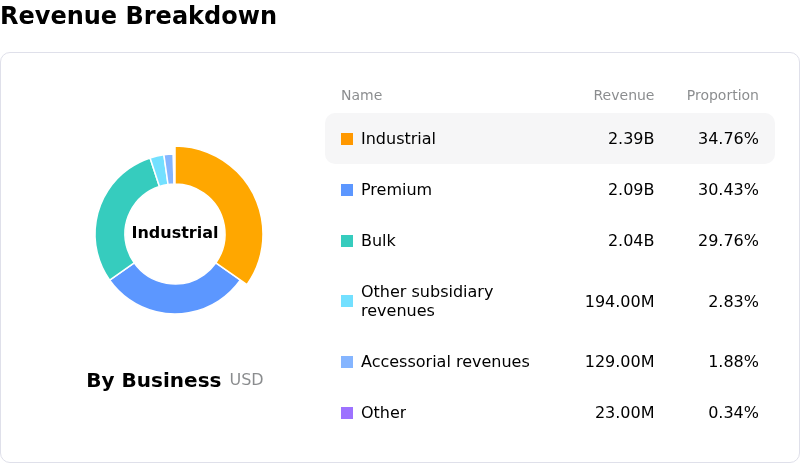
Union Pacific Corp (UNP) is in the Transportation industry. Its latest annual revenue is $24.51B, ranking 3 in the industry. The net profit is $7.14B, ranking 1 in the industry. Company Profile
Over the past month, multiple analysts have rated the company as Buy, with an average price target of $326.39, a high of $375.00, and a low of $245.00.
More details about Union Pacific Corp (UNP)
Company Specific Risks:
- Regulatory and Integration Exposure from Pending Merger: Extensive antitrust review and regulatory scrutiny regarding the proposed acquisition of Norfolk Southern present major execution risks, alongside potential legal liabilities stemming from Norfolk Southern's ongoing environmental obligations.
- Fuel Expense Volatility and Operating Margin Pressure: Spikes in fuel costs and operating expenses continue to weigh on Union Pacific's operating ratio, posing margin volatility risks despite overall freight volume momentum.
- Capital Allocation Restraints and Buyback Suspensions: The prioritization of cash reserves and debt capacity for the pending transcontinental acquisition has restricted share repurchases, eliminating buyback-driven EPS support while maintaining elevated debt leverage.
- Freight Rate Volatility and Intermodal Sensitivity: Macroeconomic uncertainty and ongoing pricing pressure across truckload and intermodal transport cycles pose persistent downside risks to volume demand and freight revenues across Western rail corridors.
This article may include AI-generated content that is human-reviewed, which is for reference and general information purposes only and does not constitute investment advice.
Recommended Articles







Comments (0)
Click the $ button, enter the symbol, and select to link a stock, ETF, or other ticker.