


SpaceX Stock (SPCX) Moved Down by 3.98% on Sep 9: Facts Behind the Movement



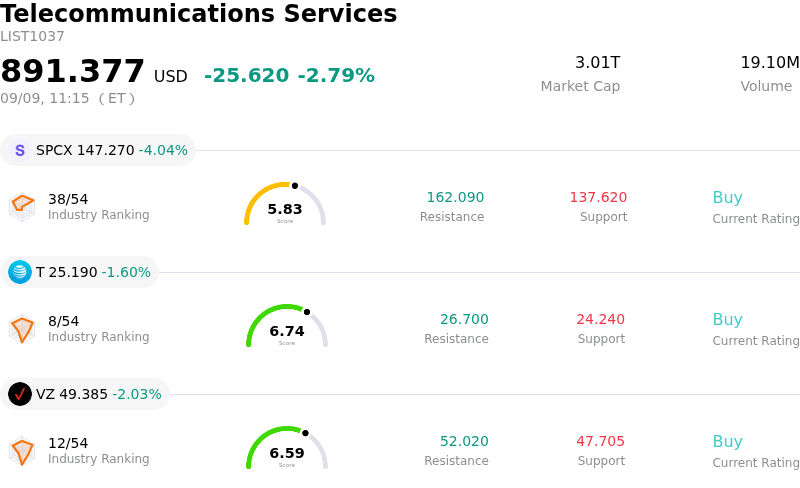
SpaceX (SPCX) moved down by 3.98%. The Telecommunications Services sector is down by 2.79%. The company underperformed the industry. Top 3 stocks by turnover in the sector: SpaceX (SPCX) down 3.98%; AT&T Inc (T) down 1.52%; Verizon Communications Inc (VZ) down 1.95%.
What is driving SpaceX (SPCX)’s stock price down today?
The downward movement in Space Exploration Technologies Corp. (SPCX) was primarily triggered by a major post-IPO lock-up expiration event. Exactly ninety days following the company's June public listing, a scheduled tranche releasing hundreds of millions of Class A shares became eligible for secondary market trading. This sudden expansion in liquid public float generated substantial immediate supply overhang, prompting early institutional investors and employees to realize gains and putting strong downward pressure on the shares throughout the session.
The selling pressure was further amplified by profit-taking following recent short-term strength. In the preceding trading session, the equity experienced notable upward momentum driven by favorable initial research coverage and bullish Wall Street price targets highlighting long-term expansion in satellite broadband and space commercialization. However, with massive new share volume hitting the market on the lock-up expiration date, active market participants quickly stepped in to lock in profits, overwhelming near-term buying interest.
From a fundamental perspective, institutional investors remain attentive to the company's capital-intensive business model and ongoing bottom-line losses. While long-term sentiment is underpinned by prospective inclusion in major market indices and strong revenue growth, high forward valuation multiples leave the stock particularly sensitive to near-term liquidity shocks and float expansion. In the short term, trading dynamics are likely to remain volatile as the market absorbs the newly unlocked share supply alongside upcoming secondary releases.
Technical Analysis of SpaceX (SPCX)
Technically, SpaceX (SPCX) shows a MACD (12,26,9) value of 2.698, indicating a buy signal. The RSI at 56.296 suggests neutral condition and the Williams %R at 30.435 suggests buy condition. Please monitor closely.
Fundamental Analysis of SpaceX (SPCX)
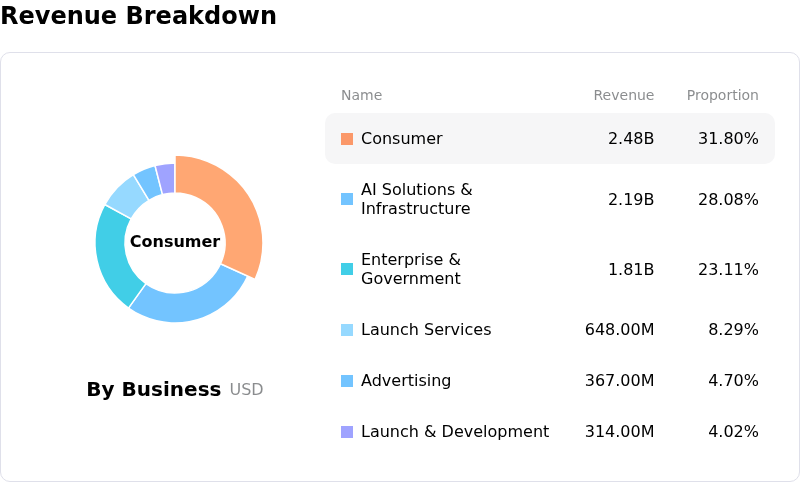
SpaceX (SPCX) is in the Telecommunications Services industry. Its latest annual revenue is $18.67B, ranking 10 in the industry. The net profit is $-4.94B, ranking 61 in the industry. Company Profile
Over the past month, multiple analysts have rated the company as Buy, with an average price target of $231.23, a high of $800.00, and a low of $100.00.
More details about SpaceX (SPCX)
Company Specific Risks:
- Massive Insider Lock-Up Expiration and Share Supply Overhang: The expiration of pre-IPO lock-up restrictions unlocks roughly 319 million shares on September 9, 2026, with tens of millions more releasing in subsequent days, creating substantial selling pressure and public float expansion.
- Extreme Valuation Multiples and Persistent Unprofitability: Trading at a Price-to-Sales ratio exceeding 76x on a $1.9+ trillion market capitalization while generating annual net losses of approximately $4.94 billion, the stock remains highly vulnerable to sharp valuation compressions.
- Intense Capital Expenditures and Heavy Cash Burn: Quarterly CapEx reaching $18.4 billion and ongoing free cash flow burn of roughly $15 billion per quarter threaten balance sheet sustainability, increasing the risk of future equity dilution or debt issuances to fund operations.
- Execution Bottlenecks in AI Hardware and Launch Programs: The business faces stringent operational deadlines, including GPU deployments for major partners, data center reliability challenges, and high execution risks tied to the unproven commercial milestones of the Starship program.
This article may include AI-generated content that is human-reviewed, which is for reference and general information purposes only and does not constitute investment advice.
Recommended Articles









Comments (0)
Click the $ button, enter the symbol, and select to link a stock, ETF, or other ticker.