


General Electric Co Stock (GE) Moved Down by 3.54% on Sep 9: What Investors Need To Know



General Electric Co (GE) moved down by 3.54%. The Industrial Goods sector is down by 0.99%. The company underperformed the industry. Top 3 stocks by turnover in the sector: Bloom Energy Corp (BE) up 0.23%; General Electric Co (GE) down 3.54%; Vertiv Holdings Co (VRT) down 3.96%.
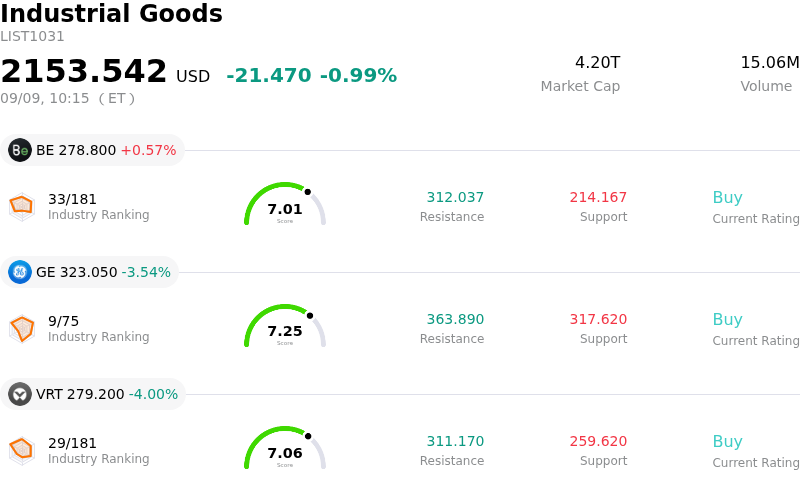
What is driving General Electric Co (GE)’s stock price down today?
General Electric experienced downward price momentum following market digestion of its mega acquisition of supplier Consolidated Precision Products for over eleven billion dollars. While the strategic rationale of integrating a key long-term casting and airfoil vendor aims to alleviate persistent supply chain bottlenecks and support engine delivery targets, market participants reacted cautiously to the transaction terms. Funding the deal with a significant cash outlay alongside substantial new debt increases short-term balance sheet leverage. Furthermore, the steep acquisition multiple attached to the deal raised concerns regarding transaction pricing and operational execution risk, prompting immediate valuation friction among institutional investors.
The selling pressure also reflects broader profit-taking after an extended rally in the stock. GE Aerospace has traded at a premium valuation multiple compared to the broader industrial sector, supported by robust commercial engine aftermarket demand and optimistic cash flow trajectories. However, when high market expectations collide with a debt-financed acquisition that requires extended integration efforts through 2027, short-term market participants often choose to de-risk. Concurrently, broader industrial sector weakness stemming from macroeconomic uncertainties and trade policy headlines added top-down headwind, compounding the stock's intraday retreat.
Despite the pullback, the underlying fundamental narrative for GE Aerospace remains anchored in structural commercial aviation demand, an expansive global engine installed base, and resilient high-margin aftermarket servicing revenues. While the market continues to weigh the capital allocation strategy and debt profile against near-term operational overhangs, institutional investors will closely monitor whether management's lean manufacturing framework can successfully unlock capacity synergies, clear supply chain bottlenecks, and justify the long-term accretion targets.
Technical Analysis of General Electric Co (GE)
Technically, General Electric Co (GE) shows a MACD (12,26,9) value of -4.515, indicating a sell signal. The RSI at 34.482 suggests neutral condition and the Williams %R at 94.940 suggests oversold condition. Please monitor closely.
Media Coverage of General Electric Co (GE)
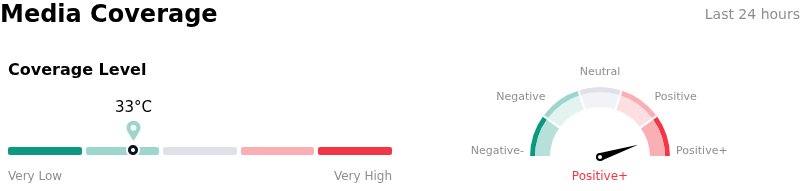
In terms of media coverage, General Electric Co (GE) shows a coverage score of 33, indicating a low level of media attention. The overall market sentiment index is currently in extremely bullish zone.
Fundamental Analysis of General Electric Co (GE)
General Electric Co (GE) is in the Industrial Goods industry. Its latest annual revenue is $45.85B, ranking 5 in the industry. The net profit is $8.70B, ranking 1 in the industry. Company Profile
Over the past month, multiple analysts have rated the company as Buy, with an average price target of $401.26, a high of $455.00, and a low of $350.00.
More details about General Electric Co (GE)
Company Specific Risks:
- Leverage and Capital Deployment Risk: The September 8 announcement of an $11.75 billion acquisition of Consolidated Precision Products (CPP) requires utilizing $7 billion in existing cash alongside significant new debt, substantially depleting liquid reserves and elevating GE's net debt leverage.
- High Valuation and Integration Risk: Purchasing CPP at a steep valuation multiple of 26x EV/EBITDA exposes GE to integration hazards and free cash flow dilution if the anticipated $200 million in annual operational synergies fail to materialize on schedule.
- Antitrust Regulatory Exposure: Because CPP represents one of only four major global suppliers of aerospace structural castings and supplies a quarter of GE's needs, the transaction faces intense regulatory and antitrust scrutiny that could result in forced divestitures or prolonged closing delays.
- Persistent Supply Chain Bottlenecks: The massive inorganic transaction underscores intractable industry chokepoints in turbine blade castings and ongoing material inflation, threatening output capacity for commercial jet engines and straining operating margins.
This article may include AI-generated content that is human-reviewed, which is for reference and general information purposes only and does not constitute investment advice.
Recommended Articles










Comments (0)
Click the $ button, enter the symbol, and select to link a stock, ETF, or other ticker.