


Uber Technologies Inc Stock (UBER) Moved Up by 3.20% on Aug 10: Key Drivers Unveiled



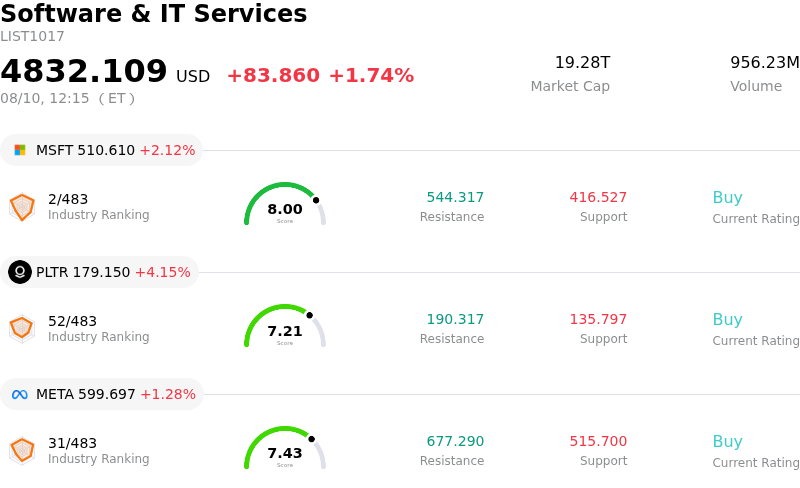
Uber Technologies Inc (UBER) moved up by 3.20%. The Software & IT Services sector is up by 1.74%. The company outperformed the industry. Top 3 stocks by turnover in the sector: Microsoft Corp (MSFT) up 2.12%; Palantir Technologies Inc (PLTR) up 4.15%; Meta Platforms Inc (META) up 1.33%.
What is driving Uber Technologies Inc (UBER)’s stock price up today?
Uber’s positive performance today is driven by a combination of strong mobility demand and strategic progress in its autonomous vehicle integration strategy. Investor sentiment has pivoted toward the company’s ability to maintain high margins while navigating the transition to a hybrid fleet model. The intraday volatility suggests a tug-of-war between short-term profit taking and long-term institutional accumulation following recent sector-wide tailwinds.
The underlying fundamentals remain robust as recent data suggests that urban travel and airport pickups have reached new highs, bolstering the core mobility segment. Additionally, the expansion of the delivery advertising business continues to serve as a high-margin catalyst, offsetting potential labor cost pressures. Markets are increasingly viewing the platform as an essential utility for urban logistics, which provides a valuation floor during periods of broader market uncertainty.
A significant driver for the current upward momentum is the progress in Uber’s partnership ecosystem with autonomous technology providers. By positioning itself as the premier third-party network for robotaxi deployment rather than developing the hardware in-house, the company avoids massive capital expenditures while benefiting from the operational efficiencies of driverless fleets. This asset-light approach is resonating with institutional investors who are recalibrating their expectations for the future of transportation.
From a macro perspective, recent economic indicators suggesting a stabilization in consumer discretionary spending have provided a favorable backdrop for the gig economy. While regulatory discussions regarding worker classification persist in certain jurisdictions, recent legal victories and proactive benefit adjustments have mitigated the risk of sudden operational disruptions. This clearer regulatory path, combined with expectations for a stable interest rate environment, is encouraging rotation back into high-growth tech leaders.
Institutional flow data indicates a broadening of the investor base as the company transitions from a growth-at-all-costs narrative to a consistent generator of free cash flow. The intraday price swings reflect the high volume of options activity and position adjustments as the stock tests key resistance levels. Overall, the market remains focused on the company’s ability to leverage its massive network effects to dominate the emerging autonomous mobility landscape.
Technical Analysis of Uber Technologies Inc (UBER)
Technically, Uber Technologies Inc (UBER) shows a MACD (12,26,9) value of 0.646, indicating a neutral signal. The RSI at 58.067 suggests neutral condition and the Williams %R at 3.996 suggests overbought condition. Please monitor closely.
Media Coverage of Uber Technologies Inc (UBER)
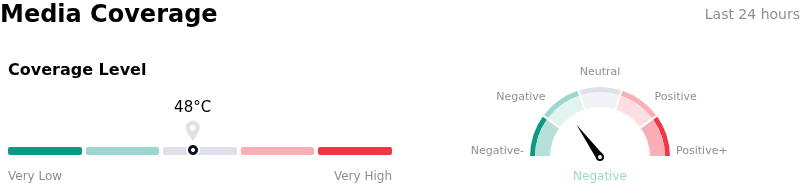
In terms of media coverage, Uber Technologies Inc (UBER) shows a coverage score of 48, indicating a moderate level of media attention. The overall market sentiment index is currently in bearish zone.
Fundamental Analysis of Uber Technologies Inc (UBER)
Uber Technologies Inc (UBER) is in the Software & IT Services industry. Its latest annual revenue is $52.02B, ranking 11 in the industry. The net profit is $10.05B, ranking 12 in the industry. Company Profile
Over the past month, multiple analysts have rated the company as Buy, with an average price target of $102.61, a high of $150.00, and a low of $72.00.
More details about Uber Technologies Inc (UBER)
Company Specific Risks:
- Regulatory and Labor Litigation: Recent judicial scrutiny in key jurisdictions, including ongoing legal challenges in Massachusetts and New York regarding driver classification, poses an immediate threat to the independent contractor model, potentially forcing a transition to an employment-based structure that would significantly increase payroll taxes and operational overhead.
- Autonomous Vehicle Competitive Displacement: Accelerated expansion by pure-play autonomous vehicle competitors like Waymo and the looming entry of dedicated robotaxi fleets from major EV manufacturers threaten to bypass Uber’s driver-based network, creating long-term uncertainty regarding Uber’s ability to maintain market share without heavy capital investment in its own hardware.
- Take Rate and Margin Pressure: Institutional analysts have highlighted concerns that Uber's take rates may be nearing a ceiling, as rising commercial insurance premiums and driver incentive requirements in saturated markets begin to compress adjusted EBITDA margins, limiting the company's ability to demonstrate consistent bottom-line growth.
- Equity Investment Exposure: Continued volatility in the valuation of Uber’s significant minority stakes in international entities such as Didi, Grab, and Aurora remains a primary driver of GAAP net income fluctuations, exposing the company to non-operating losses that negatively impact investor sentiment during periods of global market instability.
This article may include AI-generated content that is human-reviewed, which is for reference and general information purposes only and does not constitute investment advice.
Recommended Articles








Comments (0)
Click the $ button, enter the symbol, and select to link a stock, ETF, or other ticker.