


BNB (BNBUSD) Is down 1.00% on Aug 7: What Are the Risk Factors?



BNB (BNBUSD) is down 1.00% at Aug 7 04:00(ET), now at $583.5, with a 7-day down of 0.24%.
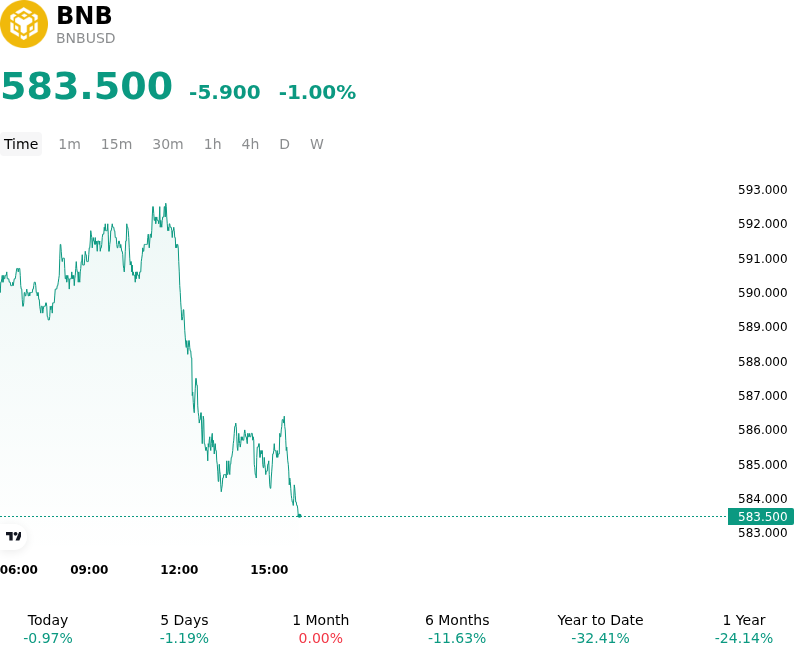
What is driving BNB (BNBUSD)’s stock price down today?
The recent downward pressure on BNB reflects a confluence of regulatory caution and a tactical shift in institutional capital allocation within the digital asset space. Investors appear to be repricing the risk premium associated with exchange-linked tokens as global regulators intensify their oversight of centralized trading platforms and their proprietary ecosystems. This sentiment shift is particularly pronounced as market participants weigh the long-term viability of the BNB Chain’s growth trajectory against emerging, more decentralized Layer-1 and Layer-2 alternatives that are capturing a larger share of developer activity and total value locked.
On-chain data indicates a deceleration in network utility, with a visible reduction in transaction volumes and decentralized application engagement. This slowdown directly impacts the protocol’s supply-side dynamics, as lower network fees result in a less aggressive burn rate, weakening the deflationary narrative that has historically supported the asset’s valuation during periods of broader market consolidation. Furthermore, institutional flows suggest a rotation out of utility tokens into assets with clearer regulatory pathways or those supported by spot ETF structures, which offer a more standardized risk profile for large-scale portfolios.
Macroeconomic headwinds are also playing a significant role in the current intraday volatility. A renewed strength in the U.S. dollar, coupled with an upward shift in Treasury yields, has dampened the appetite for high-beta crypto assets. As liquidity conditions tighten, institutional desks are prioritizing capital preservation, leading to a reduction in leveraged long positions across the derivatives market. The resulting long squeeze has exacerbated the downward move, as automated liquidations triggered at key technical levels forced additional sell-side pressure into a thinning order book.
From a structural perspective, the market remains sensitive to any developments regarding Binance’s global compliance status. While the exchange has made significant strides in operational transparency, the lingering uncertainty regarding future enforcement actions continues to act as a ceiling for institutional demand. Investors are closely monitoring the platform's market share and liquidity depth, as any signs of sustained outflow from the centralized exchange could further erode the perceived utility and value proposition of the BNB token within its native ecosystem.
Technical Analysis of BNB (BNBUSD)
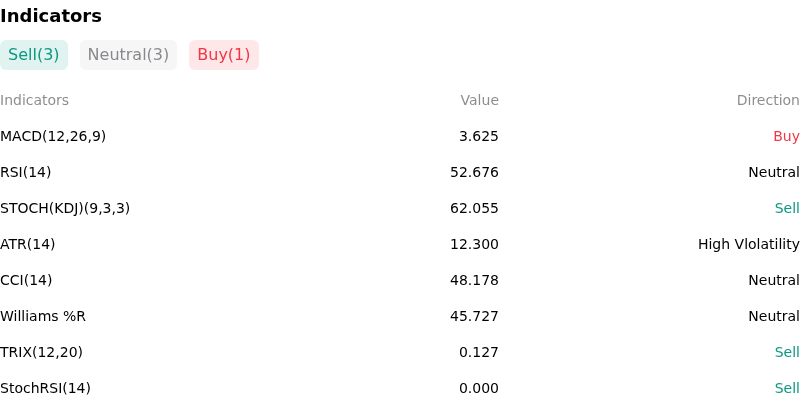
Technically, BNB (BNBUSD) shows a MACD (12,26,9) value of 3.625, indicating a buy signal. The RSI at 52.676 suggests neutral condition and the Williams %R at 45.727 suggests neutral condition. Please monitor closely.
More details about BNB (BNBUSD)
Recent Events and Risks:
- Regulatory and Compliance Oversight: The ongoing U.S. Department of Justice monitorship of Binance and the SEC’s active litigation continue to pose significant tail risks, as any reports of compliance failures or new regulatory restrictions can trigger immediate capital flight from the BNB ecosystem.
- Concentrated Holder and Liquidation Risk: A high concentration of BNB supply within exchange-controlled wallets and ecosystem-linked accounts creates a vulnerability where large-scale transfers to exchanges, often seen in the last 48 hours, signal potential selling pressure that could trigger a cascade of long liquidations in the perpetual futures market.
- Ecosystem Security and Bridge Vulnerabilities: Persistent concerns regarding the security of cross-chain bridges and decentralized applications within the BNB Smart Chain heighten the risk of smart contract exploits, which historically lead to rapid Total Value Locked (TVL) contraction and emergency sell-offs of BNB used as collateral.
- Market Structure and Liquidity Sensitivity: A recent thinning of liquidity in BNB/USD order books has increased the asset's susceptibility to intraday volatility, meaning even moderate sell orders from whales or institutional participants can result in disproportionate price slippage and flash-crash scenarios during periods of global risk-off sentiment.
This article may include AI-generated content that is human-reviewed, which is for reference and general information purposes only and does not constitute investment advice.
Recommended Articles







Comments (0)
Click the $ button, enter the symbol, and select to link a stock, ETF, or other ticker.