


Uber Technologies Inc Stock (UBER) Moved Up by 3.56% on Aug 6: What Signal Does It Send?



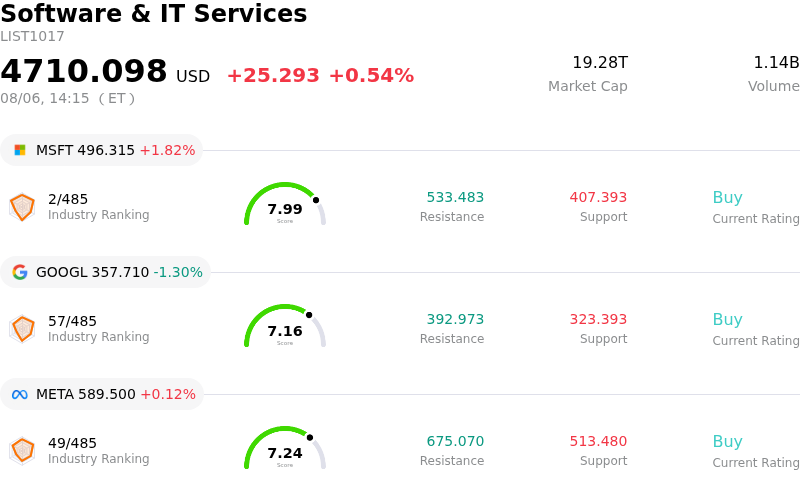
Uber Technologies Inc (UBER) moved up by 3.56%. The Software & IT Services sector is up by 0.54%. The company outperformed the industry. Top 3 stocks by turnover in the sector: Microsoft Corp (MSFT) up 1.75%; Alphabet Inc Class A (GOOGL) down 1.30%; Meta Platforms Inc (META) up 0.13%.
What is driving Uber Technologies Inc (UBER)’s stock price up today?
Uber Technologies is experiencing a notable upward trend fueled primarily by a robust second-quarter earnings release that exceeded consensus estimates across key performance indicators. The company reported a significant expansion in gross bookings, particularly within its mobility division, as airport travel and corporate commuting patterns continue to show strength. This financial resilience is complemented by a disciplined approach to cost management, resulting in strong adjusted EBITDA margins that have bolstered investor confidence in the long-term profitability trajectory of the platform.
The sentiment is further amplified by strategic advancements in the autonomous vehicle sector. Market participants are reacting positively to recent updates regarding the partnership ecosystem with leading hardware and software providers in the robotaxi space. By positioning itself as the essential demand aggregator for autonomous fleets, the company is successfully mitigating concerns regarding the potential disruption of its core ride-hailing business. This strategic shift has prompted several Tier 1 brokerage firms to raise their price targets, citing a more favorable risk-reward profile as the firm transitions toward an asset-light technology platform.
From a macroeconomic perspective, the broader equity market has found support in cooling inflation data, which has led to speculation that the Federal Reserve may maintain a more accommodative stance. As a growth-oriented company with substantial sensitive cash flows, the firm stands to benefit from a lower discount rate environment. Furthermore, the resilience of the U.S. consumer, as evidenced by steady non-farm payroll growth and retail spending, suggests that demand for both ride-sharing and delivery services remains inelastic despite ongoing economic uncertainties.
Institutional positioning has also played a role in the recent price action. Following the positive earnings surprise, several large-scale exchange-traded funds and institutional portfolios have increased their weightings, viewing the company as a core holding within the modern transportation and technology sectors. This influx of capital, combined with a decrease in short interest, has created a momentum-driven environment. While operational risks such as regulatory scrutiny over gig worker classification remain in the background, the current market narrative is dominated by the company’s operational excellence and its central role in the future of urban mobility.
Technical Analysis of Uber Technologies Inc (UBER)
Technically, Uber Technologies Inc (UBER) shows a MACD (12,26,9) value of -0.103, indicating a sell signal. The RSI at 41.690 suggests neutral condition and the Williams %R at 65.590 suggests sell condition. Please monitor closely.
Media Coverage of Uber Technologies Inc (UBER)
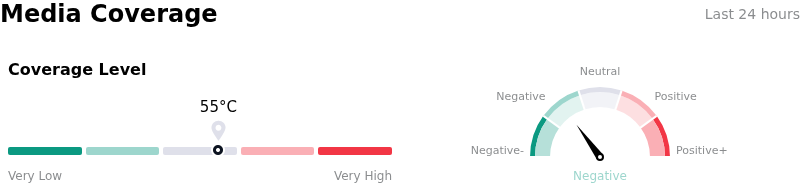
In terms of media coverage, Uber Technologies Inc (UBER) shows a coverage score of 55, indicating a moderate level of media attention. The overall market sentiment index is currently in bearish zone.
Fundamental Analysis of Uber Technologies Inc (UBER)
Uber Technologies Inc (UBER) is in the Software & IT Services industry. Its latest annual revenue is $52.02B, ranking 11 in the industry. The net profit is $10.05B, ranking 12 in the industry. Company Profile
Over the past month, multiple analysts have rated the company as Buy, with an average price target of $104.82, a high of $150.00, and a low of $72.00.
More details about Uber Technologies Inc (UBER)
Company Specific Risks:
- Gross Bookings Guidance Miss: Intraday volatility is driven by lingering investor concern over Q2 guidance that placed the gross bookings midpoint below consensus estimates, signaling a potential cooling in global mobility and delivery demand after years of rapid expansion.
- Labor Reclassification Litigation: Recent legal developments in the Massachusetts Supreme Judicial Court regarding the status of drivers as independent contractors vs. employees have heightened fears of a mandatory shift in the business model, which would significantly increase labor costs and payroll tax liabilities.
- Freight Segment Margin Contraction: Uber Freight continues to face operational headwinds due to a protracted downturn in the trucking industry, where lower spot rates and excess capacity have led to a year-over-year decline in revenue and compressed adjusted EBITDA margins.
- Autonomous Vehicle Disintermediation: Heightened sensitivity to news from autonomous driving competitors has triggered volatility, as institutional analysts express concern that Uber’s reliance on third-party drivers could become a structural disadvantage if a competitor successfully scales a proprietary, driverless robotaxi network.
This article may include AI-generated content that is human-reviewed, which is for reference and general information purposes only and does not constitute investment advice.
Recommended Articles







Comments (0)
Click the $ button, enter the symbol, and select to link a stock, ETF, or other ticker.