


Oracle Corp Stock (ORCL) Moved Up by 4.43% on Aug 4: Key Drivers Unveiled



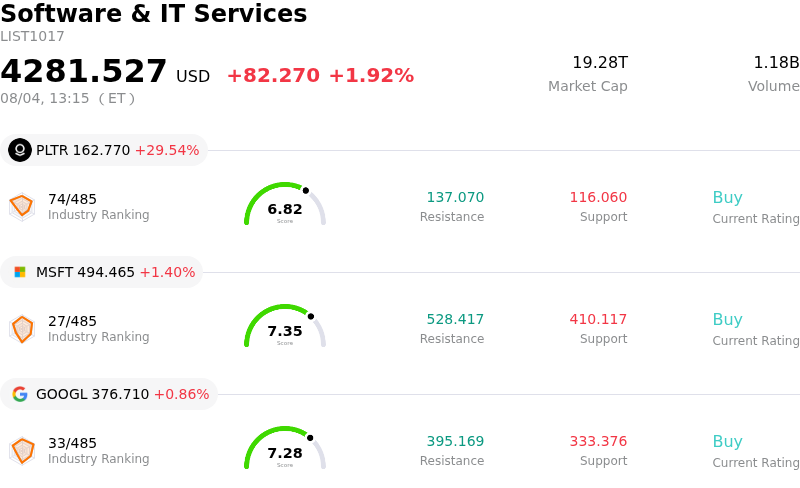
Oracle Corp (ORCL) moved up by 4.43%. The Software & IT Services sector is up by 1.92%. The company outperformed the industry. Top 3 stocks by turnover in the sector: Palantir Technologies Inc (PLTR) up 29.54%; Microsoft Corp (MSFT) up 1.40%; Alphabet Inc Class A (GOOGL) up 0.88%.
What is driving Oracle Corp (ORCL)’s stock price up today?
Oracle’s recent price appreciation is primarily driven by an acceleration in its cloud infrastructure segment, where Oracle Cloud Infrastructure continues to gain market share from larger incumbents. Investors are increasingly optimistic about the company’s ability to secure large-scale artificial intelligence workloads, as evidenced by recent strategic collaborations with major semiconductor leaders and rival cloud platforms. This interoperability strategy is proving to be a significant competitive advantage, allowing enterprises to leverage Oracle’s high-performance database services within multi-cloud environments.
The enthusiasm is further bolstered by the company’s success in integrating generative AI features across its enterprise resource planning and supply chain management suites. These advancements are not only driving higher renewal rates but are also attracting new customers seeking to modernize their operations. Institutional interest has surged following a series of analyst upgrades that highlight Oracle’s improving operating margins and the transition of legacy on-premise customers to more profitable subscription-based models.
On the macroeconomic front, a cooling inflationary environment has provided a favorable backdrop for large-cap technology stocks, encouraging a rotation into names with strong cash flow and clear growth trajectories. Oracle’s consistent execution in its transition to a cloud-first business model has positioned it as a preferred pick for portfolio managers looking for stability and AI exposure. The current market action suggests a reassessment of Oracle’s valuation as it closes the gap with its hyperscale peers.
Additionally, the market is responding to positive channel checks indicating that demand for sovereign cloud solutions is outstripping initial projections. As governments and highly regulated industries prioritize data residency and security, Oracle’s specialized offerings are seeing rapid adoption. This niche dominance, combined with the company’s aggressive capital return program, continues to attract long-term investors, offsetting broader market volatility and sustaining the positive momentum in the share price.
Technical Analysis of Oracle Corp (ORCL)
Technically, Oracle Corp (ORCL) shows a MACD (12,26,9) value of 7.004, indicating a neutral signal. The RSI at 53.248 suggests neutral condition and the Williams %R at 4.270 suggests overbought condition. Please monitor closely.
Media Coverage of Oracle Corp (ORCL)
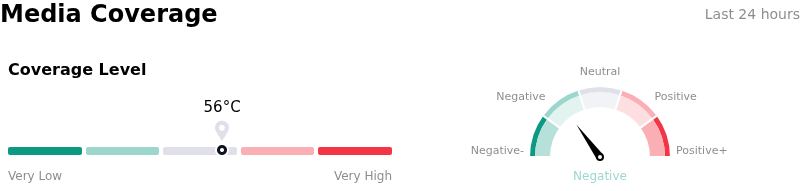
In terms of media coverage, Oracle Corp (ORCL) shows a coverage score of 56, indicating a moderate level of media attention. The overall market sentiment index is currently in bearish zone.
Fundamental Analysis of Oracle Corp (ORCL)
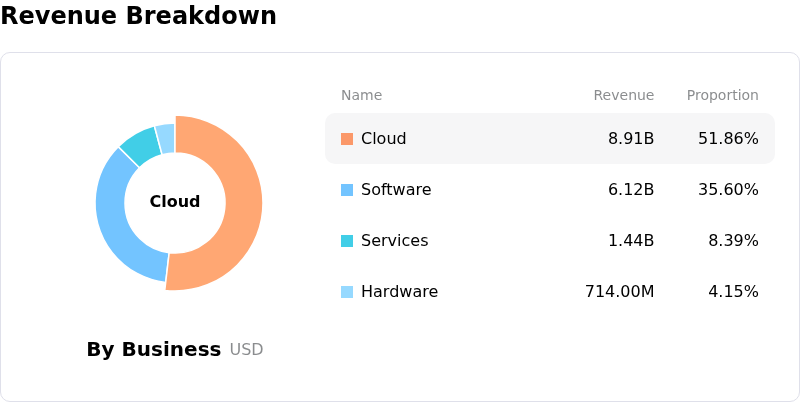
Oracle Corp (ORCL) is in the Software & IT Services industry. Its latest annual revenue is $67.36B, ranking 8 in the industry. The net profit is $16.98B, ranking 6 in the industry. Company Profile
Over the past month, multiple analysts have rated the company as Buy, with an average price target of $251.46, a high of $400.00, and a low of $110.00.
More details about Oracle Corp (ORCL)
Company Specific Risks:
- Q4 Fiscal 2024 Financial Underperformance: Oracle reported a rare double miss on both the top and bottom lines, with revenue of $14.29 billion missing the $14.59 billion consensus and non-GAAP EPS of $1.63 falling short of the $1.65 estimate, signaling a slowdown in legacy segment momentum.
- Aggressive Capital Expenditure Projections: Management’s guidance to nearly double capital expenditures to approximately $10 billion in fiscal 2025 to build out AI infrastructure increases the risk of margin compression and significant pressure on free cash flow if cloud revenue conversion lags behind data center deployment.
- Cerner Integration and Healthcare Headwinds: The continued transition of the Cerner business to a cloud-based SaaS model is cannibalizing high-margin legacy license revenue faster than anticipated, creating a persistent drag on total revenue growth that analysts identify as a primary source of near-term volatility.
- Hyperscaler Partnership Execution Risk: Recent volatility reflects market skepticism regarding the execution of multi-cloud agreements with Google and Microsoft, as these large-scale infrastructure deals carry high concentration risks and dependencies on external supply chains for GPU availability and power delivery.
This article may include AI-generated content that is human-reviewed, which is for reference and general information purposes only and does not constitute investment advice.
Recommended Articles









Comments (0)
Click the $ button, enter the symbol, and select to link a stock, ETF, or other ticker.